
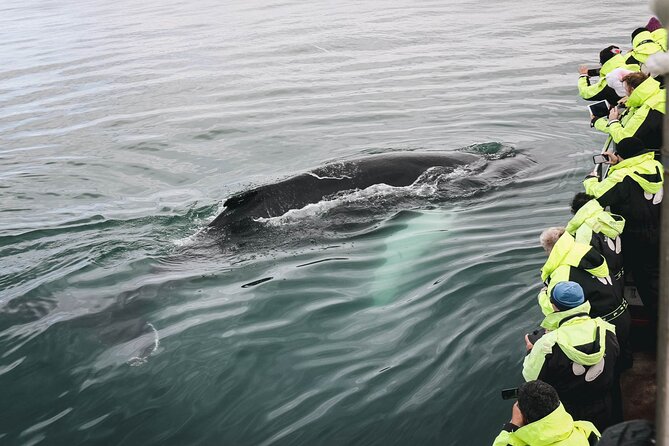
Reviewed · WHALE WATCHING
Whale Watching in Husavik
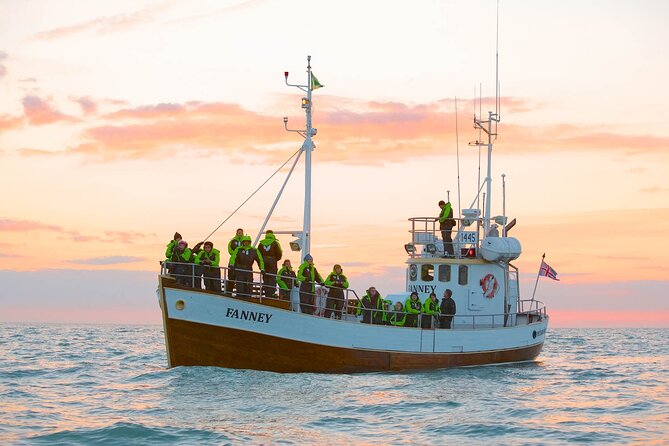
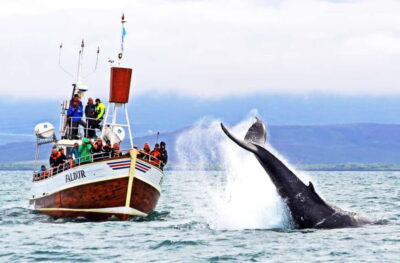
The best part of this Húsavík whale-watching trip is its setting: Skjálfandi Bay, where humpback whales, minke whales, dolphins, porpoises, and seabirds feed close to Iceland’s north coast. You spend about three hours on a traditional oak boat, with a crew that explains what you are seeing rather than simply pointing at fins.
I like the combination of old-style sailing and serious wildlife care, and I like the warm layer, hot cocoa, and pastry at the end. The main caution is simple: this is wild nature, not a show. Some departures see several whales and dolphins, while others see one whale or none, and rough water can make the ride uncomfortable.
Key points to know before you book
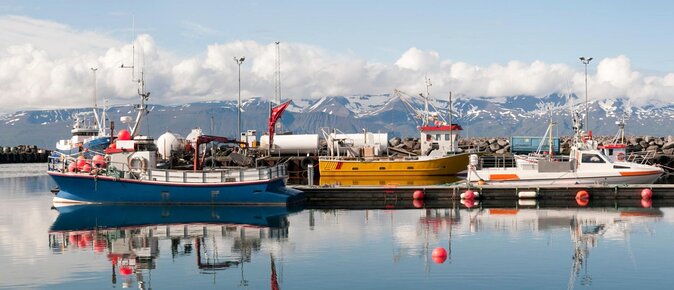
- Traditional oak boat: You explore Skjálfandi Bay from a slower, characterful vessel rather than a fast modern sightseeing boat.
- Three hours on the water: The time allows the crew to reach regular whale-watching areas and wait patiently for sightings.
- Common sightings: Humpback whales, minke whales, white-beaked dolphins, harbor porpoises, and seabirds are all possible.
- Warm clothing provided: A flotation-style warm layer or overall is available, but bring waterproof footwear and dress in layers.
- Wildlife-first approach: The crew aims to watch from a respectful distance and avoid putting pressure on the animals.
- Useful add-on: Your booking includes a 20% discount at the Húsavík Whale Museum.
Setting out from Húsavík into Skjálfandi Bay
The tour begins at North Sailing in Húsavík, at Garðarsbraut. Although the experience is listed with Akureyri as its location, the actual meeting point is in Húsavík, so check your day plan carefully before booking. The activity finishes back at the same place.
Húsavík is widely known as one of Iceland’s main whale-watching towns, and the bay gives the trip its character. You are not simply riding offshore and hoping for luck. The boat heads into traditional whale-watching areas where the crew has built up years of experience reading the water and watching seasonal wildlife patterns.
The oak boat is part of the appeal. It gives the outing a slower, more traditional feel, with the sea and weather much more present than they would be on a large enclosed vessel. That also means you should expect movement, wind, spray, and a closer connection to the conditions outside.
A safety briefing and basic instructions come before the search begins. The crew then keeps watch for blows, backs, fins, and groups of birds. Guides explain how to tell species apart and describe what the animals are doing, which helps you make sense of quick sightings.
More Whale Watching in North Iceland
- Akureyri: 3-Hour Classic Whale Watching Tour by Ship
★ 4.6 · 3,000 reviews - Whale Watching from Downtown Akureyri
★ 4.5 · 971 reviews - Big Whales & Puffins RIB boat tour from Húsavík
★ 5.0 · 501 reviews
What three hours on the water feels like
A three-hour tour is long enough to reach productive parts of the bay and spend time waiting when wildlife appears. Whales do not follow a timetable, so the outing often moves in stages: travel, scanning, a sudden sighting, more waiting, and then another search.
That waiting is not wasted time. A guide may use it to explain feeding behavior, migration, local birds, or the marine life living off Iceland’s coast. Some guides have a strong biology background, and one guide named Laura was singled out for clear directions and calm explanations during a particularly successful trip.
The crew also helps you understand individual whales. You may be told how to distinguish one animal from another by its markings, surfacing pattern, or behavior. This turns a distant back or tail into something more meaningful.
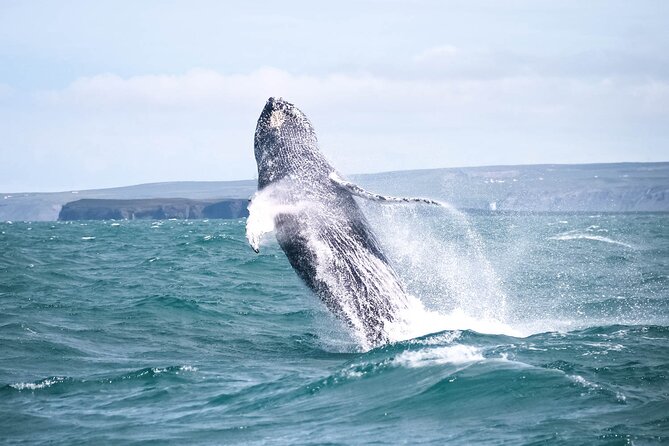
When conditions are good, the payoff can be remarkable. Sightings have included humpbacks breaching, feeding, and repeatedly surfacing. One departure watched a humpback perform backflips and side flips for nearly 45 minutes. Other outings have produced six whales, groups of dolphins, harbor porpoises, puffins, and even much larger numbers of whales when weather and conditions lined up.
You should treat these as possibilities, not promises. A different outing saw only one humpback surfacing several times. Another had limited visibility because of poor weather. The crew can search carefully, but it cannot control where an animal appears.
The whales and dolphins you might see
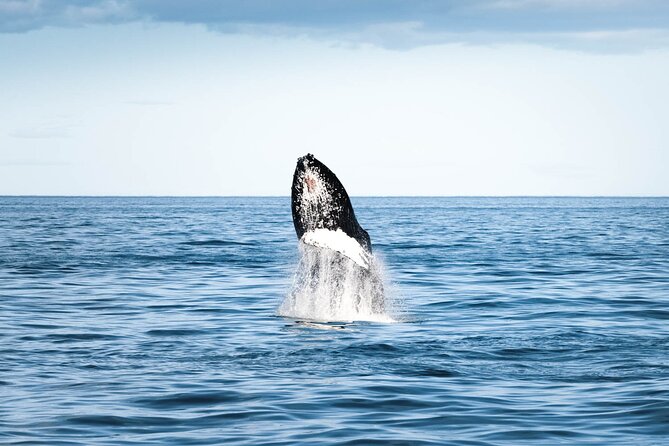
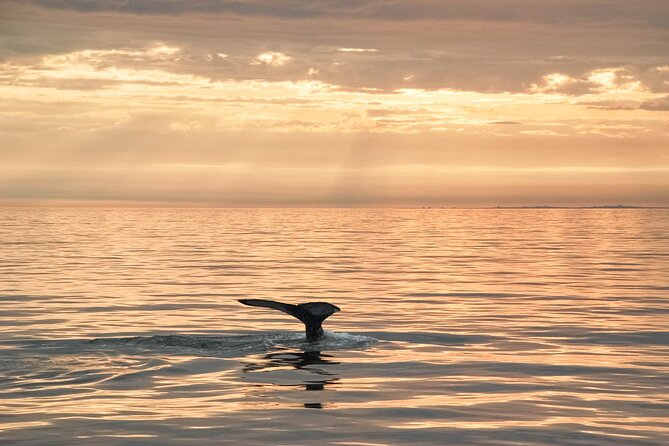
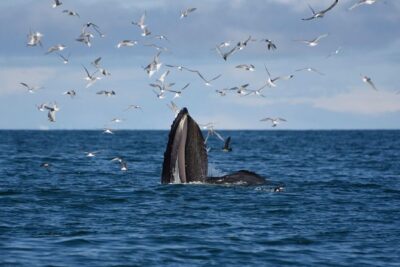
Humpback whales are the main stars of the bay. Their size makes even a brief surfacing memorable, and you might see a back arch, a tail, a blow, or a breach. Their feeding behavior can keep the boat in one area for a long time.
Minke whales are another regular possibility. They are smaller and often more fleeting, so you need to keep scanning instead of waiting for a dramatic breach. The guide’s help matters here, especially when the animal surfaces only briefly.
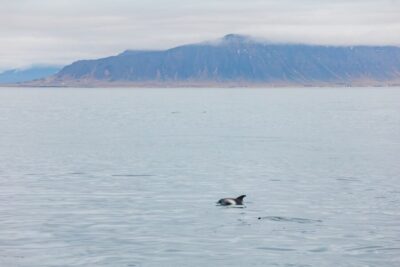
White-beaked dolphins may appear in groups, sometimes moving quickly around the boat. Seeing a pod gives the trip a different rhythm from whale watching, since dolphins can be active and social at the surface.
Harbor porpoises are smaller and harder to spot. Several have been seen on individual departures, but they can be easy to miss in choppy water. Keep your eyes on the area the guide indicates rather than trying to search the whole bay at once.
In early summer, the bay can also bring sightings of blue whales and fin whales. These are listed as seasonal possibilities, not standard sightings. Birdlife is part of the experience too, with puffins appearing on some trips.
The best approach is to enjoy each sighting on its own terms. A close humpback is thrilling, but a quiet moment watching birds, dolphins, or a porpoise also gives you a better sense of the bay’s living ecosystem.
Wildlife watching with a light touch
The crew’s handling of the animals is one of the strongest reasons to choose this outing. The stated aim is to keep a safe distance and avoid distressing whales, dolphins, and birds. The boat may pause near an animal, but the goal is observation, not pursuit.
That matters in a busy wildlife area. You want a good view, but you also want the animal to keep feeding, traveling, or resting without being crowded. The guides explain behavior and point out what is happening while the crew avoids treating the animals like performers.
The conservation message continues on land. The trip includes a 20% discount on admission to the Húsavík Whale Museum, a useful pairing if you want more context after the boat ride. One guide also encouraged visitors to support protection of whales in Iceland, which fits the wider educational tone of the tour.
I particularly like this balance. You get the excitement of close wildlife encounters without the idea that the boat should force a dramatic moment. Some of the most memorable sightings may be quiet: a whale surfacing several times, dolphins moving together, or a guide showing you how to recognize a species.
More Whale Watching in Akureyri:
- Akureyri: 2-Hour Whale Watching Express by RIB Speedboat
★ 4.8 · 489 reviews - Original Big Whale Safari & Puffins Speedboat Tour from Húsavík
★ 5.0 · 417 reviews - Traditional Whale Watching from Húsavík by Local Family Company
★ 4.5 · 389 reviews - Traditional Oak Ship Whale Watching Tour From Husavik
★ 4.5 · 366 reviews
Staying warm on an Icelandic boat
The company provides a warm overall or outer layer for the trip. On cold and windy departures, this can make a major difference. Hot cocoa and a bun or sweet treat are also provided toward the end, a small comfort that feels well timed after hours on the water.
Still, do not rely on the provided gear alone. Bring warm layers and good waterproof footwear. Wet feet can ruin an otherwise good outing, and rain can make the supplied clothing less pleasant if equipment has not dried properly.
Equipment quality has not always been consistent. One rainy departure involved wet, old, and damaged outerwear, including clothing with faulty buttons and tears. That appears to be a problem rather than the intended standard, but it is worth knowing before you go. If the weather looks poor, arrive prepared with your own waterproof jacket, warm socks, and sturdy boots.
The boat has some shelter, but this is not an entirely enclosed indoor excursion. You will spend time exposed to wind and weather. In calm sunshine, that makes the sea feel fresh and open. In rain, the same openness can be tiring.
Rough water and motion sickness
Sea conditions are the biggest practical concern. A few departures have involved heavy rolling, and some people became seasick. One person described clinging to the railing on the return journey after feeling ill and bruising an arm.
You cannot remove that risk from a whale-watching trip. The boat is described as comfortable by many people, but comfort depends heavily on the weather and your own response to movement. If you are prone to motion sickness, think carefully about the three-hour duration and bring whatever remedies you normally use.
The slow pace has both a benefit and a drawback. It gives the crew time to search and creates a quieter, more traditional outing. It also takes longer to reach the best areas, and one departure felt that the slow return made the rough conditions harder to manage.
A calm day can transform the experience. With sunshine and little wind, you can stay outside, watch the water, and enjoy the scenery without constantly bracing yourself. Since weather can change, build some flexibility into your day if possible.
Is the $113 price good value?
At $113 per person, this is not a casual, throwaway boat ride. You are paying for about three hours at sea, a trained crew, a traditional oak vessel, warm outer gear, hot cocoa, and an educational wildlife experience.
The value depends on what you want. If you are visiting Húsavík mainly to see whales, the time on the water and the crew’s patient searching make the price reasonable, especially on a day with several sightings. The 20% Whale Museum discount adds a practical bonus and helps turn the boat trip into a fuller half-day plan.
If you judge the tour only by the number of whales seen, the value is less certain. Nature may give you six whales, a breaching humpback, dolphins, and porpoises. It may also give you one whale or a distant glimpse. No sighting can be guaranteed.
I would book it for the setting, the chance of wildlife, and the quality of the interpretation, not as a promise of a particular animal. The crew’s record of rescheduling a departure canceled for bad weather also makes the purchase feel less risky. A canceled Húsavík trip was moved to Árskógssandur on another day, where harbor porpoises and a breaching humpback were seen.
Who will enjoy this trip most
This outing suits you if you like wildlife, open water, and guides who explain what you are seeing. It is especially good for first-time whale watchers because the crew helps with identification and behavior instead of leaving you to scan the horizon alone.
Families can take part, but children must be accompanied by an adult. Most people can participate, and service animals are allowed. The maximum group size is 100, so this is a substantial public outing rather than a tiny private charter.
It also works well for people who want an activity with an environmental focus. The crew’s respectful approach and conservation discussions add meaning beyond the photographs.
I would be more cautious if you dislike cold, wind, or boat movement. You should also think twice if a guaranteed close-up sighting is essential. Even on a well-run trip, the sea decides what appears.
Timing, cancellations, and simple planning tips
The tour is offered in English and lasts about three hours. It can run in the daytime, early in the morning, or during Iceland’s midnight sun period, depending on the departure you choose.
The experience requires suitable weather. If the operator cancels because of poor conditions, you can accept another date or receive a full refund. You can also cancel for a full refund up to 24 hours before the start time. Changes or cancellations inside that 24-hour window are not accepted for a refund.
Because the meeting point is in Húsavík, leave enough time to reach Garðarsbraut. The supplied information does not include transport from Akureyri, so do not assume a transfer is included. Confirm your arrival plan when booking.
My practical packing list would be:
- Warm base layers
- Waterproof boots with good soles
- A waterproof jacket, even if outer gear is provided
- Spare socks
- Motion-sickness medication if you normally need it
- A camera with a secure strap
Keep your camera ready, but do not spend the whole trip looking through a screen. The most dramatic moments can last only a few seconds.
Should you book the Húsavík whale-watching tour?
I would book this trip if you want a traditional boat, an informative crew, and a genuine chance to see whales in Skjálfandi Bay. The strongest departures combine several species, patient guides, respectful wildlife handling, and the simple pleasure of hot cocoa after time in the cold.
I would not book it if you need certainty, hate rolling boats, or plan to arrive without proper rain gear. The best choice is to reserve it with realistic expectations: you are buying time in a wild bay, not a guaranteed performance.
For most visitors who can accept that bargain, the $113 price is fair. Add the Whale Museum afterward, bring serious waterproof clothing, and leave room in your schedule in case weather changes the plan.
FAQ
Where does the whale-watching tour begin?
It begins at North Sailing, Húsavík Whale Watching, on Garðarsbraut, 640 Húsavík, Iceland.
Where does the activity end?
The tour ends back at the original meeting point in Húsavík.
How long does the tour last?
The trip lasts approximately three hours.
What animals might I see?
Possible sightings include humpback whales, minke whales, white-beaked dolphins, harbor porpoises, and seabirds. Blue whales and fin whales may be seen at the beginning of summer.
Are whale sightings guaranteed?
No. The tour takes place in nature, so sightings vary. Some departures see many whales and dolphins, while others have limited visibility or only one whale.
Is warm clothing provided?
A warm outer layer or overall is provided for the boat trip. You should still bring warm layers and waterproof footwear.
Is food or drink included?
Hot cocoa and a bun or sweet treat are provided toward the end of the excursion.
Is the tour offered in English?
Yes. The experience is offered in English.
Can children join the tour?
Yes, but children must be accompanied by an adult.
What happens if bad weather cancels the tour?
If poor weather causes cancellation, you are offered another date or a full refund.
Just added around Akureyri
- Akureyri: Whale Watching Shore Excursions★ 4.6 · 250 reviews
- Akureyri: Whale Watching Tour & Forest Lagoon Entrance★ 3.8 · 4 reviews
- West Glacial River Family Rafting★ 5.0 · 9 reviews
- Whale Watching and Sea Angling Tour★ 4.5 · 61 reviews
- Zipline Adventure Through Glerárgil River Canyon in Akureyri Town★ 5.0 · 136 reviews
- Whales and Puffins Tour from Husavik★ 4.5 · 85 reviews
- 100% Whale Watching★ 5.0 · 273 reviews
- Whale Watching Tour from Akureyri City Central★ 4.5 · 33 reviews
Whale Watching, compared.
Whale Watching Cruise on the Amelia Rose Yacht
Read our review →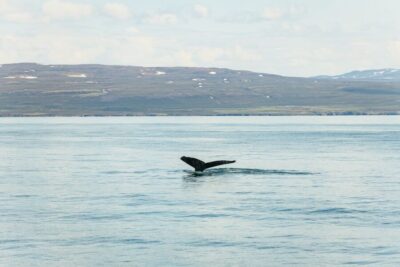
The Original Classic Whale Watching from Reykjavik
Read our review →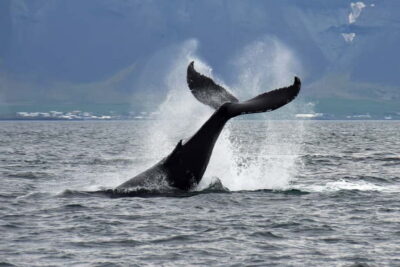
Traditional Whale Watching by Local Family Company
Read our review →
Browse the lists this tour appears in