
Reviewed · SILFRA TOURS
Dive the Divide: Silfra Fissure Scuba Tour | Reykjavik Pickup
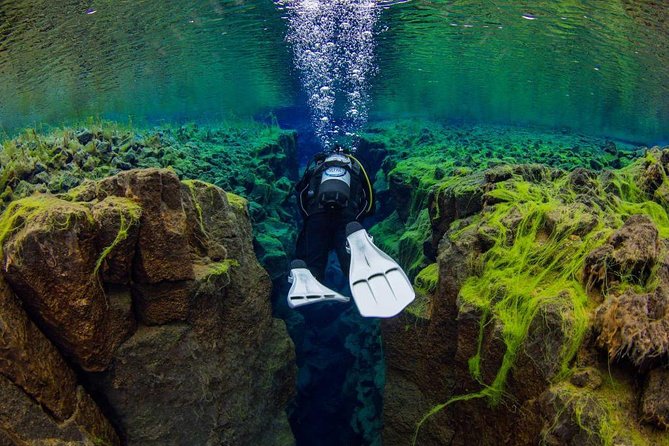
Silfra is one of Iceland’s rare experiences where the main attraction is beneath the surface: you move through a narrow crack between the North American and Eurasian tectonic plates. The water is cold, but its clarity can stretch as far as you can see, making the bare volcanic rock feel almost unreal.
I like the small maximum group of three, which should give your guide room to watch your buoyancy and equipment. I also like the full route, from Silfra Deep Crack through the Hall and Cathedral to the Lagoon, plus round-trip transport from selected Reykjavik hotels.
The catch is that this is not a casual beginner outing. You need previous dry suit experience, solid fitness, and the strength to carry heavy gear over roughly 400 meters. Equipment problems and delays can also affect the day, so leave room in your schedule.
Key points to know before booking
- The water is only about 2 to 3°C, so a dry suit, thermal undersuit, hood, and gloves are supplied.
- You must already know dry suit technique, with certification or a logbook showing at least 10 dry suit descents.
- The full route includes four sections, from the narrow Deep Crack to the Silfra Lagoon.
- The deepest point is 22 meters, or about 72 feet, in the Silfra Cathedral.
- The return walk can be tiring, especially while carrying or wearing wet equipment and weights.
- The experience costs $344.67 per person and includes transport, equipment, park admission, a guide, hot chocolate, and cookies.
Why Silfra is worth the cold
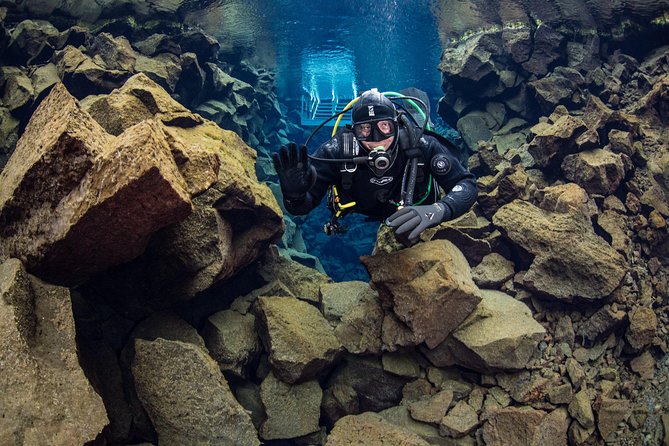
The appeal here is not wildlife. Silfra has no colorful reef or schools of fish to distract you. Its drama comes from the rock, the cold, and the strange feeling of moving through a fissure linked to two continental plates.
The water comes from glacial melt filtered through underground lava for years before reaching the fissure. The result is remarkable visibility. You can look through narrow passages and see the rock walls stretching away in clean, sharp water.
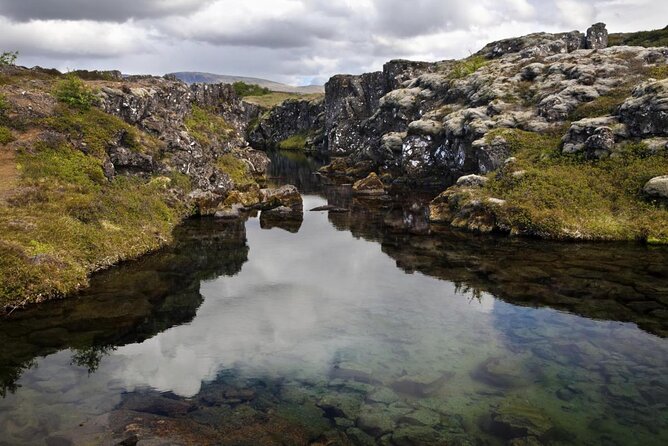
The exact geological wording is worth handling carefully. You are not swimming through a literal open gap between two exposed continents. You are moving through a water-filled fissure in the area where the North American and Eurasian tectonic plates meet and slowly pull apart. That is still an unusual setting, and it gives the outing its special character.
The water temperature is roughly 2 to 3°C. The supplied thermal undersuit and dry suit do most of the work, but you still need to be comfortable with cold-water conditions. The dry suit also changes how you move. It adds bulk, affects buoyancy, and requires more weight than a standard warm-water setup.
That is why previous dry suit practice matters so much. You are not learning the basics here while also handling cold, heavy equipment, a current, and a narrow route.
More ways to get into the Silfra fissure:
- Silfra: Snorkeling Between Tectonic Plates – Meet on Location
★ 5.0 · 5,001 reviews - Silfra: Fissure Snorkeling Tour with Underwater Photos
★ 4.9 · 2,731 reviews - Reykjavík: Silfra Fissure Snorkeling between Two Continents
★ 4.7 · 1,712 reviews
From Reykjavik to Thingvellir National Park
Pickup is offered from selected Reykjavik hotels and accommodations. The collection process can take up to 30 minutes, so do not plan to arrive at the meeting point at the last possible moment. The drive takes you out of the city toward Thingvellir National Park.
Thingvellir is worth seeing even without the scuba outing. It is a UNESCO World Heritage Site with lava fields, Þingvallavatn lake, and the historic Alþingi, Iceland’s first parliament, founded in AD 930. The park also gives you the geological setting that makes Silfra possible.
The listed schedule allows about four hours at Thingvellir, with roughly 90 minutes assigned to the Silfra activity itself. Some of that larger block includes preparation, gear fitting, safety instructions, walking to the water, and changing afterward. Do not expect four hours underwater.
The park can feel exposed and rugged. Weather may change quickly, and the walk between the staging area and the water is part of the effort. The outing includes park admission, so you do not need to arrange that separately.
Getting suited up in a dry suit
At the site, you meet your PADI-certified divemaster and the other members of your small group. The package includes a thermal undersuit, dry suit, BCD, regulator, tank, weights, hood, gloves, mask, and fins.
You provide your suit sizes when booking. That detail matters because a poor fit can make cold-water movement less comfortable and can interfere with buoyancy control. Take your time during fitting. A rushed start can create problems later, especially with weight placement, hoses, or access to valves.
The safety briefing is not filler. Your guide needs to explain how to control air in the dry suit, how the equipment behaves in cold water, and how the route works. If you have only used a wetsuit, expect the dry suit to feel very different.
A dry suit traps air around your body, so buoyancy changes as you move up and down. You also need considerably more weight than you might expect. One participant found that a loose BCD hose fastening and a weight belt issue made the outing much harder. That is a useful reminder to check every strap, hose, and weight before entering the water.
The equipment has generally been described as warm and serviceable, but individual gear condition can vary. If something does not feel right, tell the guide before you enter the fissure. This is not the place to be polite about a loose belt or inaccessible valve.
The four sections of the Silfra route
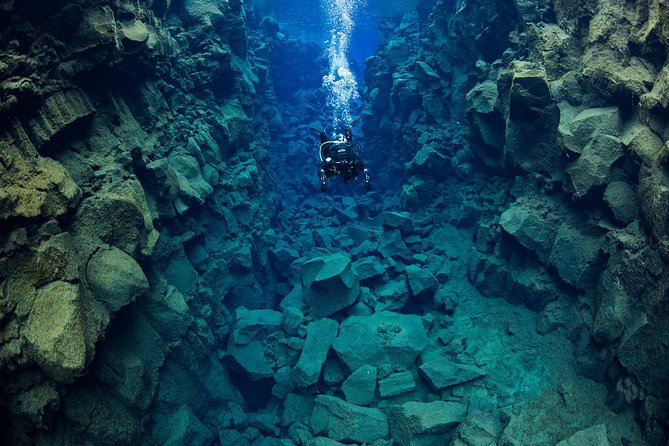
The route begins at Silfra Deep Crack, a narrow, winding passage near the entrance. This first section gives you the strongest sense of the fissure closing around you. You are moving through dark volcanic rock and incredibly clear water, with little aquatic life to soften the stark appearance.
Next comes Silfra Hall. The crack opens slightly here, giving you more room to look around and settle into the rhythm of the outing. The gentle current helps carry you along, but you still need to manage your position and avoid bumping the rock.
The route then reaches Silfra Cathedral, the deepest section at about 22 meters. This is the point where depth, clear water, and the angular rock formations combine most dramatically. Conditions can vary, and actual depth or time in each section depends on the guide, air supply, comfort, and group control.
The final section is Silfra Lagoon. Compared with the narrow opening, the Lagoon feels more open and gives the route a clear finish. At the exit platform, your guide helps remove your fins before you begin the walk back to the car park.
The advertised route includes all four sections, but exact movement through them is not a private photo session. At busy times, other scuba groups and snorkelers may be nearby. The clarity remains the main attraction, though the staging area can feel crowded and the start may take longer than expected.
A few more Golden Circle days worth weighing up
- Silfra: Diving Between Tectonic Plates and Pick Up from Reykjavik
★ 5.0 · 590 reviews - Dive the Divide: Silfra Fissure Scuba Tour | Meet at Thingvellir
★ 4.5 · 172 reviews - Thingvellir: Silfra Fissure Diving with Optional Pickup
★ 4.6 · 73 reviews - Silfra: Diving Between Tectonic Plates
★ 4.8 · 64 reviews
The walk back is part of the challenge
The walk to the water can be tiring because you are carrying a full set of equipment. The return is often harder. You may still be wearing part of the kit, carrying extra weight, and dealing with cold hands and wet clothing.
The distance is about 300 meters, or 984 feet, from the exit platform back to the car park. The outfitter can remove weights or other gear to make the walk easier, and there is an option to rest near the visitor entrance along the way.
I would treat this walk as a serious part of the physical requirement, not a minor footnote. You need to be able to handle heavy equipment over roughly 400 meters in total. Strong fitness is required, and the outing is not suitable for someone who struggles with loaded walking.
Once you are back at the vehicle, you can dry off and warm up with hot chocolate and cookies. Food and other drinks are not included, so bring anything else you need within the stated tour rules.
Guides and group size
The maximum group size is three participants. That is a major advantage in a cold, equipment-heavy setting. A small group lets the divemaster keep closer track of buoyancy, comfort, air use, and any equipment concern.
Guide quality matters here more than on a simple sightseeing trip. You need clear instructions before entry and steady attention during the route. Guides named in past outings include Maciek, Julian, Arturo, and Katja. Assignments can change, but the best guide behavior is consistent: careful gear checks, calm explanations, a manageable pace, and regular attention to every person in the group.
There have also been reports of guides paying less attention to equipment problems or moving ahead too quickly. That is not a reason to dismiss the outing, but it is a reason to speak up immediately if your weight shifts, your hose becomes hard to reach, or you are struggling to control your position.
The small group does not make this a private charter. The site can be busy, especially when snorkeling groups are present. If having complete control over pace and photography is essential, ask about a private arrangement before booking.
What the $344.67 price includes
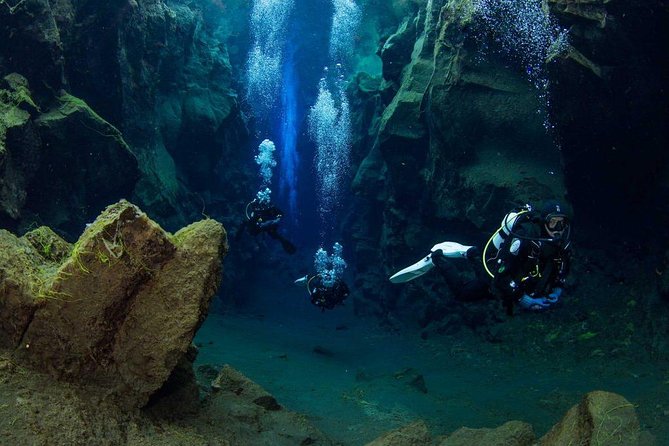
At $344.67 per person, this is an expensive half-day activity. The price makes more sense when you add up what is included: round-trip transport from selected Reykjavik locations, Thingvellir admission, the full equipment package, thermal layers, a PADI-certified divemaster, and the small group format.
You are also paying for access to a very specific cold-water setting that requires specialist equipment and careful logistics. Bringing your own gear would not remove the need for transport, site management, and a trained guide.
The value depends on your priorities. If you are already a certified dry suit user and Silfra is a major reason for visiting Iceland, the cost may be justified. You get a focused route through all four named sections without having to arrange equipment or reach Thingvellir independently.
If you are simply curious about cold-water scuba but have no dry suit background, this is poor value because you may not qualify. The experience is not designed to teach you dry suit skills from scratch. Confirm your certification and logbook before paying.
Important rules that can affect your booking
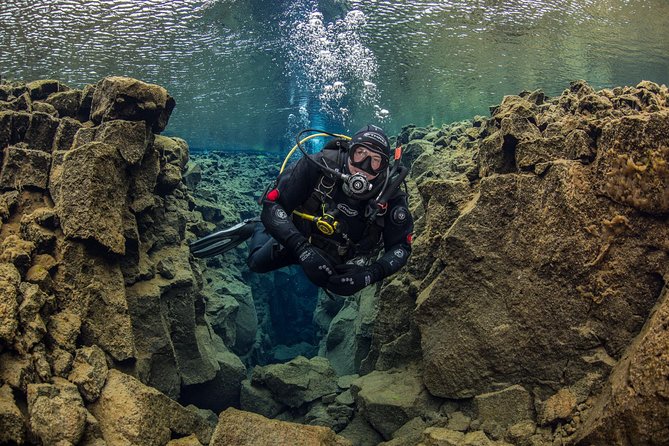
You must be at least 18 years old and have previous dry suit experience. The operator may ask to see a dry suit certification card or a logbook showing at least 10 completed dry suit descents.
You cannot wear ordinary glasses beneath the mask because they interfere with the seal. Contact lenses or prescription goggles are the practical options. Participants with medical concerns may need to provide a signed doctor’s note, and you should read the medical questionnaire and diving handbook before booking.
Plan air travel carefully. The guidance strongly recommends waiting 24 hours after scuba activity before flying. That matters in Iceland, where many visitors arrive or depart on tightly packed schedules.
The experience depends on suitable weather. If conditions force cancellation, you can choose another date or receive a full refund. For your own protection, do not schedule your flight immediately after the outing even if the weather looks good.
Free cancellation is available up to 24 hours before the start time. Changes or cancellations made inside that window are not refunded.
Who should book this Silfra outing
I would recommend it to an adult with solid scuba skills, previous dry suit practice, good fitness, and a strong interest in geology and unusual underwater settings. It suits someone who is happy to follow a guide through a fixed route and accept cold, bulky equipment in exchange for exceptional visibility.
It is also a good choice if you want transport from Reykjavik and do not want to rent or assemble a complete cold-water setup. The hot chocolate afterward is a small touch, but it matters when you are changing in Icelandic weather.
I would not choose it for a first scuba lesson, a relaxed family activity, or anyone who dislikes carrying equipment. It is also a poor match if your main goal is abundant marine life. Silfra is about rock, water, light, and geology.
Should you book it?
Book this outing if Silfra is high on your Iceland list and you already meet the dry suit requirement. The clear water, unusual rock formations, four-section route, and maximum group of three give it real value for the right participant.
Before booking, confirm your proof of dry suit experience, provide accurate suit sizes, review the medical rules, and leave extra time around pickup and your flight. Once at the site, check your weights and hoses carefully, tell the guide about any concern, and expect the walk back to test your legs.
For a properly prepared scuba participant, Silfra can be a rare and memorable way to see Thingvellir from below. For everyone else, snorkeling at Silfra may be the better fit, but this specific outing requires the training and stamina to handle it safely.
FAQ
How long does the Silfra scuba experience take?
The full outing lasts about six hours, including pickup from Reykjavik, transport to Thingvellir National Park, preparation, the underwater route, changing, and the return journey.
What is the deepest part of the route?
Silfra Cathedral is the deepest section, reaching about 22 meters, or 72 feet.
Do I need previous dry suit experience?
Yes. You must have previous dry suit experience and provide a dry suit certification card or a logbook showing at least 10 completed dry suit descents.
What equipment is included?
The package includes a thermal undersuit, dry suit, BCD, regulator, tank, weight, hood, gloves, mask, and fins.
Is transport from Reykjavik included?
Yes. Round-trip transport is included from selected Reykjavik hotels and accommodations. Pickup may take up to 30 minutes.
Can I fly immediately after the scuba outing?
No. The guidance strongly recommends waiting 24 hours after scuba activity before flying.
Just added around Golden Circle
- Into the Glacier Combo: Snowmobiling + Langjökull Ice Cave★ 5.0 · 84 reviews
- Golden Circle★ 5.0 · 8 reviews
- Snowmobiling on Langjökull Glacier from Geysir Area★ 5.0 · 34 reviews
- Reykjavik Shore Excursion: The Golden Circle Full Day Tour★ 4.5 · 12 reviews
- Golden Circle Small Group Day Tour★ 5.0 · 63 reviews
- Whale Watching and Golden Circle Tour from Reykjavik★ 4.0 · 28 reviews
- Golden Circle with Tomato Farm Lunch & Secret Lagoon Bathing★ 3.5 · 12 reviews
- Iceland Stopover: The Golden Circle Day Tour★ 5.0 · 4 reviews
Silfra Tours, compared.
Snorkeling Between Tectonic Plates – Meet on Location
Read our review →
Silfra Drysuit Snorkeling with Free Photos – Meet on Location
Read our review →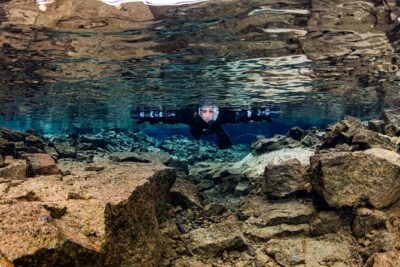
Snorkeling Between Tectonic Plates Pick Up from Reykjavik
Read our review →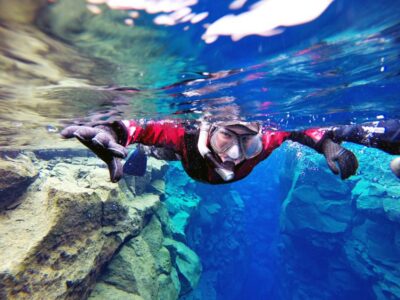
Half-Day Snorkeling Day Trip with Underwater Photos
Read our review →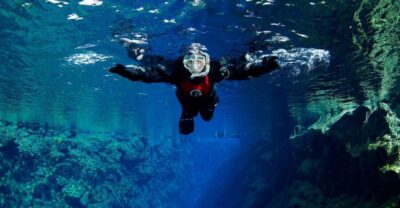
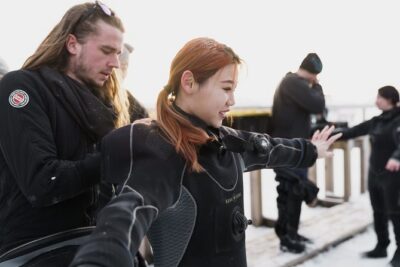
Silfra Drysuit Snorkeling Tour with Free Photos – From Reykjavik
Read our review →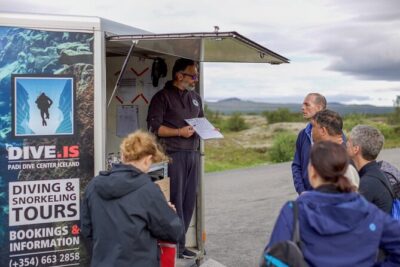
Diving Between Tectonic Plates and Pick Up from Reykjavik
Read our review →
Golden Circle & Snorkeling in Silfra From Reykjavík with Free Photos
Read our review →Browse the lists this tour appears in