
Reviewed · LAVA CAVES
Geological Lava Tunnel Adventure – Arnarker Cave
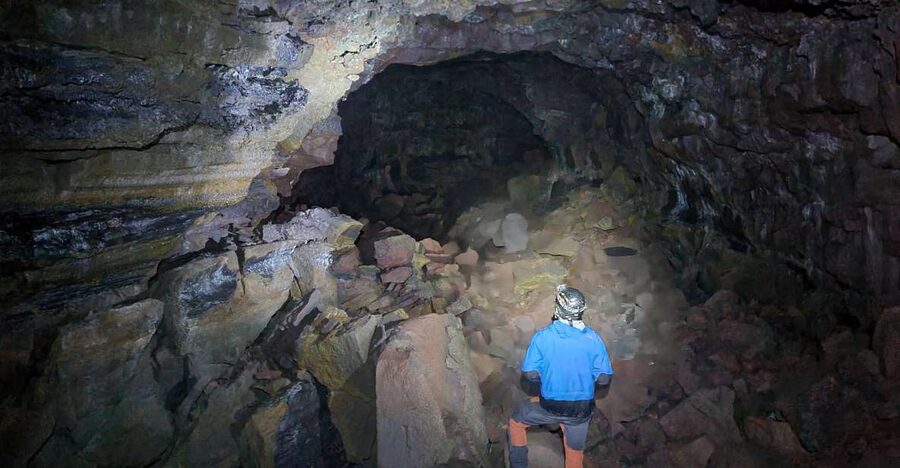
Arnarker Cave is not a polished show cave with a neat walkway and electric lights. It is a real, rough lava tube, where you climb over boulders, squeeze through uneven sections, and see the volcanic rock close at hand. The guide leads a group of no more than six and explains how Iceland’s lava tunnels formed.
I like the small-group format, which gives you room to move and time to stop for photos. I also like having a professional geologist along, since the twisted rock, cooled lava, and winter ice make far more sense when someone explains the forces behind them.
The catch is simple: this is physical caving, not a casual underground stroll. You need good balance, decent fitness, warm clothing, and a tolerance for cold, tight, uneven spaces.
Key points to know before entering Arnarker Cave
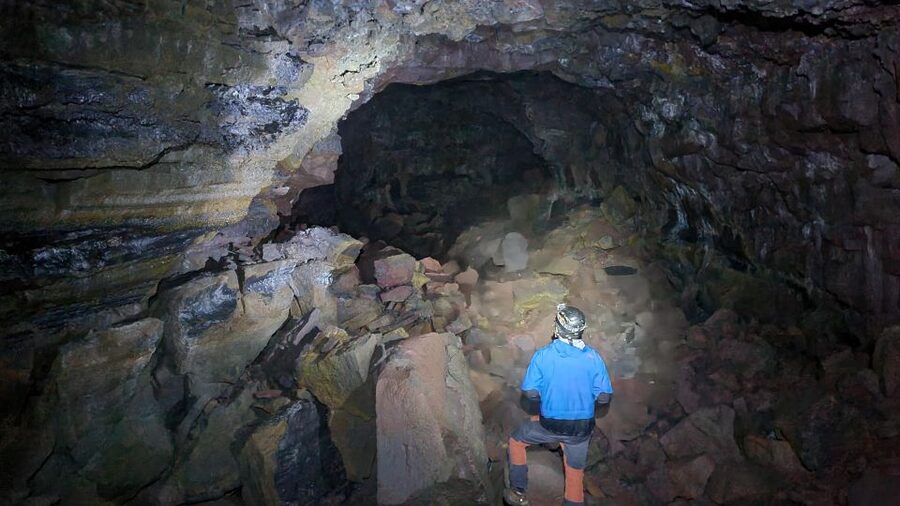
- Natural 500-meter lava tube: There is no constructed path, so expect boulders, uneven footing, and climbing.
- Professional geological guide: You learn about lava cave formation and Icelandic volcanism as you go.
- Very small group: The tour is limited to six people, with more personal space than a standard cave outing.
- Cold underground conditions: The cave rarely rises above 4°C, even in summer.
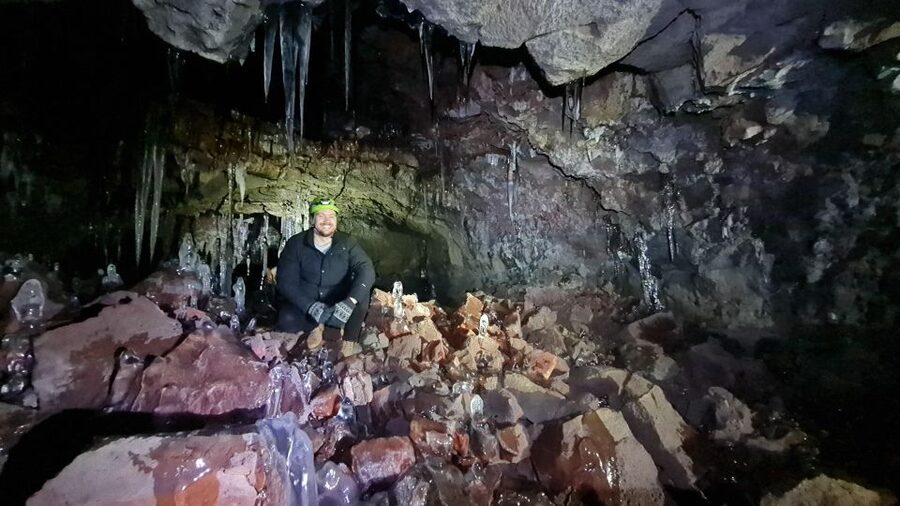
- Winter ice formations: Ice can add striking shapes to the cave’s volcanic features during the colder months.
- Equipment is supplied: Helmets, headlamps, and gloves are included, but hiking boots are not.
Why Arnarker Cave feels different from a show cave
Iceland has easier lava cave tours with built paths and more visitor-friendly access. Arnarker Cave offers something less managed. You enter a 500-meter lava tunnel in a much more natural state, with the rock under your boots and the route shaped by the cave itself.
That difference matters. A constructed walkway lets you focus on scenery with little effort. Arnarker asks you to pay attention to every step. You climb over boulders, keep your balance, and use your headlamp to inspect the walls and ceiling. The reward is a stronger sense of being inside a volcanic feature rather than simply looking at one from a platform.
The cave is divided naturally into two demanding sections. The first 100 meters can take about an hour because the route is especially rough. The remaining 400 meters may take another hour and a half. That pace is useful to understand before you book. You are not racing through the tunnel. You are moving carefully, stopping for explanations, and working your way through the rock.
The full experience lasts about five hours, including transport from Reykjavik. Much of that time is spent getting to the cave, preparing, exploring, and returning, but the underground portion is long enough to feel like a proper caving outing.
More Lava Caves in Reykjavik
- From Reykjavik: Lava Caving Tour
★ 4.7 · 585 reviews - The Lava Tunnel Tour with Transfer from Reykjavik
★ 4.5 · 435 reviews - Lava Tunnel Tour Including Transfers from Reykjavik
★ 4.5 · 345 reviews
The Reykjavik pickup and ride to the cave
Pickup and drop-off take place at Bus Stop 8, in the parking lot of Hallgrimskirkja. This is a practical meeting point in Reykjavik, but you should allow enough time to find the exact bus stop and arrive ready to leave.
The drive to the cave takes about an hour under normal conditions. One route can take longer because the guide may use a more scenic road with views of recent lava flows. That extra time is worthwhile if you want the journey to connect the cave with Iceland’s wider volcanic activity.
You will not spend the ride receiving a long lecture before the real activity begins. The main geological learning happens at the cave, where you can look directly at the formations being discussed. Still, the drive helps place Arnarker in the setting of Iceland’s active volcanic regions.
The tour operates throughout the year, and poor weather does not normally stop it. That is a useful advantage in Iceland, where rain, wind, or changing conditions can disrupt outdoor plans. Even so, the underground temperature remains cold, so bad weather is not a reason to pack lightly.
Getting equipped for a cold, rough cave
The operator provides helmets, headlamps, and gloves. These are not optional extras. You need both hands available for balance in places, and a headlamp is essential in a cave with no built lighting.
You must bring hiking boots. Make sure they have firm soles and ankle support. Trainers or soft casual shoes are a poor match for loose rock and boulders, and footwear is not included in the price.
A waterproof jacket is also a smart choice. Water can drip from the ceiling, even when the weather outside is dry. Dress in warm layers, since the cave rarely exceeds 4°C. You may warm up while climbing, but the air inside remains cold and you will spend time standing still for explanations and photographs.
Before setting off, expect a practical check of your equipment and ability to move safely. The age range is 15 to 65. The limits are not arbitrary: the route needs balance, stamina, and comfort with uneven ground.
The first 100 meters require the most care
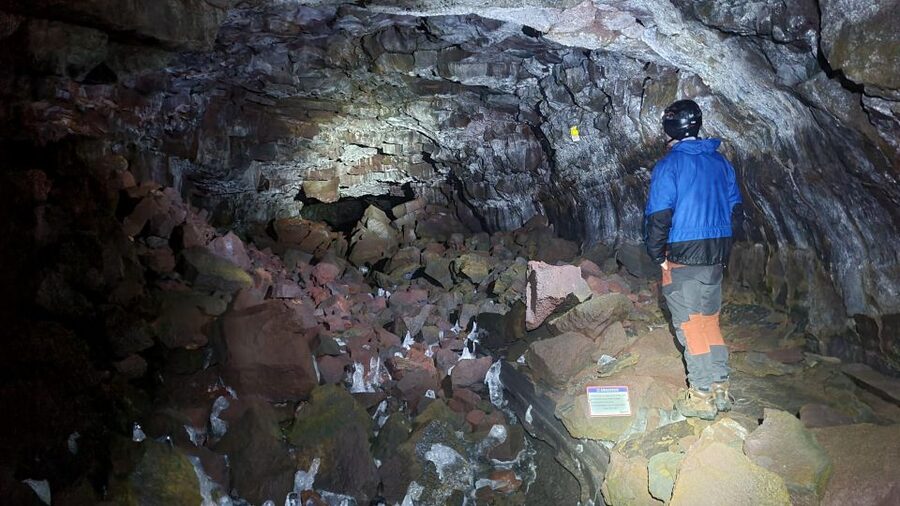
The beginning of the cave is the part that demands the most patience. You climb down and over rock and boulders, rather than following a smooth floor. About 100 meters may take an hour, which gives you a clear idea of the route’s difficulty.
I would treat this first section as a test of comfort. If you dislike crouching, stepping across irregular surfaces, or using your hands to steady yourself, you may find the cave tiring quickly. The guide can explain the safest way through, but the route remains natural and physically demanding.
This is also where the small group pays off. With a maximum of six people, the guide can keep the pace controlled and stop for explanations without managing a large line. You get more space to choose your footing and more time to look at the rock.
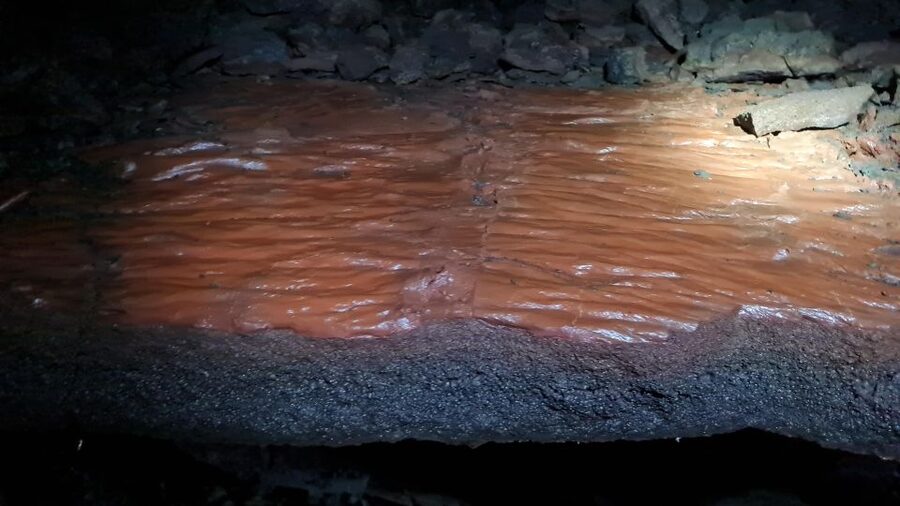
Do not expect a single dramatic viewpoint to make the effort worthwhile. Arnarker’s appeal comes from the changing details along the route: lava textures, cooled surfaces, cavities, and formations shaped by the movement of molten rock. The guide’s explanations help you notice what you might otherwise pass by.
Same corner of the island, a completely different day out:
- Reykjavik Food Walk – Local Foodie Adventure in Iceland
★ 5.0 · 18,952 reviews - Iceland: Northern Lights Bus Tour from Reykjavik
★ 4.1 · 11,161 reviews - Reykjavík: Whale Watching and Marine Life Cruise
★ 4.6 · 9,838 reviews - Reykjavik: Sky Lagoon Entrance Pass With 7-Step Spa Ritual
★ 4.8 · 6,166 reviews
A slower second section with volcanic detail
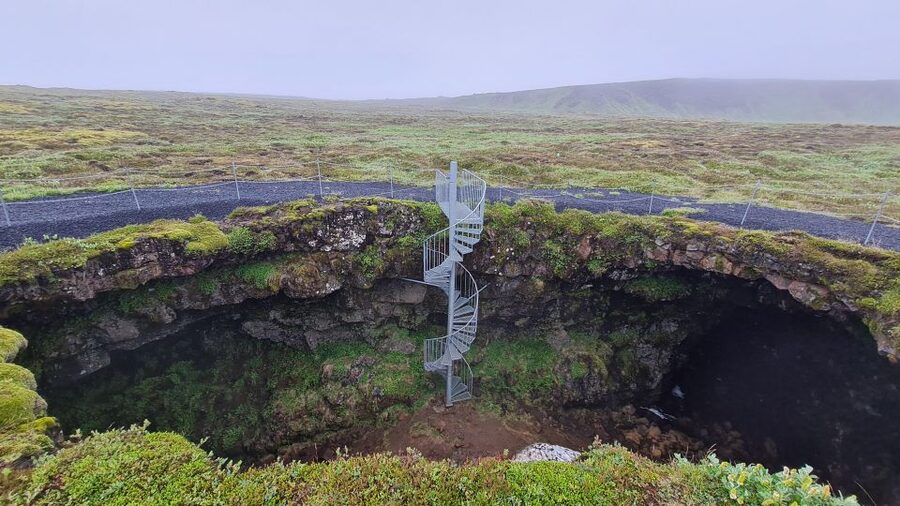
The second part runs for roughly 400 meters and may take about an hour and a half. It is still uneven, but the longer distance gives you more time to settle into the rhythm of the cave.
Your headlamp picks out only the section immediately around you. That limited view makes the cave feel more enclosed and keeps your attention on the surfaces close by. You may stop for photographs, but this is not a place where every image comes out easily. Low light, wet rock, and awkward positions make a steady hand useful.
The professional guide explains how lava tunnels form and how Iceland’s volcanism created the cave. This is the strongest reason to choose this experience over simply visiting a marked attraction. You are not only seeing volcanic rock. You are learning how hot lava moved, cooled, and left a tunnel behind.
The guide also helps connect the formations to visible processes. Instead of hearing general facts in a visitor center, you can examine the rock while the explanation is fresh. That direct connection makes the geology easier to remember.
Ice formations add another layer in winter
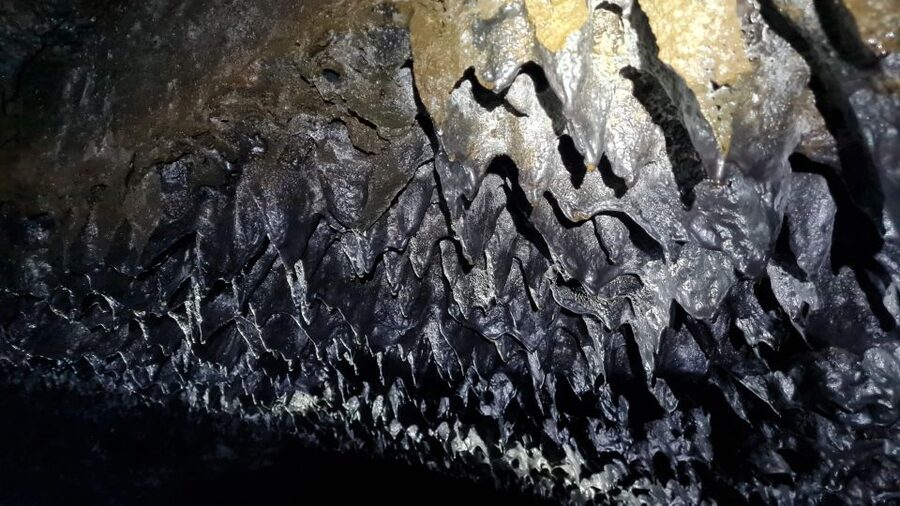
During winter, you may find ice formations inside the cave. These can appear alongside the volcanic features, giving you a contrast between hot rock from ancient eruptions and frozen water in the cold tunnel.
The ice is an added seasonal interest, not a guarantee that every visit will look the same. Conditions vary, so you should book for the caving and geology first, then treat ice as a bonus.
Winter also makes warm clothing and suitable boots even more important. The cave is cold in summer, and winter conditions outside may add to the challenge of reaching the entrance and returning to Reykjavik. The tour can operate in poor weather, but you still need to arrive prepared for Icelandic conditions.
What the guide adds to the experience
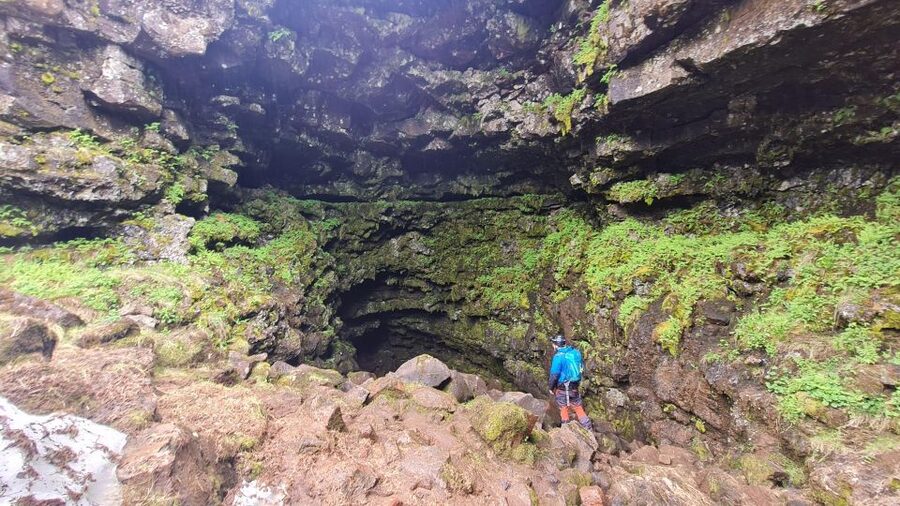
The guide is a professional geologist, described in one account as a volcanologist, and geological instruction is central to the outing. You get explanations of lava tunnel formation, Icelandic volcanism, and the features found along the way.
The best guiding here is not about delivering a long speech. It is about stopping at the right formations, answering questions in clear language, and giving you time to take in what you are seeing. The guide also manages the physical side of the tour by setting a careful pace and helping the group move through the rough sections.
Photo stops are part of the experience. You should not expect a formal photography session, but there is time to pause and take pictures. The small group helps because you are less likely to be hurried through every interesting section.
English is the tour language. If geology is new to you, that is fine. The format is designed around seeing the features in front of you, not memorizing technical terms.
The real cost at $214 per person
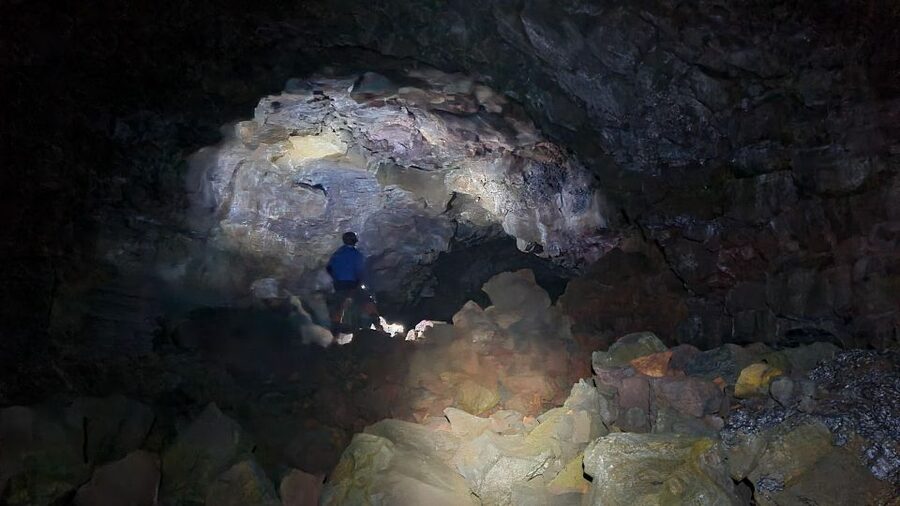
At $214 per person, this is not a budget cave visit. You are paying for a five-hour outing, transport from Reykjavik, a professional geological guide, and a very small group. Helmets, headlamps, and gloves are included, which saves you from renting or buying basic caving equipment.
The value depends on what you want from Iceland. If you only want an easy look at volcanic rock, a lower-priced show cave with a constructed path may suit you better. If you want a more personal and physical outing with expert geological context, the price is easier to justify.
A group limit of six is important here. In a large group, a rough cave route can become a slow queue. With only a few people, you have more room to move and more access to the guide’s attention. One outing had only three people, which is close to the best-case setup for a cave this uneven.
Food and drinks are not included. Bring anything you need for the five-hour outing, though the supplied information does not specify meal stops. You should plan to arrive fed and carry suitable personal refreshments if needed.
Who should book this cave adventure
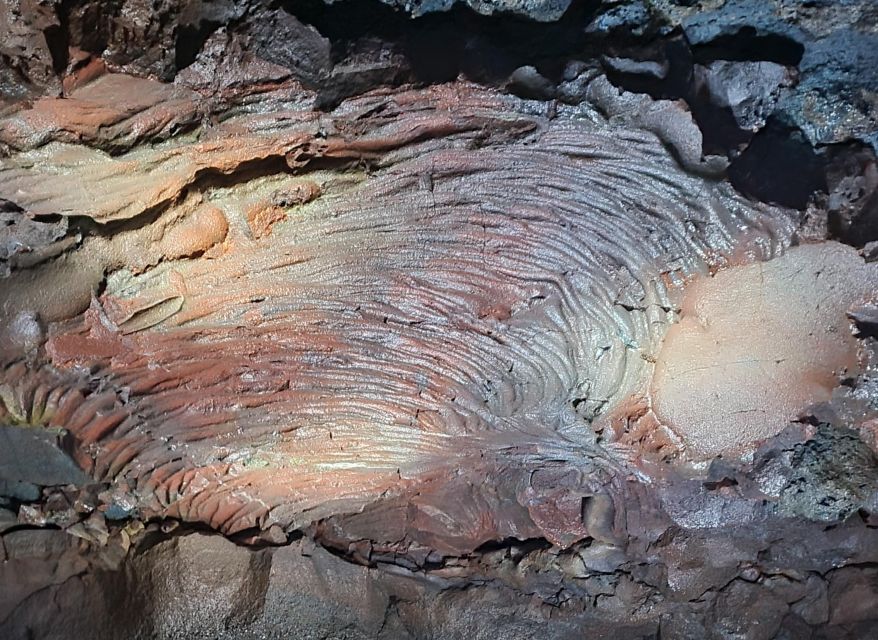
I would recommend Arnarker to fit visitors aged 15 to 65 who enjoy active outings, have good balance, and want a genuine geological experience. It suits you if the idea of climbing over rocks sounds interesting rather than annoying.
It is especially good for anyone who has already seen Iceland’s major sights and wants something more hands-on. You get out of the bus, put on a helmet, and interact directly with the volcanic terrain. That physical contact is part of the appeal.
This is not suitable for people with low fitness, mobility impairments, back or heart problems, claustrophobia, recent surgery, or pregnancy. It is also not suitable for wheelchair users, anyone over 200 centimeters tall, anyone over 125 kilograms, or people over 65. The operator lists these limits because the cave is tight and physically demanding.
The route also requires good balance. Even a fit person may struggle if they are uncomfortable on boulders or in confined spaces. Be honest with yourself before paying for a tour that cannot be changed into an easy walk once you are underground.
Booking details and practical flexibility
You can cancel up to 24 hours before the tour for a full refund. You can also reserve now and pay later, which helps if your Iceland schedule depends on weather or changing plans.
The activity lasts five hours, but starting times depend on availability. Check the departure time carefully and arrange your day around the five-hour window, especially if you have another paid activity afterward.
Pickup and drop-off are included at Bus Stop 8 by Hallgrimskirkja. Hiking boots are the main item you must supply yourself. Add warm layers and a waterproof jacket, then keep your hands free for movement by using a small, secure bag only if the operator permits it.
Should you book Arnarker Cave?
Book this tour if you want natural caving rather than a polished attraction, and if you are ready for cold, boulders, and a slow physical route. The combination of a six-person maximum and a professional geologist gives the experience real value, especially for anyone curious about Iceland’s volcanic past.
Skip it if you want a flat path, a warm interior, or a quick underground visit. Arnarker rewards effort, but it asks for balance, stamina, and comfort in a confined space. For the right person, the chance to touch and study a real lava tube, with winter ice sometimes adding to the scene, makes this one of Reykjavik’s more unusual half-day adventures.
FAQ
Where does the Arnarker Cave tour start?
The tour starts at Bus Stop 8, in the parking lot of Hallgrimskirkja in Reykjavik.
How long does the experience last?
The experience lasts five hours, including pickup and drop-off in Reykjavik.
How far is Arnarker Cave from Reykjavik?
The drive takes about one hour, although it can take longer if the route includes a more scenic drive past recent lava flows.
How long is the lava tunnel?
Arnarker Cave is about 500 meters long.
Is there a path inside the cave?
No. There is no man-made path, and you need to climb over boulders in much of the cave.
What equipment is provided?
Helmets, headlamps, and gloves are provided.
Do I need to bring hiking boots?
Yes. Hiking boots are not included, and ankle support is necessary for the uneven route.
How cold is the cave?
The temperature in the cave rarely rises above 4°C, even during summer.
Can I visit during winter?
Yes. The tour operates all year, and winter visits may include ice formations inside the cave.
Is the tour suitable for children?
The minimum age is 15. The tour is also not suitable for people with low fitness, mobility impairments, claustrophobia, pregnancy, certain medical conditions, or recent surgery.
Just added around Reykjavik
- Reykjavik: Whale and Puffin Watching RIB Boat Tour★ 4.6 · 179 reviews
- Reykjavik: Whale Watching & Lava Show★ 5.0 · 4 reviews
- Reykjavik: Whale & Marine Adventure Tour★ 4.3 · 71 reviews
- Reykjavik: Whale Watching Express★ 4.3 · 227 reviews
- From Reykjavík: Viking Horseback Tour in Hafnarfjörður★ 4.9 · 112 reviews
- Reykjavík: Horse Riding Tours★ 4.9 · 127 reviews
- The Siggi Tour from Reykjavík: 1.5 to 2-Hour Ride★ 4.5 · 27 reviews
- Icelandic Horse Riding and Whale Watching Cruise from Reykjavík★ 4.0 · 14 reviews
Lava Caves, compared.
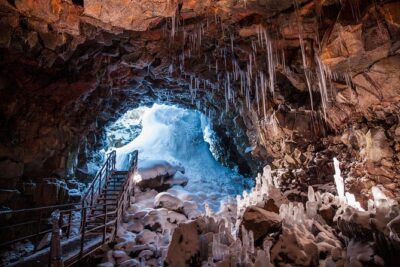
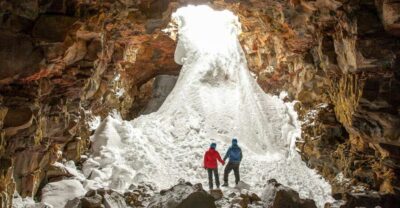
Raufarhólshellir Lava Tunnel: Underground Expedition
Read our review →
Snæfellsnes Day Trip with Vatnshellir Lava Cave
Read our review →
The Lava Tunnel Tour with Transfer from Reykjavik
Read our review →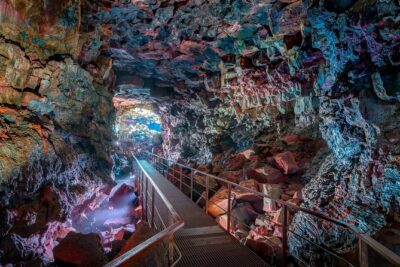
Lava Tunnel Tour Including Transfers from Reykjavik
Read our review →
Epic Snæfellsnes Adventure with Lava Cave Small-Group Day-Tour
Read our review →Browse the lists this tour appears in