
Reviewed · WHALE WATCHING
Reykjavik: Whale Watching Tour, Whales of Iceland Exhibition
The best part of this Reykjavik outing is the contrast: you search the open water for a living humpback, then stand beside a full-size model and grasp just how huge it is. Faxafloi Bay can produce minke whales, humpbacks, dolphins, porpoises, seals, and seabirds, though nature never follows a schedule.
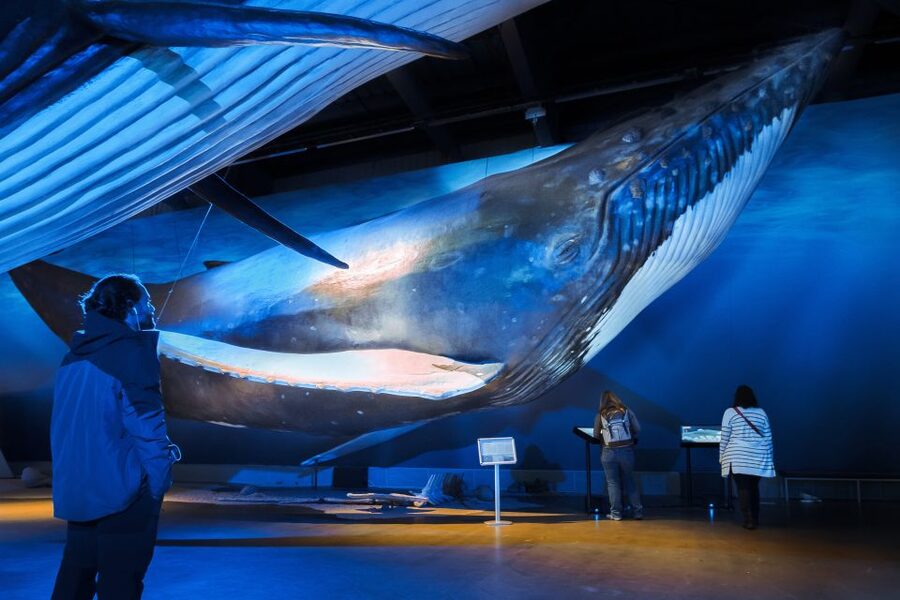
I like the large boat and thermal overalls, which give you room to move and help take the sting out of Iceland’s wind. I also like the Whales of Iceland Exhibition, where 23 life-size models turn a fleeting sea sighting into something you can study at close range. The main drawback is simple: whale sightings are not guaranteed, and the museum’s location and opening hours require some planning.
Key points to know
- Humpback whales are the headline sighting: Several trips have seen multiple humpbacks, sometimes close to the boat.
- The large boat helps with viewing: You can seek a spot outside, then retreat indoors when the wind becomes too much.
- Thermal overalls are supplied: Children’s sizes are available, but you should still dress in warm layers.
- The museum adds useful scale: Its 23 full-size models help you understand what you saw at sea.
- A no-sighting return ticket protects your investment: If the boat finds nothing, you receive a free ticket to try again.
- Summer gives you the best odds: April through September is the preferred whale-watching season, though sightings have occurred in winter too.
From Reykjavik’s Old Harbor to Faxafloi Bay
Your boat trip begins at Reykjavik’s Old Harbor, where you meet at the local partner’s office before boarding. The total experience lasts about three and a half hours, but the exact split between the boat and museum can vary because you may choose which activity to do first.
The harbor departure is handy if you are staying in central Reykjavik. The tour does not include hotel transfers, so you need to make your own way to the meeting point. Parking is included, and the museum is at Fiskislod 23.
Once aboard, the boat heads into Faxafloi Bay. This is not a short harbor cruise. You are heading out to search for animals that surface when they choose, so the experience involves patience, scanning, and a little luck.
That searching is part of the fun. A guide may point out a fin, a blow, or a brief movement before the whale appears again. You also learn how to look for yourself. Ivan, Lucas, Daniel, Oskar, and Andrea have all been praised for keeping the trip informative and lively, with guides explaining both the animals and the surrounding waters.
More Museums in Reykjavik
- Reykjavik: Perlan Museum Wonders of Iceland Entrance Ticket
★ 4.7 · 2,575 reviews - Reykjavík: Hop-On Hop-Off Bus and Perlan Museum Entry Ticket
★ 4.3 · 719 reviews - Reykjavik: Whales of Iceland Museum Entrance Ticket
★ 4.4 · 493 reviews
What you might see on the water
Minke whales are among the most common sightings in Faxafloi Bay. They can surface quickly and disappear just as fast, which makes them exciting but sometimes hard to photograph.
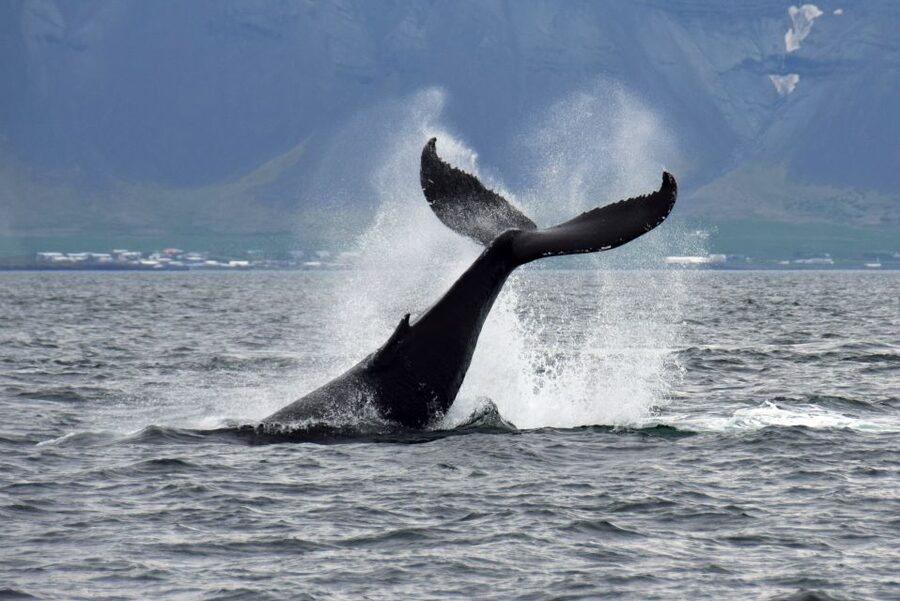
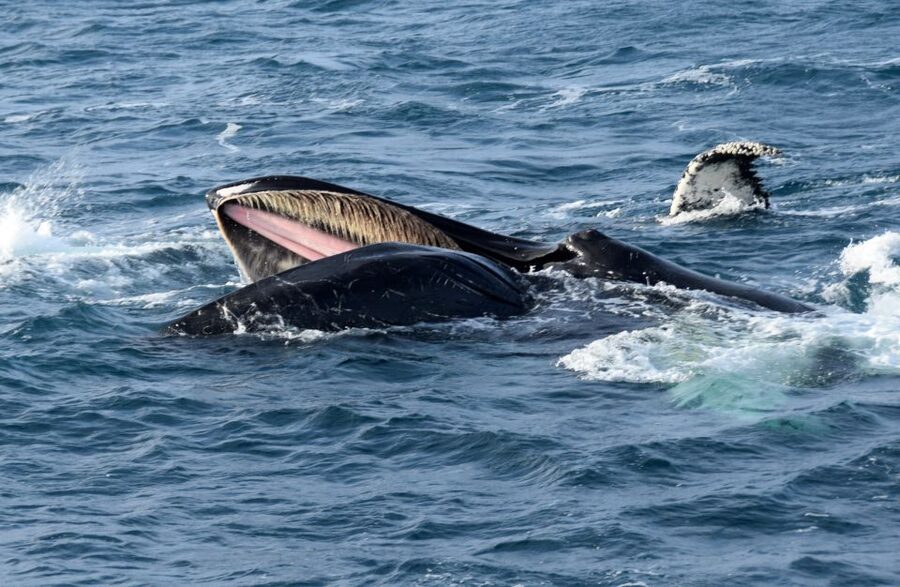
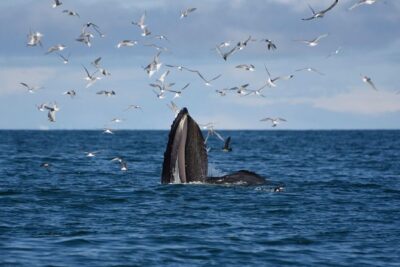
Humpback whales are the big prize. Several outings have produced more than one humpback, including one trip with three animals staying near the boat for a long period. Another outing saw a humpback come close enough for clear photographs and video, while a separate trip included a breach.
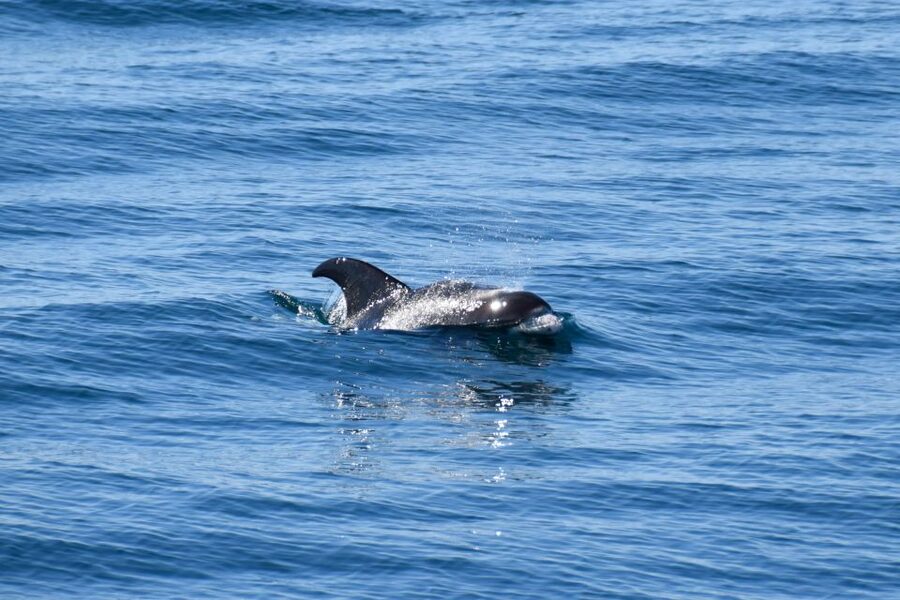
You may also spot white-beaked dolphins and harbor porpoises. Dolphins can be easier to follow because they often move in groups, while porpoises tend to appear briefly. Seals have also been seen, and northern gannets may be spotted hunting from above the water.
Wildlife sightings cannot be promised. That point matters more than any marketing language. Even during the best months, animals move, weather changes, and the boat may return with only a few distant glimpses. The company offers a free ticket to visit again if nothing is seen, which gives you some protection, though it may not help if you are leaving Iceland soon.
A large boat, warm gear, and real weather
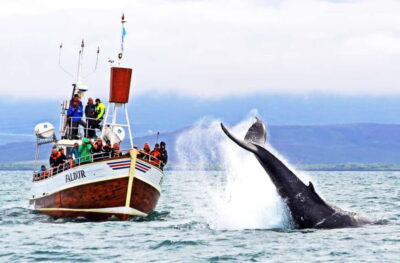
This tour uses one of Iceland’s larger whale-watching boats. That matters because you are not forced to remain in one cramped viewing position. You can move around, check another side of the boat, or head inside when the cold becomes unpleasant.
Thermal overalls are supplied, including children’s sizes. They are useful, but do not treat them as a replacement for your own clothing. Wear warm layers, comfortable shoes, and clothing that handles wind. Bring sunscreen in summer, since the combination of reflected light and long daylight can catch you out.
The upper deck usually offers the best views, but it is also the coldest and windiest place to sit. One parent who brought a disabled daughter arrived about 40 minutes early to work out the gangplank and find a suitable seat. That is sensible advice for anyone who needs extra boarding time or a specific position.
The guides use a microphone, but wind can make explanations difficult to hear outside. If you care about the commentary, listen from inside when possible, or move closer to the guide. Free WiFi is included, and refreshments are available for purchase on board. Motion-sickness tablets are also offered before departure and on the boat, according to the tour details.
The guides make the difference
A whale-watching trip can feel flat if the guide simply points and names animals. Here, the guide’s role is more active. You are taught how to scan the water, where to look, and what signs may suggest an animal is about to surface.
Lucas has been singled out for clear guidance during trips with humpbacks and minke whales. Daniel kept one winter outing moving after an early humpback proved difficult to see, then helped the group find two more. Oskar combined animal facts with humor while locating minke whales.
Ivan has also trained passengers to spot whales for themselves, rather than leaving everyone dependent on the guide’s finger. That is a small but valuable difference. Once you learn the pattern, you begin noticing more of the bay: a fin, a splash, a bird dropping toward the water, or a dark shape that vanishes before you can be certain.
The boat trip can last around three hours, depending on conditions and the search. That is a long time outside for anyone who is not prepared. The reward is that you have time to wait for a better sighting instead of rushing back after a single pass.
More Whale Watching in Reykjavik
- Reykjavík: Whale Watching and Marine Life Cruise
★ 4.6 · 9,838 reviews - Reykjavík: Whale Watching Cruise on the Amelia Rose Yacht
★ 4.5 · 2,911 reviews - The Original Classic Whale Watching from Reykjavik
★ 4.5 · 2,626 reviews - Reykjavik: Whale Watching Tour with Expert Guide
★ 4.2 · 2,307 reviews
Why the Whales of Iceland Exhibition helps
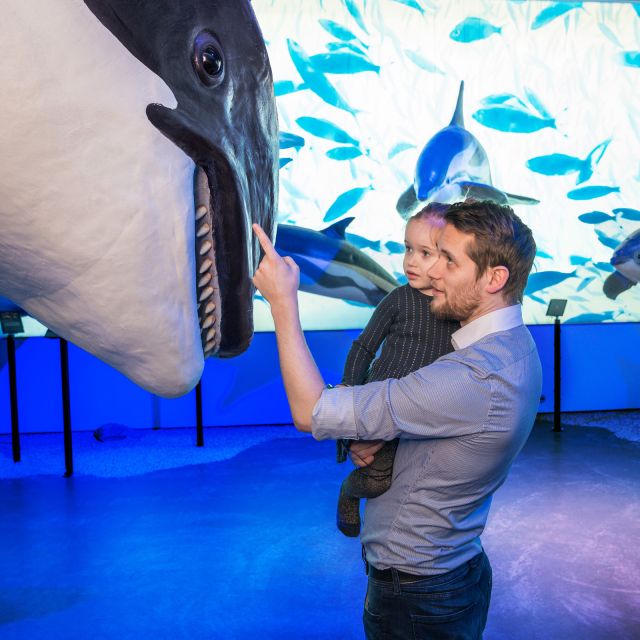
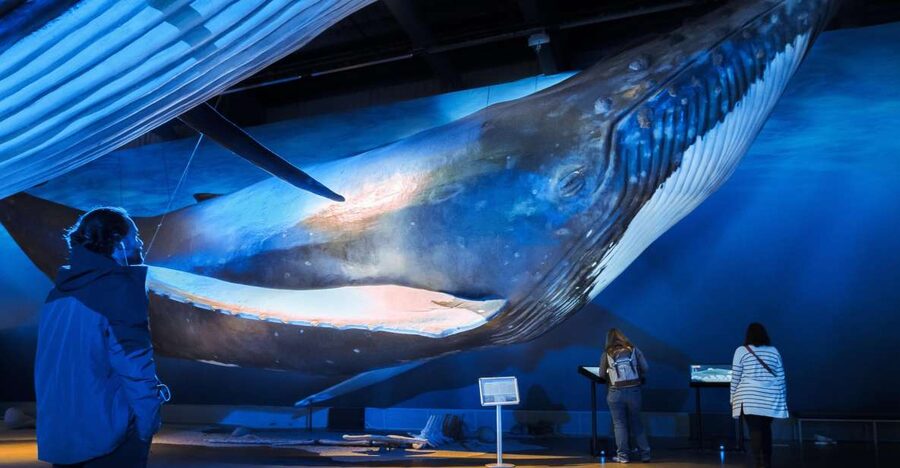
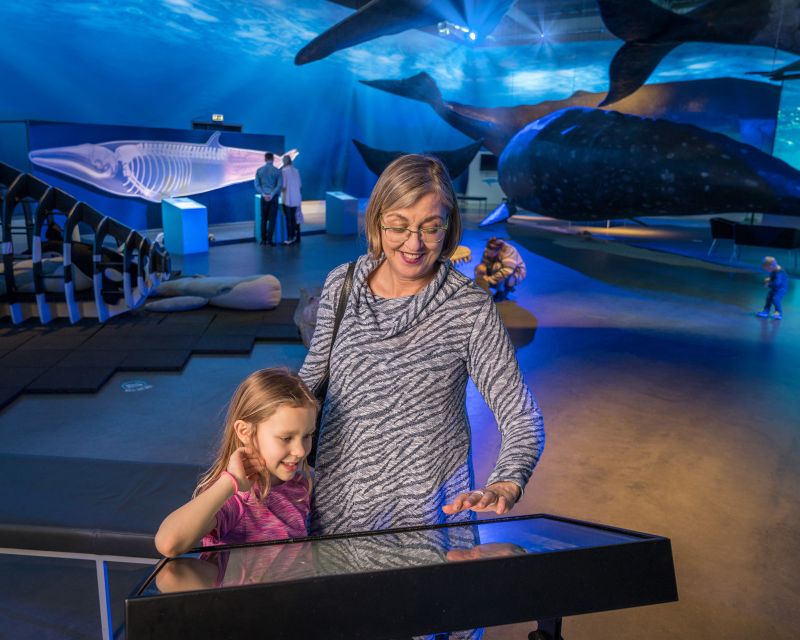
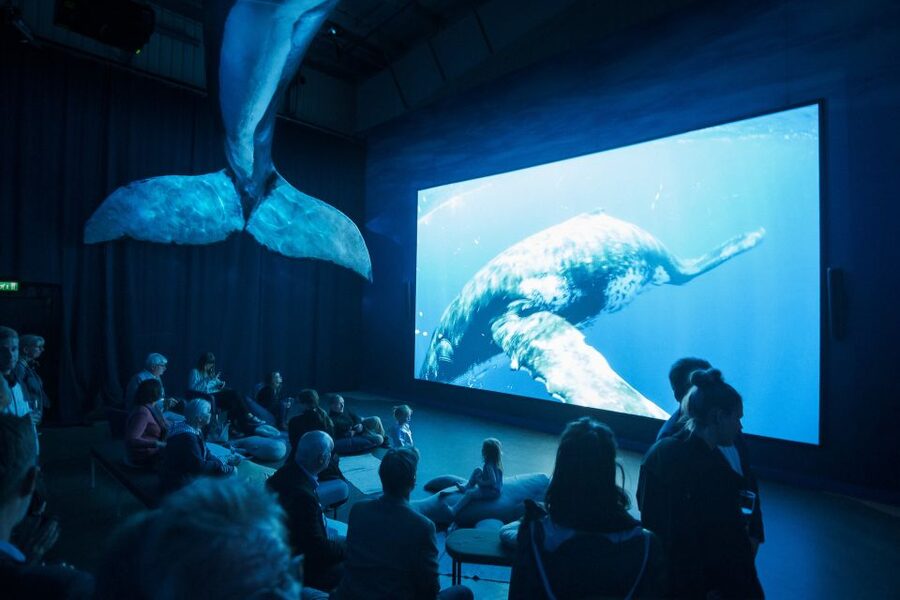
The museum at Fiskislod 23 contains 23 life-size models representing the whale species found in Icelandic waters. This is more than a rainy-day extra. A whale at sea is usually visible in pieces: a back, a fin, a blow, or a tail. At the museum, you can walk beside a full body and understand the scale.
The exhibition uses information displays, videos, audio guides, and virtual reality headsets. The audio guide is available in English, German, Icelandic, Chinese, Spanish, Portuguese, Japanese, French, Polish, and Finnish. There is also an app in English, German, French, Spanish, and Chinese.
Two live-guided museum tours are offered daily at 10:30 AM and 1:30 PM, free for ticket holders. Check the timing before you arrive, especially if you want the live tour rather than the self-guided material.
The museum is wheelchair accessible. It also has a cafe where you can buy coffee and a pastry after the exhibition. That is a welcome place to warm up, particularly if the boat has been windy or the museum visit follows a cold morning on the bay.
One practical warning: confirm the museum’s opening hours against your schedule. A previous visitor arrived near closing time and could enter, but could not use the audio guide. If you are flying out the next day, do not leave the exhibition until the last possible hour.
Choosing the order of the two activities
You can decide whether to visit the museum before or after the boat trip. That flexibility is useful because weather, museum tour times, and your day plan may not line up neatly.
I prefer the museum after the boat. Seeing a whale at sea first gives the models more meaning. You can return to the exhibition and compare the animal you saw with the larger species on display. It also helps you understand why a brief humpback sighting can still be a major event.
Starting at the museum has its own advantage. The models and displays give you a basic introduction before you go looking for animals. If your boat departs later, the exhibition can also fill part of the morning.
The free live-guided tours at 10:30 AM and 1:30 PM should influence your choice. Pick the order that lets you attend one if that is important to you. The booking information does not promise a particular guide for every departure, so treat names such as Lucas, Daniel, Oskar, Ivan, and Andrea as examples of guides who have led tours, not as a fixed roster.
When to book for the best chance
April through September is the strongest period for whale watching in Iceland. Longer daylight and seasonal wildlife activity improve your odds, but there is still no guarantee.
Winter trips can work. Humpbacks, minke whales, dolphins, and porpoises have been spotted in February, March, October, November, and December. One February trip saw a humpback and a dolphin, while another winter outing found several humpbacks. March is not considered the best month, yet a trip during that period still produced whales.
The best approach is to give yourself flexibility. Book early enough in your Iceland schedule that you can use the free return ticket if the first trip finds nothing. A last-day booking leaves you with no practical chance to try again.
Is the $123 price good value?

At $123 per person, this is not a cheap add-on. Its value depends on how much you want both parts of the experience.
You are paying for a guided boat trip, thermal overalls, WiFi, museum admission, parking, and the possibility of returning free after a no-sighting trip. The museum on its own would not replace the boat, but it gives you a worthwhile second activity rather than leaving you with only a weather-dependent search.
The price feels strongest for families and first-time whale watchers. Children get the same chance to see large animals in the wild, and the museum makes the subject easier to understand. The supplied overalls are another help for young passengers, though you still need proper layers.
For serious wildlife photographers, the value is less certain. The boat provides opportunities, but whales surface unpredictably, and wind can make photography difficult. Dirty windows were noted on one trip, which may affect indoor viewing and photographs. Outside viewing is usually more useful, but it is also colder.
The cancellation policy makes the booking less risky: you can cancel up to 24 hours ahead for a full refund. You can also reserve now and pay later. Those terms are helpful when your Iceland plans depend on weather.
Who should book this experience?
You should consider this tour if you want a clear introduction to Iceland’s marine life without arranging separate transport or museum admission. It suits families, couples, and anyone who wants both an outdoor search and an indoor explanation.
It is also a good fit if you are fascinated by whales but do not have time for a longer coastal trip. The boat leaves from Reykjavik, and the museum gives the day substance even when sightings are brief.
You should think twice if you dislike cold, wind, or uncertain wildlife encounters. Three hours on the water is a serious commitment, and no tour operator can make a whale surface on command. You may see several humpbacks, or you may see only a distant minke, dolphins, or porpoises.
For passengers with mobility concerns, the experience is wheelchair accessible, but boarding involves a gangplank. Contact the operator ahead of time if you need help or a particular seat, and arrive early enough to board without pressure.
Should you book the Reykjavik whale-watching and museum tour?
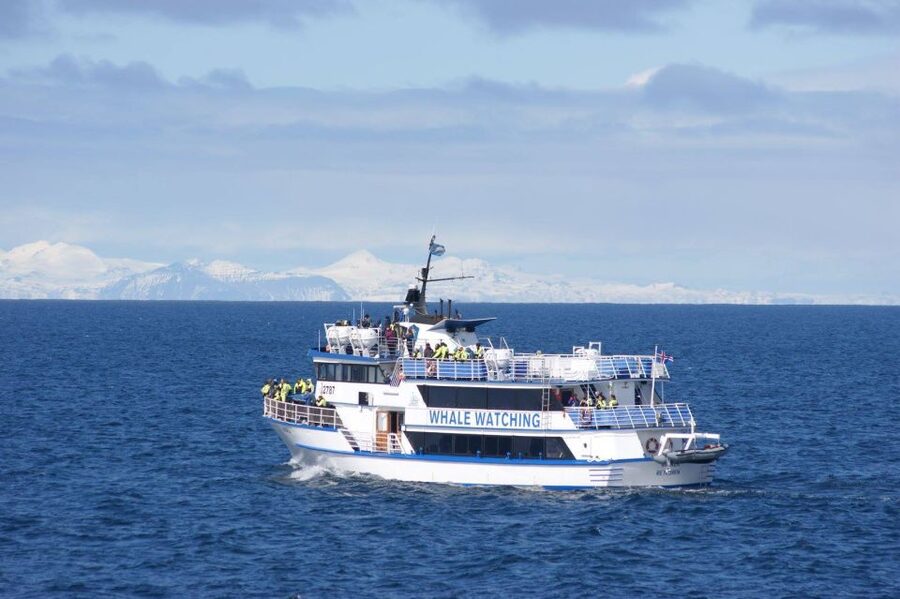
I would book it if whale watching is high on your Iceland list, especially from April through September. The strongest feature is the combination of a genuine wildlife search with a museum that supplies scale, context, and a warm place to recover afterward.
Book it early in your itinerary, not on your final morning. Dress more warmly than you think you need, plan around the museum’s live tour times, and accept that the no-sighting ticket is a second chance rather than a guarantee.
If you want a polished, low-effort introduction to whales from Reykjavik, the $123 package is sensible. If you need guaranteed wildlife or hate spending hours scanning empty water, choose a different activity.
FAQ
Where does the whale-watching tour begin?
You meet at the local partner’s office and board in Reykjavik’s Old Harbor. Hotel transfers are not included.
How long does the full experience last?
The advertised duration is three and a half hours. This includes the guided boat trip and the Whales of Iceland Exhibition, with the exact order chosen by you.
What whales and animals might I see?
The most common sightings include minke whales, white-beaked dolphins, harbor porpoises, and humpback whales. Seals and northern gannets may also appear.
Are whale sightings guaranteed?
No. Wildlife sightings cannot be guaranteed. If the boat finds nothing, you receive a complimentary ticket to visit again.
What should I wear?
Bring warm, comfortable clothing and shoes, with several layers for the wind. Thermal overalls are provided, including children’s sizes. Sunscreen is recommended in summer.
What languages are available?
The live boat tour is in English. Museum audio guides are available in English, German, Icelandic, Chinese, Spanish, Portuguese, Japanese, French, Polish, and Finnish. An app is available in English, German, French, Spanish, and Chinese.
Is the experience wheelchair accessible?
Yes, the experience is listed as wheelchair accessible. Boarding includes a gangplank, so contact the operator ahead of time if you need assistance or extra boarding time.
Just added around Reykjavik
- Reykjavik: Whale and Puffin Watching RIB Boat Tour★ 4.6 · 179 reviews
- Reykjavik: Whale Watching & Lava Show★ 5.0 · 4 reviews
- Reykjavik: Whale & Marine Adventure Tour★ 4.3 · 71 reviews
- Reykjavik: Whale Watching Express★ 4.3 · 227 reviews
- From Reykjavík: Viking Horseback Tour in Hafnarfjörður★ 4.9 · 112 reviews
- Reykjavík: Horse Riding Tours★ 4.9 · 127 reviews
- The Siggi Tour from Reykjavík: 1.5 to 2-Hour Ride★ 4.5 · 27 reviews
- Icelandic Horse Riding and Whale Watching Cruise from Reykjavík★ 4.0 · 14 reviews
Whale Watching, compared.

Whale Watching Cruise on the Amelia Rose Yacht
Read our review →
The Original Classic Whale Watching from Reykjavik
Read our review →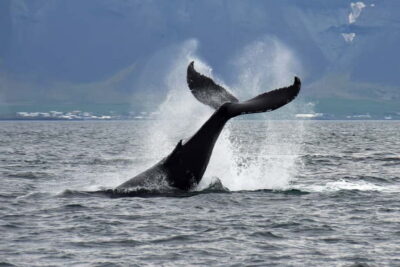
Traditional Whale Watching by Local Family Company
Read our review →
Browse the lists this tour appears in