
Reviewed · WALKING TOURS
Reykjavik: World War II Walking tour around the city centre
The most striking part of this Reykjavik World War II walking tour is that the invasion began at an ordinary-looking harbour, right in the middle of the city you are exploring today. Your guide uses old photographs and videos to place British soldiers into the streets around you, then explains how the later American presence changed Icelandic food, music, and social life. I like the walk to the Old Harbour and the way it links military events to everyday culture. I also like the small side streets and less obvious stops that you could easily miss on your own.
The main consideration is the subject matter. This is not a light sightseeing stroll, and it is not designed for children under 10. You will walk for two hours in almost any weather, with one small hill and benches at some, but not all, stops. Bring rain gear and good shoes, even in summer.
Key points to know before you book
- The Old Harbour marks the exact British landing place: The walk begins at Austurvollur, then heads to the spot where British forces arrived in May 1940.
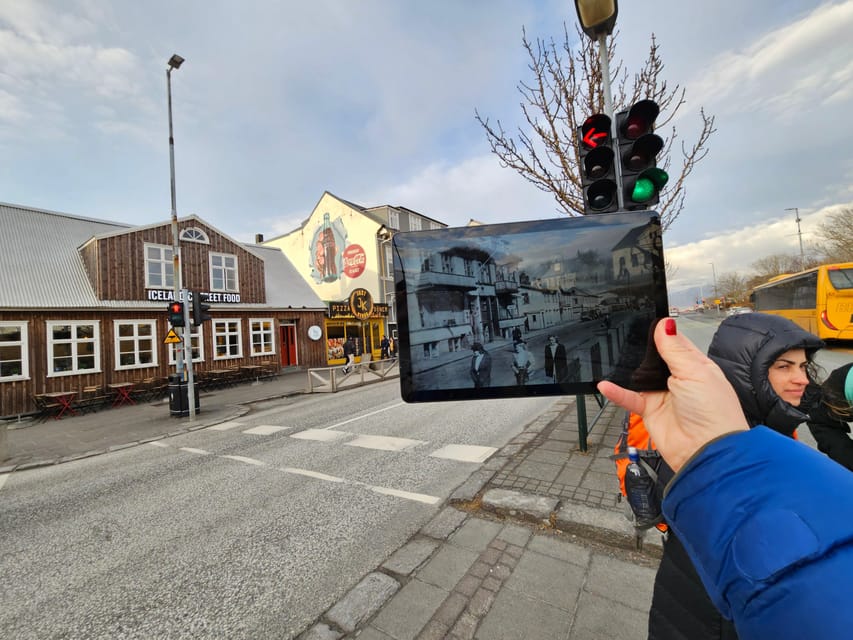
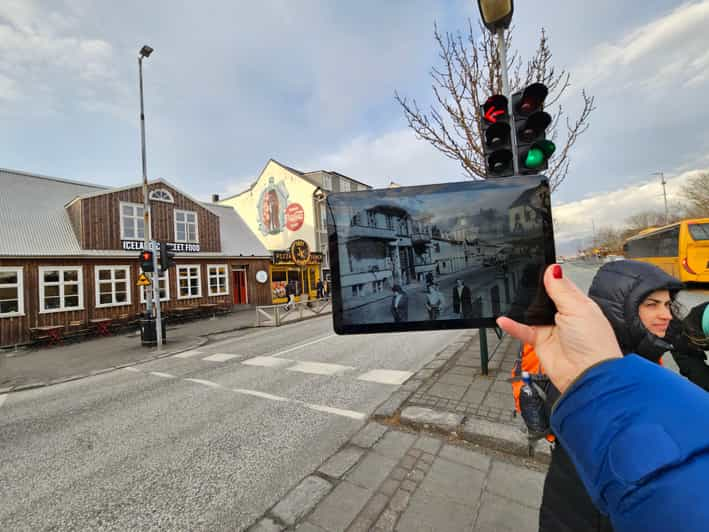
- Period photos and videos change the way you see Reykjavik: Your guide compares wartime images with the streets and buildings in front of you.
- The tour covers social change as well as military events: Expect discussion of American influence on Icelandic food, music, and daily habits.
- Lucky may guide your walk: One especially praised guide, Lucky, is described as funny, warm, and able to add ghost stories when guests show interest.
- Most of the route is flat and has no stairs: A small hill is included, and wheelchair users can join, though benches are not available at every stop.
- The $40 price is sensible for a focused two-hour tour: It offers a local guide, visual material, and a subject that standard city walks often skip.
Starting at Austurvollur beside Hotel Borg
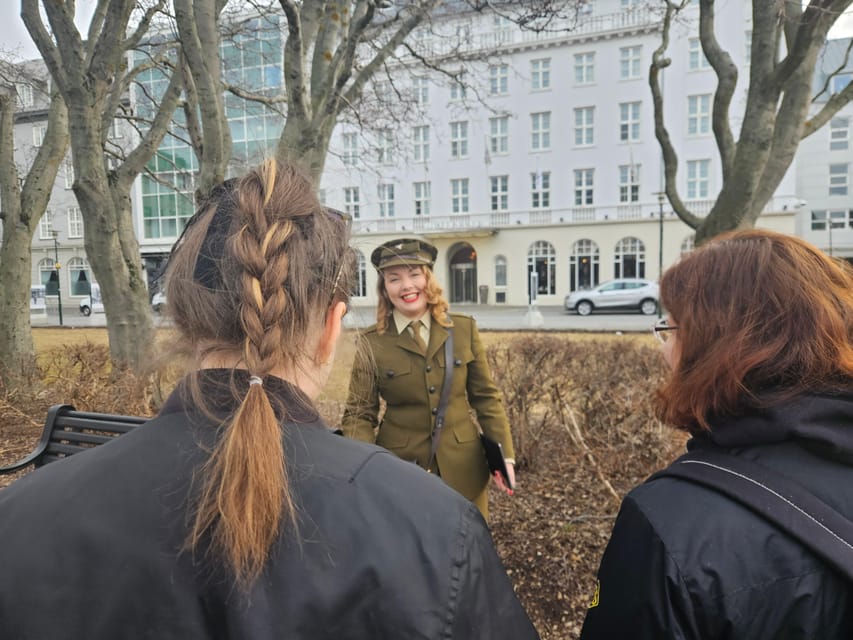
You meet your English-speaking guide outside Hotel Borg on Austurvollur, Reykjavik’s Parliament Square. Wait outdoors rather than going into the hotel. This is a central and easy place to reach, and the tour ends back here, so you do not need to arrange transport at the finish.
The opening location matters because it puts wartime Reykjavik in the middle of modern city life. You are not beginning at a distant museum or a reconstructed military site. You start among familiar city streets, then walk toward the harbour where the British occupation began.
I like this setup because it gives the tour a clear sense of direction. You are not simply hearing separate facts at scattered stops. You follow the route taken by the soldiers as they moved from the waterfront toward important buildings in the city centre.
The walk lasts two hours. That is long enough to build a proper story, but short enough to fit before lunch, after breakfast, or alongside other Reykjavik plans. You should still treat it as a real walking activity. There are several places to sit, but not every stop has a bench, and you go up and down a small hill.
More Walking Tours in Reykjavik
- Reykjavik Food Walk – Local Foodie Adventure in Iceland
★ 5.0 · 18,952 reviews - Reykjavík Small group Walking Tour – by CityWalk
★ 5.0 · 5,076 reviews - Reykjavik: Guided Foodie Walking Tour with 6 Tastings
★ 4.9 · 1,645 reviews
Reaching the Old Harbour and the British landing site
The Old Harbour is the key opening chapter. Here, your guide shows you the exact place where British forces landed in May 1940. The location turns an event that can feel remote and abstract into something you can locate on the ground.
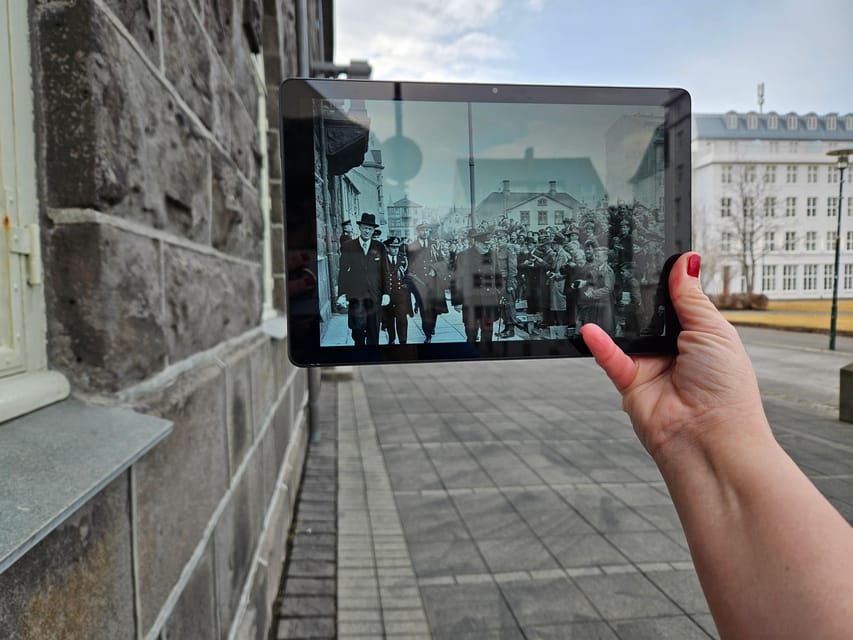
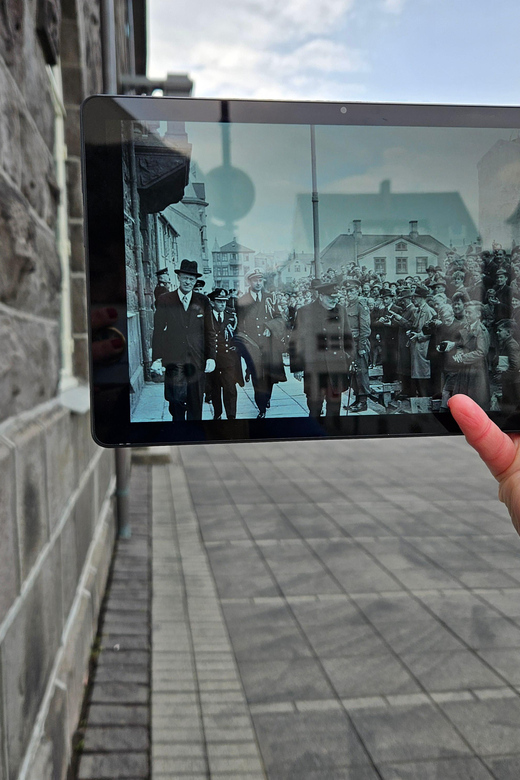
The tour is not only about troop movements or military strategy. Using period photographs and videos, your guide shows how this part of Reykjavik looked during the war and helps you compare it with the present-day waterfront. That visual comparison is one of the strongest parts of the experience. You can look at the harbour, then look at an image from the same area decades earlier.
I find this approach more useful than a long list of dates. The images give you something concrete to watch for as you walk. Buildings, streets, and open spaces become clues. You begin to see Reykjavik as a city that changed quickly under outside military pressure.
The harbour stop also gives you a practical sense of scale. From here, the route into the centre follows the direction of the original movement. The story has a physical line, and you can walk it rather than simply hearing about it.
Following the soldiers through Reykjavik Old Town
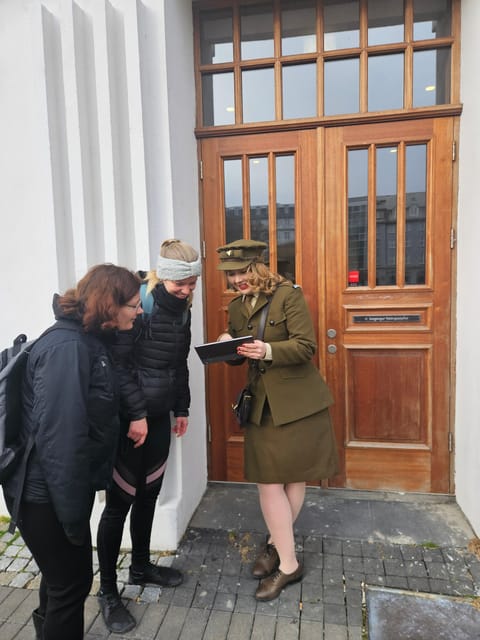
From the harbour, the group follows the route British soldiers took into the heart of Reykjavik. Along the way, the guide points out important buildings and explains how they were taken over as the occupation developed.
This part should suit you if you like history tied to streets and buildings. You are not entering a large military museum, and the experience does not depend on displays behind glass. The city itself is the setting, with the guide supplying the context that you would miss while walking alone.
The Old Town section also includes side streets that you might not otherwise notice. These are not presented simply as pretty shortcuts. They help show how compact the wartime city was and how close major events were to ordinary homes, businesses, and public spaces.
Because most of the route is flat and there are no stairs, the walk is manageable for many people with limited mobility. Still, it is worth being realistic. You will be outdoors for the full two hours, and seating is occasional rather than constant. Wheelchair users can join, but you should expect the small hill and check that the pace and terrain suit your needs.
The guide’s role is especially important here. One guide named Lucky was praised for being both funny and well prepared, with the ability to adjust the mood when guests showed interest in ghost stories. That suggests a tour with room for personality, though the central subject remains wartime Reykjavik rather than entertainment.
The German Residence and the city’s wartime tension
The German Residence is one of the named highlights, and it adds a different angle to the story. The British landing was not happening in a vacuum. Reykjavik was also connected to Germany and to the wider tension of the war, so this stop helps broaden the picture beyond the occupation itself.
The value of a stop like this is that it makes the tour less one-sided. You hear about the British arrival, but you also consider the German presence and the political pressure surrounding Iceland at the time. The guide can use the building and its setting to explain why particular places mattered.
You should not expect a grand military monument at every stop. Much of the appeal is the contrast between ordinary city surroundings and the serious events that unfolded there. The German Residence is useful precisely because it places international conflict inside Reykjavik’s everyday streets.
This is also where the tour’s focus on culture and society becomes important. The walk is not limited to who occupied which building. It asks what occupation meant for Icelanders and how foreign military forces affected the way people lived.
Same corner of the island, a completely different day out:
- Iceland: Northern Lights Bus Tour from Reykjavik
★ 4.1 · 11,161 reviews - Reykjavík: Whale Watching and Marine Life Cruise
★ 4.6 · 9,838 reviews - Reykjavik: Sky Lagoon Entrance Pass With 7-Step Spa Ritual
★ 4.8 · 6,166 reviews - Reykjavik: FlyOver Iceland Entry Ticket
★ 4.7 · 3,499 reviews
How American troops changed Icelandic life
A major strength of the tour is its attention to the American presence. The British landing is the clear starting point, but the story continues with American troops and the cultural changes they brought.
Your guide discusses changes in food and music, two subjects that make large historical shifts easier to understand. You hear not only about soldiers and buildings, but about what people ate and what music they danced to. These details give the occupation a human scale.
I especially like this part because it helps you understand influence as something more than a political fact. Military presence can alter routines, tastes, language, entertainment, and social contact. A discussion of food and dance may sound lighter than a discussion of occupation, but it shows how international events reached into ordinary life.
The tour also gives you a chance to look at US military presence through a more thoughtful lens. That does not mean the walk avoids the military facts. It means you are encouraged to consider both the practical impact and the social cost of foreign forces in Iceland.
If you already know the broad outline of World War II, this cultural angle may be the reason to book. If you want a detailed account of battles far from Iceland, this is probably not the right fit. The emphasis is on Reykjavik, occupation, local change, and the connection between world events and city life.
Why the visual material improves the walk
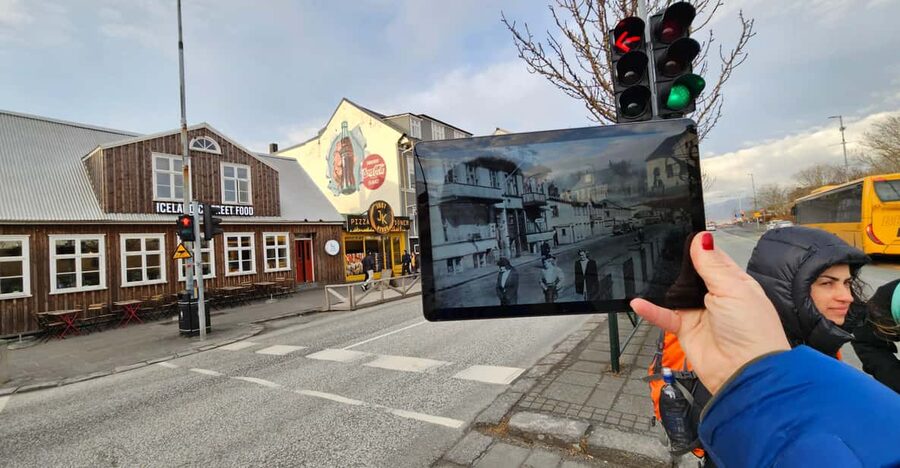
Period photographs and videos are not just decoration here. They help your guide show how Reykjavik has changed and make each stop easier to picture.
A walking tour can sometimes leave you trying to imagine a scene from a verbal description. The old images reduce that gap. You can compare the past and present as you stand in the same area, which gives the history a stronger physical connection.
This also makes the experience useful for first-time visitors. You do not need a detailed knowledge of Icelandic history before arriving. The guide builds the story as you move from Parliament Square to the harbour, through the Old Town, and back toward the meeting point.
The material is most effective when you take your time looking at it. Bring a camera, but do not expect photography to be the main activity. The point is to use modern Reykjavik as a reference for the older images, not to collect a set of standard city views.
Weather, shoes, and the pace of a two-hour walk
The tour runs in almost all weather, so your clothing can make or break the experience. Iceland can feel cold even in summer, and wind or rain is possible during any season. Pack waterproof rain gear, outdoor clothing, and comfortable shoes.
A small umbrella may be less useful than a proper waterproof jacket, though the information provided specifically stresses rain gear rather than a particular type of equipment. The practical message is simple: prepare to stay outside for two hours.
There are benches at several stops, but not at all of them. If standing for long periods is difficult, plan accordingly. The route has one small hill, while most of it is flat and free of stairs.
The pace should work well for people who enjoy walking but do not want a full-day excursion. You remain in central Reykjavik and finish at the starting point. That makes it easy to continue sightseeing afterward, return to your hotel, or stop for food nearby.
Is $40 a fair price for the experience?
At $40 per person, this is not the cheapest way to spend two hours in Reykjavik, but the price is reasonable for a live, specialized walking tour. You are paying for an English-speaking guide, a focused subject, visual material, and a route built around places that may not mean much without explanation.
The value is strongest if you enjoy history and want more than a general introduction to the city. A standard city walk may cover major landmarks, architecture, and local stories. This tour gives you a narrower subject and follows it in a clear sequence from the British landing to the city centre and the effects of American influence.
The price is less attractive if you are mainly looking for postcard views or a relaxed orientation walk. The subject matter leads the experience, and much of the reward comes from listening carefully.
The tour also offers free cancellation up to 24 hours before the start, along with a reserve-now-and-pay-later option. Those terms make it easier to fit the walk into a changeable Iceland itinerary, where weather and day trips can affect your plans.
Who will get the most from this Reykjavik walk?
I would recommend this tour to adults and older children who enjoy local history, military history, or the way global events affect daily life. It also suits repeat visitors who have already seen Reykjavik’s most familiar sights and want a more focused story.
It is a good choice if you like guides who add personality. Lucky, one guide associated with the experience, is praised for humor and for adapting the conversation when guests show an interest in ghost stories. You should still book for the wartime subject, not expect a ghost tour.
The walk may not suit children under 10 because of the material covered. If you want to bring younger children, a private tour can be arranged with the content adjusted for them.
You should also think about your energy and clothing. This is an outdoor walking tour in Icelandic weather, not a seated talk. Comfortable shoes and waterproof clothing are more important than dressing up for the city.
Accessibility and practical planning
The route is wheelchair accessible, with no stairs and mostly flat streets. The small hill is the main terrain issue, and not every stopping point has a bench.
Meet outside Hotel Borg in Austurvollur rather than inside the hotel. The walk ends at the same meeting point, which keeps the logistics simple and removes the need for a return bus or taxi.
The tour is offered in English with a live guide. Check the available starting times when booking, since the exact departure time is not fixed in the information provided.
Bring a camera if you want to record the places and compare them later with the period images. Snacks and drinks are not included, so carry water or plan to buy something before or after the walk.
Should you book the World War II walking tour?
Book it if you want to understand how the British landing, the American presence, and wartime pressure changed Reykjavik. The exact harbour location, the Old Town route, the German Residence, and the discussion of food and music give the walk more range than a simple military history lesson.
Skip it if you want a broad sightseeing tour, a museum visit, or an easy stroll with little standing. The weather is part of the deal, and the subject is serious.
For history-minded visitors, $40 is a fair price for two focused hours with a local English-speaking guide. Bring waterproof clothing, wear good shoes, and arrive ready to look at familiar streets in a very different way.
FAQ
Where does the Reykjavik World War II walking tour begin?
The tour begins outside Hotel Borg on Austurvollur, also known as Parliament Square. You should wait outside the hotel rather than going inside.
Where does the tour end?
The activity ends back at the meeting point outside Hotel Borg.
How long does the walking tour last?
The tour lasts two hours. Starting times vary, so check availability when booking.
What language is the tour offered in?
The tour is conducted in English with a live guide.
Does the tour visit the British landing site?
Yes. The route goes to the Old Harbour, identified as the exact place where British forces landed in May 1940.
Is the tour suitable for children?
The tour is not suitable for children under 10 because of the subject matter. A private tour can be arranged for younger children with the material adjusted.
Is the tour wheelchair accessible?
Yes. The route has no stairs and is mostly flat, though it includes a small hill. Benches are available at several stops but not all of them.
What should I bring?
Bring comfortable shoes, a camera, rain gear, and outdoor clothing. The tour runs in almost all weather, and drinks or snacks purchased along the way are not included.
Just added around Reykjavik
- Reykjavik: Whale and Puffin Watching RIB Boat Tour★ 4.6 · 179 reviews
- Reykjavik: Whale Watching & Lava Show★ 5.0 · 4 reviews
- Reykjavik: Whale & Marine Adventure Tour★ 4.3 · 71 reviews
- Reykjavik: Whale Watching Express★ 4.3 · 227 reviews
- From Reykjavík: Viking Horseback Tour in Hafnarfjörður★ 4.9 · 112 reviews
- Reykjavík: Horse Riding Tours★ 4.9 · 127 reviews
- The Siggi Tour from Reykjavík: 1.5 to 2-Hour Ride★ 4.5 · 27 reviews
- Icelandic Horse Riding and Whale Watching Cruise from Reykjavík★ 4.0 · 14 reviews
Walking Tours, compared.
Reykjavik Food Walk – Local Foodie Adventure in Iceland
Read our review →
Reykjavík Small group Walking Tour – by CityWalk
Read our review →
Reykjavik Folklore Walking Tour: Meet the Elves, Trolls & Ghosts of Iceland
Read our review →
Funky History Walking Tour in Reykjavik – With local storyteller
Read our review →Browse the lists this tour appears in