
Reviewed · MUSEUMS
Saga Museum – Entrance ticket
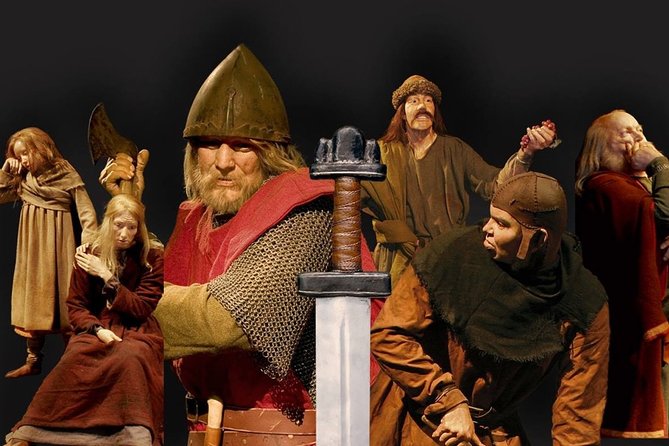
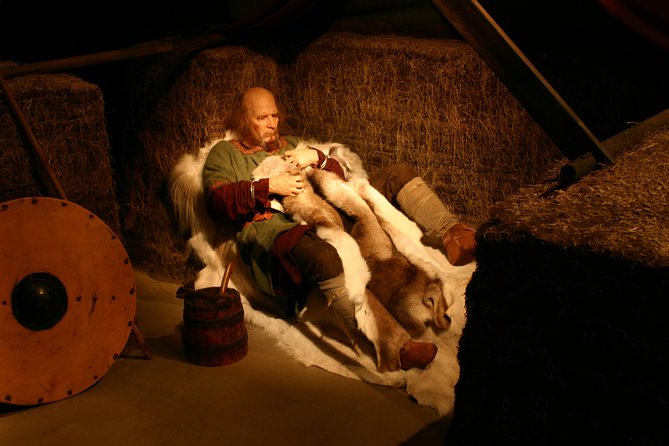
The Saga Museum brings Iceland’s early stories to life with lifelike wax figures arranged in full-size scenes. You’ll meet Leif Eiriksson, Snorri Sturlusson, Ingolfur Arnarson, and other figures tied to the Icelandic sagas, while an audio guide explains what you are seeing.
I like the clear, story-based format, especially for a first visit to Iceland. I also like the chance to dress as a Viking and handle replica weapons and armor, which gives children something to do beyond listening. The drawback is that this is a small museum with mostly static displays, so visitors looking for original artifacts, interactive technology, or a long afternoon attraction may find it limited.
Key points to know before you go
- Lifelike figures tell the story: About 18 to 20 scenes recreate major moments from Iceland’s early settlement and saga tradition.
- Audio guides keep the visit self-paced: Choose English, Icelandic, French, German, Russian, Spanish, or Swedish.
- Leif Eiriksson and Snorri Sturlusson feature prominently: The museum connects famous names with the wider story of Iceland.
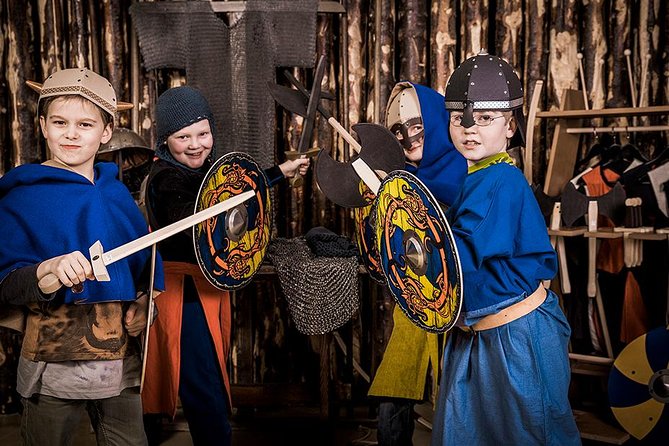
- Viking dress-up adds a family angle: You can try clothing, armor, and weapons after viewing the displays.
- Plan on 45 minutes to one hour: You can stay up to two hours, but the museum is compact.
- The $32 price works best as part of a harbor visit: Free parking and a central old harbor location make it easy to combine with other Reykjavik stops.
Entering Reykjavik’s old harbor museum
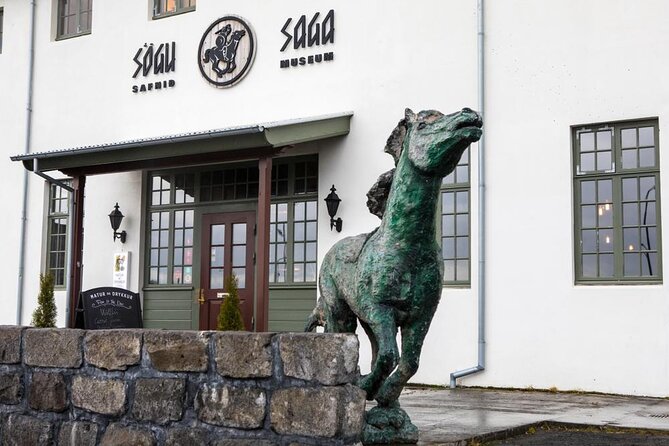
The Saga Museum sits in Reykjavik’s old harbor area, making it an easy addition to a day spent around the waterfront. You can arrive by public transportation, and free parking is included, which helps if you are using a rental car.
The museum is open daily from 10:00 a.m. to 5:00 p.m. The ticket gives you entry to the exhibits and the audio guide, so you do not need to fit into a scheduled walking group. That flexibility matters in Reykjavik, where weather can change quickly and your plans may shift during the day.
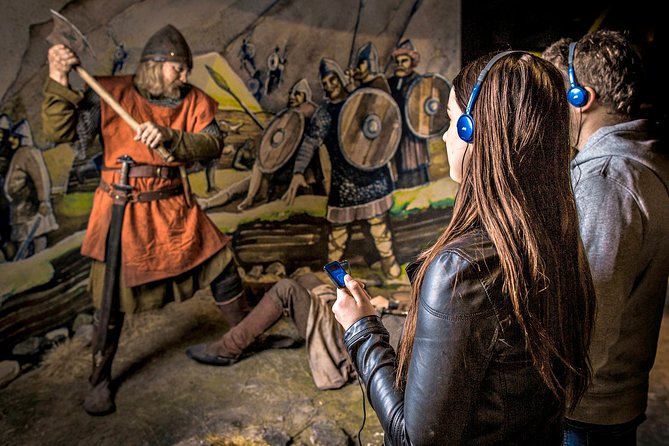
At the entrance, you receive an audio device. English is available, along with Icelandic, French, German, Russian, Spanish, and Swedish. You can also buy the narration as a booklet at the front desk if you prefer to read rather than listen.
I would allow about 45 minutes for a brisk visit and up to two hours if you listen carefully, spend time with each scene, and use the costume area. The museum is listed for one to two hours, but the shorter timing is more realistic for many people.
More Museums in Reykjavik
- Reykjavik: Perlan Museum Wonders of Iceland Entrance Ticket
★ 4.7 · 2,575 reviews - Reykjavík: Hop-On Hop-Off Bus and Perlan Museum Entry Ticket
★ 4.3 · 719 reviews - Reykjavik: Whales of Iceland Museum Entrance Ticket
★ 4.4 · 493 reviews
How the lifelike scenes tell Iceland’s story
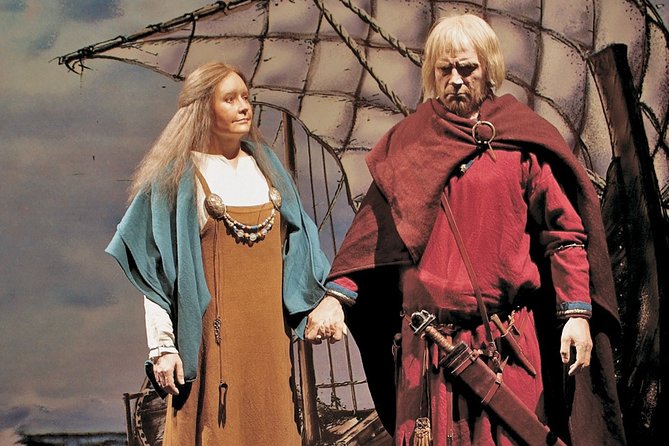
The museum’s main strength is its presentation. Instead of asking you to study a long wall of text, it places human figures into scenes from Icelandic history and saga tradition. The figures are highly realistic, with carefully made faces and striking eyes. In a few displays, the realism may be a little intense for very young children.
The scenes cover the people and events that shaped Iceland’s early identity. You learn about Leif Eiriksson, often called Leif the Lucky, and Ingolfur Arnarson, who is associated with the settlement of Reykjavik. Snorri Sturlusson appears as an important poet and writer connected to the sagas.
The museum also explains how Iceland earned its fearsome Viking reputation. That story is not simply a collection of battles. The exhibits connect exploration, settlement, belief, conflict, storytelling, and the hard conditions faced by people living on a remote North Atlantic island.
For me, the audio guide is important because the figures alone cannot explain the full setting. The narration gives the names, background, and meaning behind each scene. Without it, you might admire the craftsmanship but miss why a particular person or event matters.
The display count is described as about 18 to 20 exhibits. That slight variation is not important in practice. The point is that this is a compact museum, not a huge historical center. You can see the complete route without giving up half a day.
Leif Eiriksson, Snorri Sturlusson, and the saga tradition
The museum works best when you already know little about Icelandic history. If names such as Leif Eiriksson and Snorri Sturlusson are only familiar from a guidebook, the exhibits give you a useful introduction.
Leif Eiriksson represents Iceland’s connection to the wider Viking world and the age of Atlantic exploration. Snorri Sturlusson represents the literary side of Iceland’s past. His work helped preserve stories, characters, and beliefs that might otherwise have disappeared.
You also encounter Ingolfur Arnarson, linked with the settlement of Reykjavik. That connection gives the museum a local focus. You are not only learning about Vikings in a distant, general sense. You are learning how the history of this particular city and island began.
The audio format lets you set your own pace. You can listen to every explanation, skip ahead, or pause at a scene that interests you. If you are visiting with children, that control makes the museum easier to manage than a formal, fixed-length lecture.
One useful tip is to keep your attention on both the figures and the audio. The displays are designed to make you look first, but the story comes through the narration. Treating the museum as a quick photo stop would leave out much of its value.
The Black Death and the darker side of the story
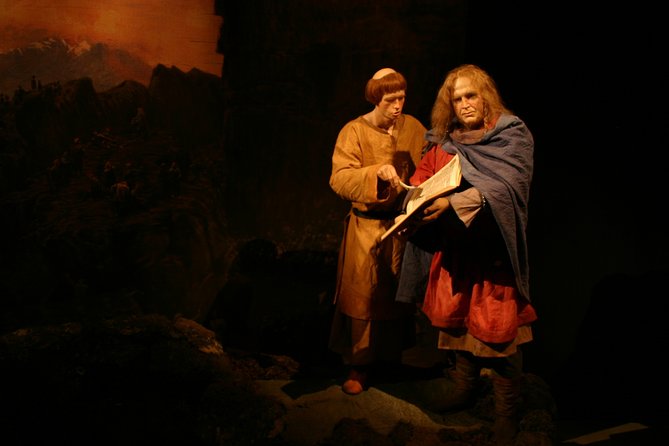
The museum does not present Iceland’s past as a string of heroic Viking adventures. One exhibit covers the Black Death, described as one of the most devastating pandemics in human history, with an estimated death toll between 75 and 200 million people.
This section adds needed weight to the visit. Medieval life involved disease, danger, violence, and sudden loss, not just exploration and dramatic legends. The museum’s approach makes the period more human and less like a costume show.
The subject matter may be serious for younger children, but the displays are part of an educational visit rather than a shock attraction. The audio guide gives you context, allowing you to decide how closely to study the scene.
I appreciate this wider range because it prevents the museum from becoming a simple celebration of Viking strength. Iceland’s past included resilience, but it also included hardship and fear. That balance helps you understand why the sagas can feel both heroic and grim.
Same corner of the island, a completely different day out:
- Reykjavik Food Walk – Local Foodie Adventure in Iceland
★ 5.0 · 18,952 reviews - Iceland: Northern Lights Bus Tour from Reykjavik
★ 4.1 · 11,161 reviews - Reykjavík: Whale Watching and Marine Life Cruise
★ 4.6 · 9,838 reviews - Reykjavik: Sky Lagoon Entrance Pass With 7-Step Spa Ritual
★ 4.8 · 6,166 reviews
Trying Viking clothing, armor, and weapons
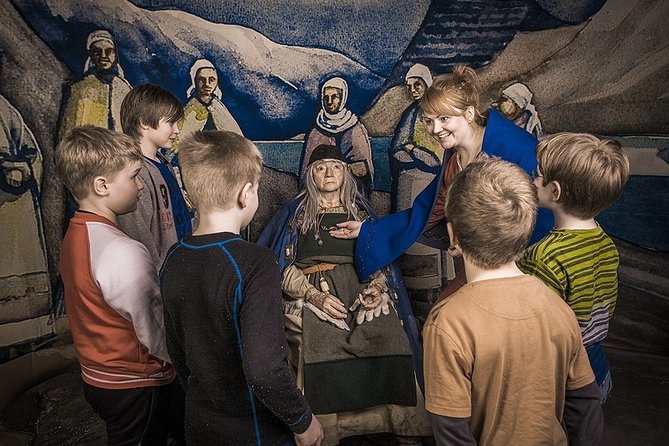
After seeing the displays, you can dress like a Viking and try Viking weapons and armor. This is one of the museum’s most useful features for families. Children who may lose interest during the audio sections get a hands-on moment at the end.
The costume area also makes the museum feel less formal. You are not limited to standing behind barriers and reading labels. You can connect with the period through clothing and equipment, even though the main displays remain static.
I would not book the museum solely for this feature. The costumes are an extra part of the visit, not a full activity program. But when combined with the lifelike scenes, they help break up the listening and viewing.
The figures themselves are the real visual highlight. Their expressions and eyes are made with unusual care, and some appear so lifelike that you may expect movement. That realistic style creates a strong first impression, though very young children could find a few figures unsettling.
Is the $32 admission good value?
At $32 per person, the ticket is not a bargain-priced museum visit. The value depends on how you use it. If you spend only 30 minutes looking quickly at the figures, the cost may feel high. If you listen to the full audio material, study the scenes, and use the dress-up area, the price is easier to justify.
The ticket includes admission, taxes, fees, and handling charges. Children under six enter free, which helps families with very young children. Free parking is another practical benefit, especially in a city where parking costs and availability can affect a short stop.
The museum also makes sense as part of a wider old harbor outing. You can pair it with other waterfront plans instead of making a special cross-city trip for one small attraction. Its daily 10:00 a.m. to 5:00 p.m. hours give you plenty of room to fit it into a Reykjavik schedule.
I would compare it with the cost of other indoor activities in Reykjavik and ask what kind of museum experience you want. For a short, focused introduction to Iceland’s saga tradition, the ticket is reasonable. For a large collection of archaeological objects or high-tech historical displays, it is less convincing.
Who will enjoy the Saga Museum most?
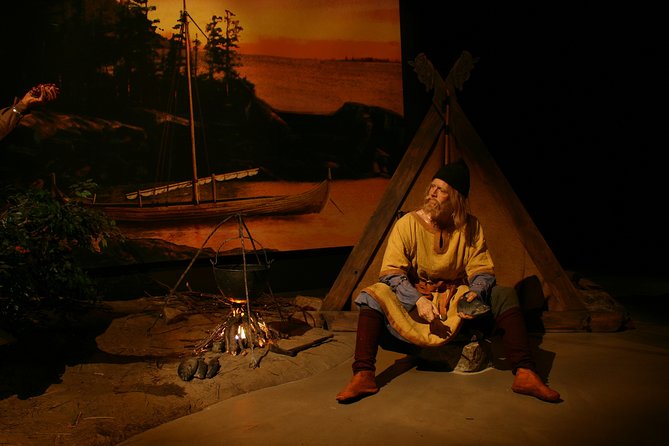
The museum suits first-time visitors to Iceland who want basic historical context before exploring the country. It also works well for families because the figures are visually memorable and the Viking clothing gives children a more active part in the visit.
It is a good choice on a rainy or windy day. You get a contained indoor activity that does not require a long time commitment. The old harbor location makes it convenient when you are already near the waterfront.
The museum may also appeal to readers who have encountered Icelandic sagas but want help connecting the names and stories. The audio guide turns a set of unfamiliar figures into a clearer sequence of people and events.
You may want to skip it if your priority is original artifacts, archaeological research, or interactive digital exhibits. The museum relies heavily on mannequins, dioramas, and narration. One display is described as a bonus exhibit with a humorous touch, but the overall format remains traditional.
A practical visit plan for one hour
If you have one hour, I would approach the museum in three stages:
- First 10 minutes: Walk through the opening scenes and get a feel for the figures, clothing, and setting.
- Next 30 minutes: Use the English audio guide and stop for the main historical explanations, especially the sections on Leif Eiriksson, Snorri Sturlusson, Ingolfur Arnarson, and the Black Death.
- Final 15 to 20 minutes: Return to the displays that caught your attention, then try the Viking clothing, armor, and weapons.
You can spend longer if you want to hear every audio segment. The museum has a maximum capacity of 50 people, but your visit is still self-paced rather than a large guided procession.
Book at least 24 hours ahead if you want the option of a full refund. Cancellation later than that is not refundable, and changes made within 24 hours are not accepted. Confirmation is provided when you book, and the ticket is mobile, so you can keep it on your phone.
Should you book the Saga Museum?
Book it if you want a short, visual introduction to Iceland’s Viking and saga past, especially if you are traveling with children or need an indoor stop in Reykjavik. The realistic figures, multilingual audio guide, and costume area give the museum more life than a simple row of historic panels.
Skip it if you want a large museum with original objects, advanced virtual displays, or several hours of material. At $32, the visit needs to fit your interests and schedule.
For most people, I would treat the Saga Museum as a focused 45-minute to one-hour stop near the old harbor. Go for the storytelling, the remarkably realistic scenes, and the useful introduction to Iceland’s early history. Keep your expectations realistic, and the experience can earn its place in a Reykjavik day.
FAQ
Where is the Saga Museum located?
The Saga Museum is in Reykjavik’s old harbor area.
What are the opening hours?
The museum is open every day from 10:00 a.m. to 5:00 p.m.
How long should I plan for the visit?
The expected visit lasts about one to two hours, although many people can see the main displays in about 45 minutes.
Is an audio guide included?
Yes. Admission includes an audio guide, with choices in Icelandic, English, French, German, Russian, Spanish, and Swedish.
Can I visit without using an audio device?
Yes. The audio guide can also be purchased as a booklet at the front desk.
Is the museum suitable for children?
Most people can take part, and the museum offers Viking clothing, armor, and weapons for visitors to try. Children under six receive free admission.
Is cancellation available?
Yes. You can cancel at least 24 hours before the experience start time for a full refund. Cancellations or changes made less than 24 hours in advance are not accepted for a refund.
Just added around Reykjavik
- Reykjavik: Whale and Puffin Watching RIB Boat Tour★ 4.6 · 179 reviews
- Reykjavik: Whale Watching & Lava Show★ 5.0 · 4 reviews
- Reykjavik: Whale & Marine Adventure Tour★ 4.3 · 71 reviews
- Reykjavik: Whale Watching Express★ 4.3 · 227 reviews
- From Reykjavík: Viking Horseback Tour in Hafnarfjörður★ 4.9 · 112 reviews
- Reykjavík: Horse Riding Tours★ 4.9 · 127 reviews
- The Siggi Tour from Reykjavík: 1.5 to 2-Hour Ride★ 4.5 · 27 reviews
- Icelandic Horse Riding and Whale Watching Cruise from Reykjavík★ 4.0 · 14 reviews
Museums, compared.

Perlan Museum Wonders of Iceland Entrance Ticket
Read our review →
Hop-On Hop-Off Bus and Perlan Museum Entry Ticket
Read our review →

Aurora Reykjavík, The Northern Lights Center Museum Visit
Read our review →
Ancient Historical Site Tour at the Caves of Hella
Read our review →
Browse the lists this tour appears in