
Reviewed · ICE CAVE TOURS
Small-Group Ice Cave Tour from Jökulsárlón
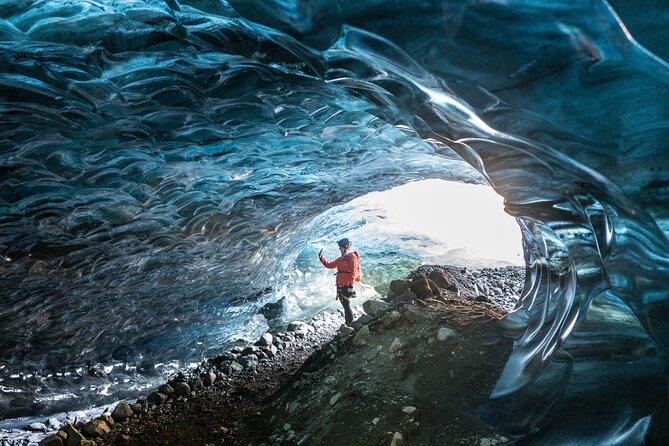
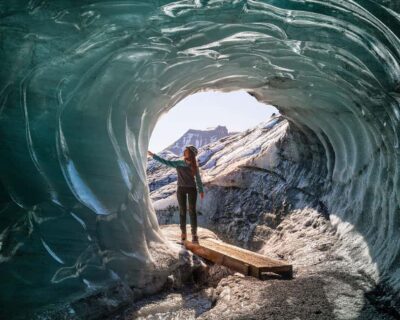
The best part of this tour is that the ice cave is not a polished attraction. It is a living, temporary formation inside Vatnajökull, shaped by meltwater, weather, and the movement of the glacier. You may walk beneath blue ice, around frozen bubbles, and through low passages that look quite different from the cave shown in a brochure.
I like the small-group format, with no more than 12 people, and the guides’ habit of helping with photographs. Guides including Laura, Robert, Alex, and Sindri have been praised for explaining the ice, helping nervous walkers, and giving people time to frame a good shot. I also like that helmets, crampons, headlights, and transport from the meeting point are included.
The main caution is simple: the cave can change or be crowded. Rain may flood the main cave, bad weather may force a delay, and several companies may use the same accessible cave at once. Your route, hike length, and time underground can vary from day to day.
Key points to know before you book
- The meeting point is at Jökulsárlón, not at your Reykjavík hotel. You must arrange your own way to the glacier lagoon area.
- The cave changes with the season, so the exact shape, entrance, and route cannot be promised.
- Crampons, helmets, and headlights are supplied, but warm clothing and suitable shoes are your responsibility.
- The walk takes about an hour and includes roughly 524 feet, or 160 meters, of elevation gain.
- The group limit is 12 people, though other tour groups may be inside the cave at the same time.
- The price is $188 per person, a fair rate if you value safety equipment, transport, and a guide who gives personal help.
Why Vatnajökull makes this different
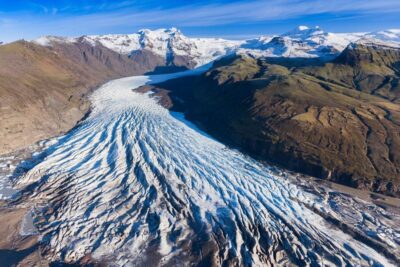
Vatnajökull is Europe’s largest glacier, and this tour gives you a close look at one small part of an enormous ice cap. The glacier is not a fixed sheet of white ice. It moves, melts, cracks, and drains water through channels that may become caves for a short time.
That short life is part of the appeal. An ice cave found one week may be unsafe or gone a few weeks later. A cave that looks tall and open in one season may become low, narrow, or flooded after heavy rain. The guide chooses the safest usable cave on the day, so the exact experience is never fully known in advance.
You should set your expectations accordingly. This is not a guaranteed walk through a huge tunnel with towering blue walls. Sometimes the cave is large enough to explore several chambers. At other times, it is a smaller formation with a low entrance and a shorter route. The natural uncertainty makes the outing more genuine, but it also means the advertising photographs cannot promise your exact cave.
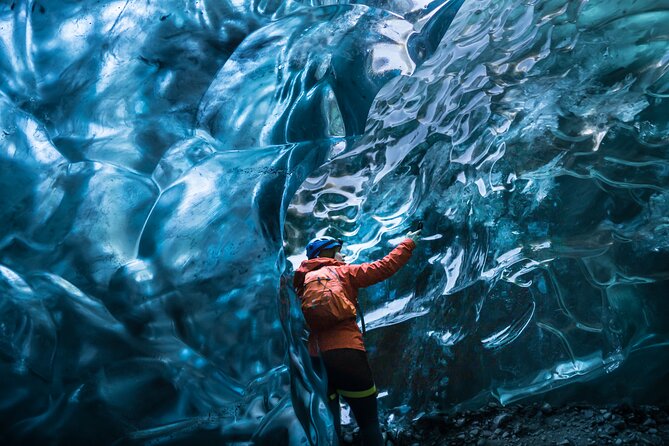
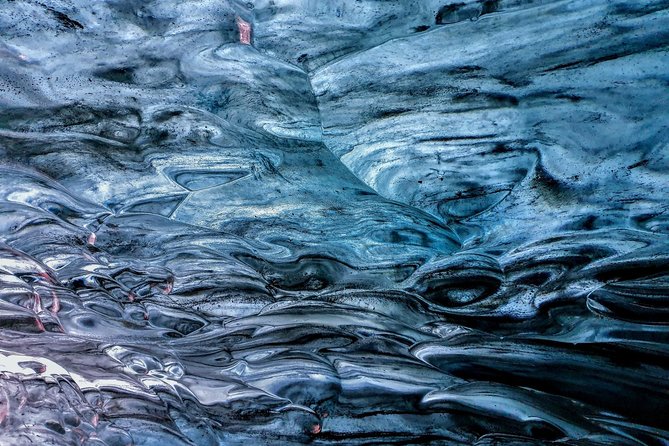
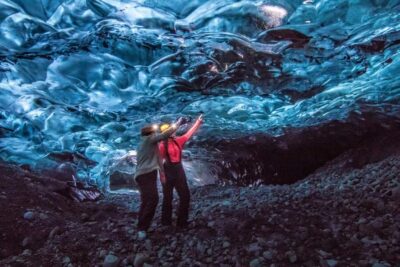
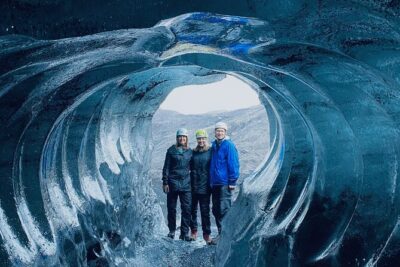
The blue color comes from dense glacier ice and the way light passes through it. In places, you might see clear blue walls, frozen bubbles, dark bands, or layers of ice mixed with rock. The outside entrance may look plain. Once your eyes adjust, the interior can reveal far more detail than the opening suggests.
More Ice Cave Tours in Southeast Iceland
- Jökulsárlón: Vatnajökull Ice Cave Guided Tour
★ 4.2 · 2,046 reviews - Skaftafell: Ice Cave Tour and Glacier Hike
★ 4.5 · 1,746 reviews - Jökulsárlón: Crystal Ice Cave Super Jeep Tour
★ 4.1 · 1,681 reviews
Getting to the glacier from Jökulsárlón
The activity begins at Jökulsárlón, the famous glacier lagoon on Iceland’s southeast coast. This is important if you are planning from Reykjavík. The tour does not include hotel pickup, and one account describes the drive from Reykjavík to the meeting area as about five hours.
Build the ice-cave tour into a south-coast road trip rather than treating it as a quick Reykjavík excursion. You will need to reach the meeting point on your own, and the activity ends there as well. If you are already visiting Jökulsárlón, the arrangement is much easier.
From the meeting point, you take a roughly five-mile, or nine-kilometer, drive toward the glacier. The vehicle ride is part of the practical setup rather than a sightseeing tour, but it puts you near the day’s chosen access point. One account describes the ride as bumpy, which is hardly surprising on rough glacier roads.
Look for the Glacier Trips vehicle and signage when you arrive. The meeting area has several operators, so allow time to get your bearings. Check your email and phone the day before, and again before leaving for the meeting point. Weather or access conditions can lead to a last-minute time change.
The walk to Fláajökull’s ice cave
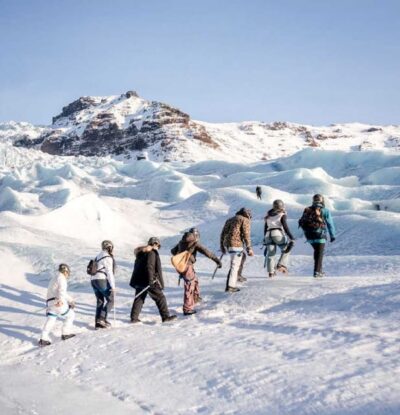
At the glacier access point, the guide provides a helmet, crampons, and a headlight. You bring your own coat, gloves, trousers, and footwear. The supplied crampons are a major help on icy ground, but they do not turn the walk into an easy stroll.
The approach takes about an hour and includes approximately 160 meters of elevation gain. The precise route changes with the cave location and the condition of the glacier. You may cross rough ground, loose stones, and uneven ice, so you need to watch your footing rather than spend the whole walk looking through your camera.
The guide leads the group across the glaciated terrain and talks about how the glacier formed and changed during the past century. This is where a small group matters. Guides such as Alex and Laura have been praised for answering questions, checking that people feel safe, and helping with photographs instead of simply leading everyone from one marker to the next.
The route can be physically demanding for some people. The description says most people can participate, but the hike still requires reasonable fitness and comfort with uneven ground. One group had to use a closer cave because some people lacked suitable footwear and fitness for the longer route. That is a useful warning: your own ability matters, but the group’s pace and equipment can also affect the final cave choice.
What it feels like inside the ice
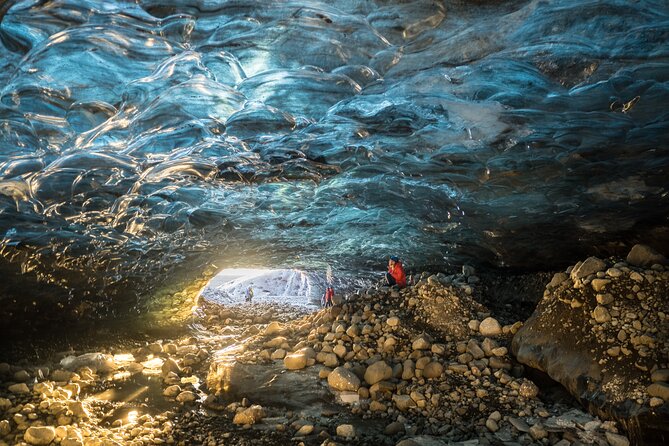
The entrance may not look impressive at first. You may see what appears to be a dark opening in rock and ice, then realize that the walls, ceiling, and floor are all part of the glacier. The interior can include several chambers, low passages, and areas where rock has fallen onto the ice.
Expect to duck in places. You may need to keep checking both above and below you, since the ground can include loose gravel and sizeable rocks. This is not a place for rushing. Crampons help, but they do not remove the need for care.
The planned time inside is about 30 to 40 minutes. In practice, some outings have lasted longer, particularly when the cave was large and the guide could take the group into several chambers. Other visits have been shorter because of weather, access, or the condition of the formation.
Your guide may ask you to turn off your headlight inside the blue ice. That can make the cave feel darker at first, but it allows the natural color and translucence of the ice to show more clearly. Bring a camera or phone, but keep it secure while walking. The strongest photographs often come after you stop, look up, and let the guide suggest where to stand.
The guides receive especially strong praise for photo help. Laura has been singled out for giving people time in each section and explaining how to photograph the blue ice. Robert has helped groups take pictures and supported people who felt uneasy in narrow spaces. This hands-on help adds real value, particularly if you are traveling without a tripod or a companion who knows how to frame cave photographs.
More boat rides on the glacier lagoon:
- Reykjavik: Jokulsarlon Glacier Lagoon Full-Day Guided Trip
★ 4.7 · 3,302 reviews - From Reykjavik: Jökulsárlón Glacier Lagoon and Diamond Beach
★ 4.5 · 1,389 reviews - Reykjavik: South Coast, Diamond Beach, and Jökulsárlón Tour
★ 4.5 · 1,254 reviews - Jökulsárlón: Vatnajökull Glacier Guided Hiking Tour
★ 4.7 · 921 reviews
Crowds, cave changes, and the limits of nature
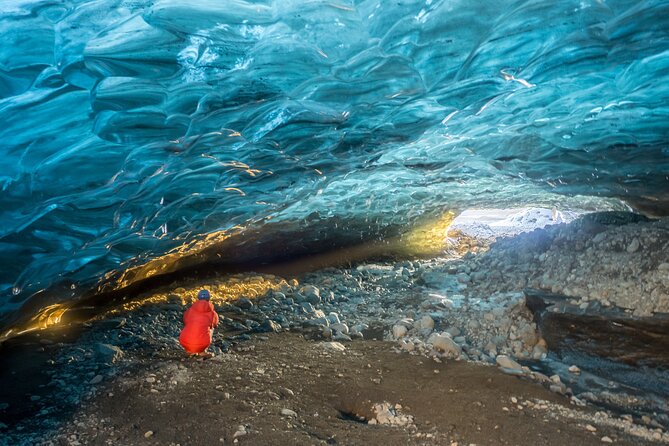
A small group does not mean you will have the cave to yourself. Other companies may bring groups into the same formation, especially when only one cave is safe and accessible. You may have quiet moments inside, but you should be ready to share the space.
Crowds are the biggest complaint about the outing. Several groups can wait at the entrance, move through the same chambers, or pause for photographs in the best blue-ice sections. A smaller group helps your guide manage time and attention, but it cannot control every other operator in the cave.
Winter timing may help with crowd levels, though it does not guarantee solitude. One January visit found the cave less busy, while another account described a crowded cave despite a good overall experience. Your exact date, weather, and the cave chosen that morning all matter.
Rain creates another uncertainty. A main cave may flood, forcing the guide to use a smaller alternative. That is not a failure of the tour. It is the sensible response to a natural formation that can change quickly. Still, you should book this knowing that the substitute cave may not match the size shown in promotional photographs.
The provider puts safety first and may alter the hike, cave, or schedule. If poor weather cancels the activity, you can choose another date or receive a full refund. If the planned cave is not accessible, an alternative is offered, with the price difference refunded when applicable.
What the $188 price includes
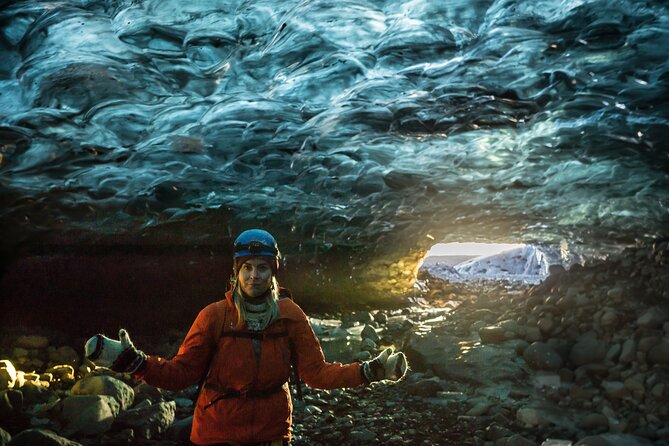
At $188 per person, this is not a cheap add-on. The value comes from the parts you would find difficult to arrange alone: a guide who knows the glacier access route, transport from the meeting point, safety equipment, and a careful decision about which cave is usable that day.
The included helmet, crampons, and headlight save you from bringing or renting specialized gear. The guide also handles the route across a moving, uneven glacier environment. For a first ice-cave visit, that guidance is worth more than a basic transport-only excursion.
The small group adds another layer of value. A maximum of 12 people is not private, but it gives the guide a better chance to answer questions, adjust the pace, and help with pictures. Some departures may have 14 or 15 people in practice according to individual accounts, so I would confirm the current group limit before booking if space is a major concern.
The price does not include clothing, shoes, food, drinks, hotel pickup, or tips. You should arrive ready for cold, wet, changeable conditions. There is no meal stop built into the short activity, so handle food and drinks before or after the tour.
Who will enjoy this ice-cave tour
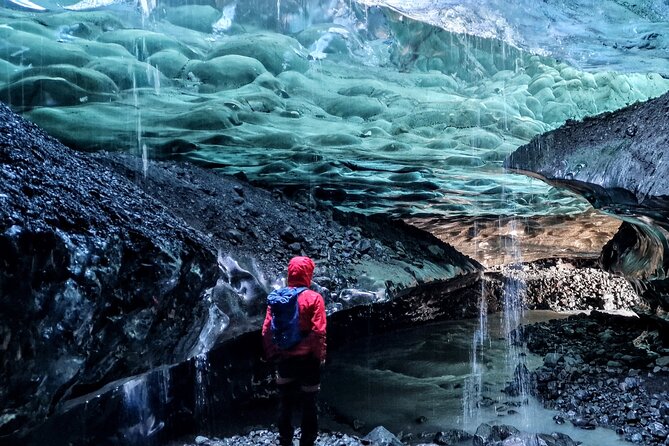
I would choose this for someone who wants a real glacier outing rather than a quick photo stop. You should enjoy walking on rough ground, accept that the cave may be small, and be willing to follow the guide’s safety decisions.
It suits photographers, especially those who want help with phone pictures. It also works well for couples and small groups who prefer personal guidance over a large coach excursion. Guides have helped people with claustrophobia, but narrow spaces are still part of the experience, so you should think honestly about your comfort level.
This is less suitable if you need a fixed itinerary, guaranteed blue walls, or a long underground walk. It is also a poor fit if you plan to drive from Reykjavík and return the same day without allowing a very long road journey. The tour itself lasts around two and a half to three hours, but reaching Jökulsárlón is the larger time commitment.
The hike may not suit everyone in your party. Good shoes and a reasonable level of fitness are important, and a weaker group member can affect the route. Ask the operator about current conditions if you are unsure.
Booking, weather, and practical timing
The tour is offered in English, and confirmation arrives within 48 hours, subject to availability. It is popular enough that bookings are often made about 33 days ahead, so I would not wait until the last moment for a specific travel date.
You can cancel for a full refund up to 24 hours before the start time. Changes made inside that 24-hour window are not accepted, and the local time applies. Weather cancellations are handled separately through a new date or a full refund.
Keep checking your email and phone the day before the tour. Delays and route changes can happen early in the morning, and one delayed departure caused confusion for people who did not see the message in time. At the meeting point, identify the correct vehicle before assuming you have found your group.
Give yourself time before and after the activity at Jökulsárlón. Since the tour returns to the starting point, you can continue your coastal sightseeing afterward, but do not plan a tight connection. A longer cave route, a delayed start, or difficult weather can push the finish later.
Should you book it?
I would book this tour if you are already exploring southeast Iceland and want a guided look inside a temporary glacier cave. The strongest reasons are the small group, supplied safety gear, flexible route, and guides who take time to explain the ice and help with photographs.
I would skip it only if you need certainty. The cave may be smaller than expected, shared with other groups, flooded, or reached by a shorter route than advertised. That is the nature of Vatnajökull, not a promise that every departure will look like a postcard.
For the best chance of enjoying it, arrive with sturdy footwear, warm layers, realistic expectations, and a little patience. If you can accept the glacier on its own terms, $188 buys a memorable, close-up experience that is difficult to reproduce without professional help.
FAQ
Where does the ice-cave tour begin?
The tour begins at Jökulsárlón, Iceland, and ends back at the same meeting point. Hotel pickup and drop-off are not included.
How long does the activity last?
The tour usually takes about two and a half to three hours, depending on weather and the location of the cave. The walk to the cave takes roughly an hour, and the planned time inside is about 30 to 40 minutes.
What equipment is provided?
The tour includes a helmet, crampons, and a headlight, along with guide services, transport from the meeting point, and all fees and taxes.
Do I need to bring my own clothing and shoes?
Yes. Clothing and shoes are not included. You are responsible for arriving with suitable footwear and clothing for a cold, uneven outdoor environment.
Will I visit the same ice cave shown in photographs?
Not necessarily. Ice caves form naturally and change with weather, melting, and seasonal conditions. The guide selects the safest accessible cave, so the route and cave can vary each day.
What happens if bad weather cancels the tour?
You will be offered an alternative date or a full refund if poor weather causes the cancellation. If the selected cave is inaccessible, an alternative activity or cave may be offered, with the price difference refunded when applicable.
Just added around Southeast Iceland
- Vatnajökull: Short Glacier Encounter Walk with 4×4 Transfer★ 4.9 · 201 reviews
- Skaftafell: Half-Day Vatnajökull National Park Glacier Hike★ 4.9 · 83 reviews
- Skaftafell: Glacier Hike & Ice Climbing Adventure★ 5.0 · 28 reviews
- South Coast Including Vatnajökull National Park and Jökulsárlón Glacier Lagoon★ 4.0 · 4 reviews
- Skaftafell: Blue Ice Cave & Glacier Hike on Vatnajökull★ 4.5 · 114 reviews
- Airplane flight over glacier lagoons and Iceland’s highest peak★ 5.0 · 3 reviews
- Crystal Treasures of Vatnajökull: Ice Cave Adventure★ 5.0 · 89 reviews
- Skaftafell Ice Caving & Glacier Hike★ 5.0 · 229 reviews
Ice Cave Tours, compared.
Ice Cave by Katla Volcano Super Jeep Tour from Vik
Read our review →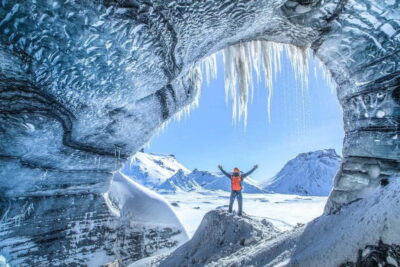
Katla Ice Cave & South Coast Waterfalls Tour
Read our review →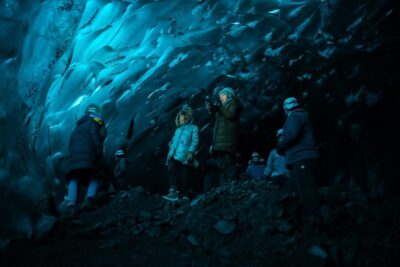
Browse the lists this tour appears in