
Reviewed · VOLCANO TOURS
Volcano Movie – Experience the Latest Eruptions in Iceland
Iceland’s eruptions are not just old stories in a geology book. They have closed airports, changed coastlines, forced evacuations, and reshaped daily life. At LAVA Centre in Hvolsvöllur, this 4K volcano film brings together footage from eruptions across Iceland, including Eyjafjallajökull in 2010 and the more recent Fagradalsfjall series.
I like two things here. First, the film keeps its focus on actual eruption footage rather than padding the experience with a long lecture. Second, the choice to use sound instead of voice-over lets the cracking earth, rushing lava, and explosive force carry the story. The main consideration is that this is a cinema ticket, not a guided volcano trip, and the no-food-or-drink rule may matter if you are planning a longer stop.
Key points to know before you go
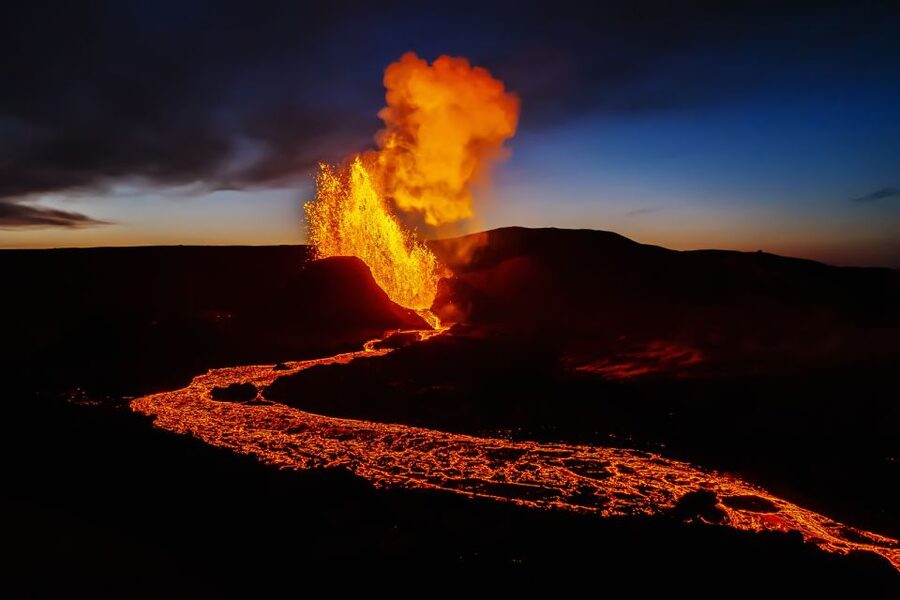
- The film covers more than a century of eruptions, beginning with Katla in 1918 and moving through Hekla, Askja, Surtsey, the Westman Islands, Krafla, and later events.
- Eyjafjallajökull gets special attention, including the 2010 eruption that disrupted air traffic across Europe.
- Holuhraun in 2014 and 2015 is part of the story, even though its global impact was far less visible than Eyjafjallajökull.
- There is no spoken narration, so you follow the story through images, natural sound, and the order of events.
- The ticket costs $16 per person, making it a reasonably priced add-on at the LAVA Centre if you want more than a quick roadside stop.
- The cinema is wheelchair accessible, and free information about Icelandic earthquakes and nearby volcanoes is available at the entrance.
A powerful introduction to Iceland’s active earth
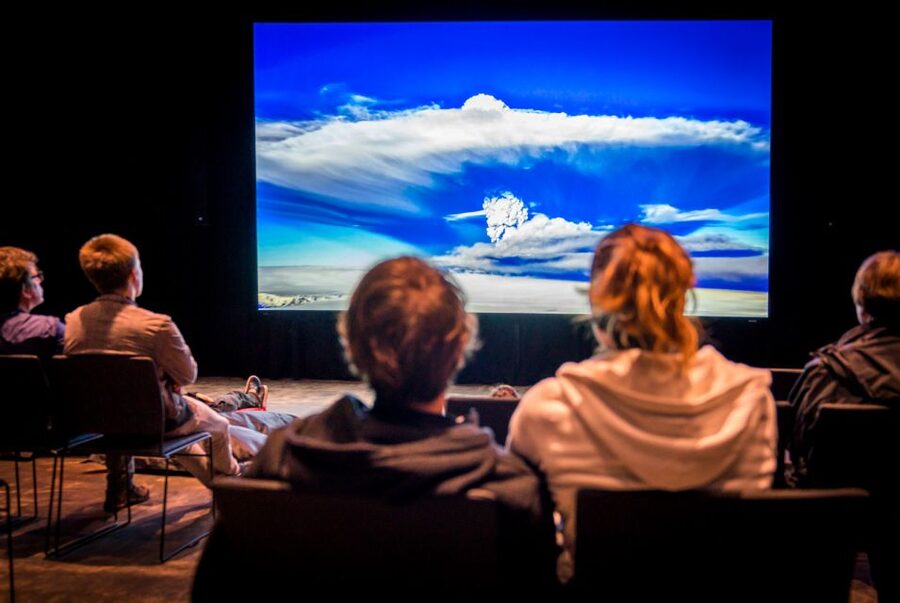
Iceland sits in a place where volcanic forces are close to the surface. You do not need a geology degree to appreciate that fact, but a little context makes the footage more meaningful. The film gives you that context through a timeline of major eruptions rather than through a long spoken explanation.
The story begins with Katla in 1918, then moves through eruptions at Hekla in 1947, Askja in 1961, Surtsey in 1963, the Westman Islands in 1973, and Krafla from 1975 onward. These names may mean little before your visit. By the end, they form a record of how often Iceland’s volcanic systems have changed the country.
The overview is useful because it places recent events in a longer pattern. Iceland has an eruption roughly every four to five years on average, though that does not mean eruptions arrive on a fixed schedule. Some are isolated events. Others come as part of a longer series, as with the recent activity called Fagradalseldar.
You get a better sense of scale when the film connects distant dates and places. A black-and-white or older historical record can feel remote, while the newer 4K footage puts you close to moving lava and erupting craters. The change in image quality also shows how much our view of volcanic activity has improved.
More Volcano Tours in the South Coast
- Ice Cave by Katla Volcano Super Jeep Tour from Vik
★ 4.5 · 1,100 reviews - Lava Centre Interactive Volcano Exhibition
★ 4.5 · 209 reviews - Katla Volcano Ice Cave – Super Jeep Tour from Vik
★ 4.5 · 199 reviews
The 2010 eruptions that changed air travel
The section on 2010 is likely to be the most familiar part of the film. It covers the Fimmvörðuháls eruption, followed by the Eyjafjallajökull eruption that disrupted air traffic across Europe for days.
Eyjafjallajökull became famous partly because its name was hard for many people to pronounce. The real story is far more important than the name. Ash from the eruption created serious risks for aircraft engines, and flight cancellations spread well beyond Iceland. A local eruption became a continent-wide transport problem.
The film helps you connect the dramatic news reports with the physical event itself. Instead of thinking only about grounded aircraft and airport closures, you see the volcanic force that caused them. The eruption was not simply a spectacular fountain of lava. Its ash, location, and interaction with ice made it especially disruptive.
The nearby Fimmvörðuháls eruption adds another layer. It happened before Eyjafjallajökull’s larger eruption and forms part of the same remarkable period of activity. Seeing the two events together gives you a clearer picture of how volcanic episodes can unfold over time.
For anyone planning a visit to South Iceland, this section has practical value. The region is full of places connected to volcanic activity, glaciers, farms, roads, and hiking routes. The film gives you a useful frame for understanding why the area can be both scenic and unpredictable.
Holuhraun, a huge eruption with less publicity
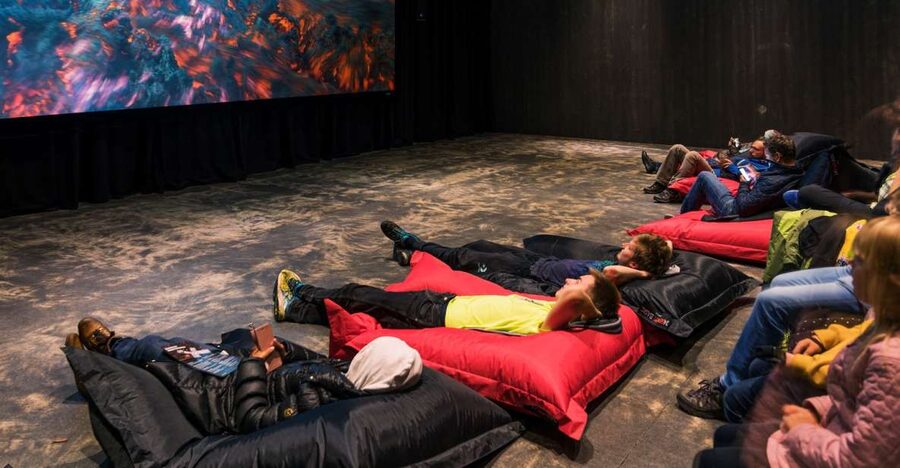
Holuhraun is one of the film’s most useful subjects because it received less public attention than Eyjafjallajökull. The eruption took place from 2014 into 2015 and was massive, yet it did not shut down European air travel in the same way.
That difference matters. Media attention does not always match the size or scientific importance of an eruption. Holuhraun shows how location, wind, ash, and nearby communities can shape the effects of volcanic activity.
The film presents this event as part of the wider story of Iceland’s active interior. You can see the scale of the eruption and gain a better understanding of how much volcanic material can be released over a long period. It also reminds you that an eruption can be enormous without becoming a daily headline outside Iceland.
I like this part because it broadens your view beyond the one eruption most people know. If your interest begins with Eyjafjallajökull, Holuhraun gives you a more balanced picture of Icelandic volcanism. It also makes clear that the risks are not identical from one eruption to another.
From Grímsvötn to Fagradalsfjall
The film then moves to the Grímsvötn eruption in 2011 and the more recent eruptions at Fagradalsfjall, also known as the Fagradalseldar series. These events bring the story closer to the present and show that volcanic activity in Iceland remains a current reality.
Grímsvötn is included as one of the key modern eruptions. Its place in the film helps connect the older timeline with the recent series of eruptions in the Reykjanes area. Fagradalsfjall is especially relevant if you are visiting Iceland after seeing news reports or photographs of fresh lava fields.
You should not expect the movie to function as a live eruption alert or a substitute for current safety information. It is a record and presentation of past events. Conditions around active volcanic areas can change, so use official local information if you are planning a separate visit to an eruption site.
The Fagradalsfjall section also gives the film a strong sense of the present. The older events establish Iceland’s volcanic pattern, while the recent eruptions show that the story is still being written. That contrast is one of the main reasons the film works well as a stop during a South Iceland sightseeing day.
Same corner of the island, a completely different day out:
- Reykjavík: South Coast Waterfalls, Black Sand & Glacier Tour
★ 4.8 · 11,030 reviews - Iceland South Coast Full Day Small-Group Tour from Reykjavik
★ 5.0 · 5,988 reviews - South Coast Day Tour Black Sand Beach & Waterfalls from Reykjavik
★ 4.5 · 2,697 reviews - South Coast Classic: Full-Day Tour from Reykjavik
★ 4.6 · 2,457 reviews
Why the 4K presentation matters
The film uses footage shot in 4K or better. That is not just a technical label. Eruptions involve small details that can disappear in poor video: glowing cracks, shifting lava, bursts of ash, and changes in the shape of a crater.
High-resolution images also help you judge scale. A lava flow can look like a slow orange stream in one shot, then reveal its size when compared with nearby ground or structures. A plume can appear soft from a distance but much more forceful when the image captures its movement and density.
The film uses video and sound together, with no vocal narrative. This approach will suit you if you prefer a visual presentation and want to form your own impression of the events. It may be less suitable if you want a guide to explain every scientific term as the footage plays.
The lack of narration also keeps the presentation short and direct. A verified booking review described it as nice, brief, and very interesting. That is useful guidance for planning: treat this as a focused cinema stop, not an all-day museum program.
A natural stop at LAVA Centre in Hvolsvöllur
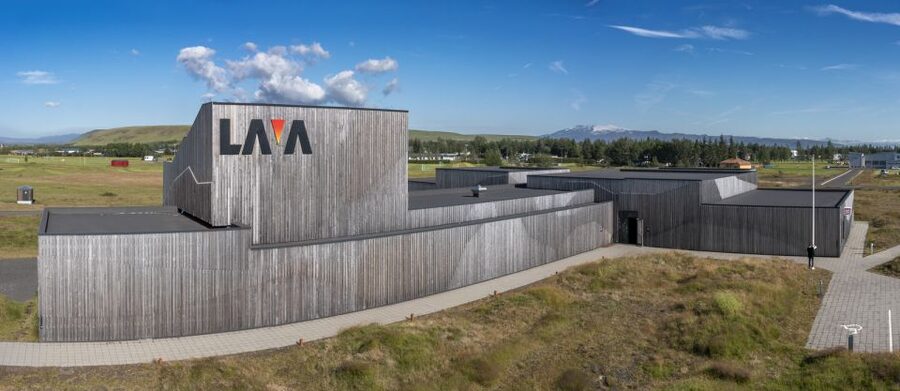
The meeting point is easy to find. LAVA Centre is at Austurvegur 14 in Hvolsvöllur, and it is the first building on the left when you come from Reykjavík or the Golden Circle. You are told that you cannot miss it, which is helpful on a driving day when you do not want to search through side streets.
The location makes sense for a South Iceland route. Hvolsvöllur sits in a region associated with volcanoes, glaciers, and the major attractions of the south coast. You can add the film to a day that includes the Golden Circle or continue toward other South Iceland sights, depending on your plans.
At the entrance, you can find free information about earthquakes in Iceland and the major volcanoes around LAVA Centre. This material gives you a chance to get your bearings before the film, especially if the names of Icelandic volcanoes are new to you.
The cinema admission covers only the movie. Food is not included, but you can buy food at the in-house Katla restaurant and shop. You cannot bring food or drinks into the cinema, so plan to eat before or after the screening rather than arriving with snacks in hand.
Is $16 a fair price?
At $16 per person, this is not the cheapest possible way to spend a short part of your day in Iceland. It is also not an unreasonable price for a dedicated 4K presentation covering more than a century of volcanic events.
The value depends on what you want. If you are mainly stopping at LAVA Centre for the building or nearby information, the film adds a clear subject and a strong visual component. If you already have a full schedule of museums, paid attractions, and outdoor stops, you may decide that a cinema ticket is less important.
I think the price works best for visitors who want to understand the forces behind South Iceland’s scenery. It gives you a concentrated look at eruptions without needing to drive to a remote site or depend on current volcanic activity during your trip. You are paying for access to footage that brings together events from many different years and regions.
The rating shown for the experience is 3.6 from three reviews, so there is not enough feedback to draw a broad conclusion. The strongest specific praise is for the film being concise and interesting. I would take that as a sign that the movie may suit you if you value a compact presentation, while anyone seeking a long, guided lesson may want a different activity.
Who should see the volcano film?
I would recommend it most strongly to:
- Visitors with a real interest in Iceland’s eruptions and geology
- Families who want a visual introduction before visiting volcanic areas
- People who remember the 2010 air-travel disruption and want to understand its cause
- Drivers looking for a practical stop in Hvolsvöllur
- Anyone who prefers dramatic footage to a long spoken lecture
- Visitors who want context for Fagradalsfjall and the recent eruption series
It may be less satisfying if you expect a live guide, a walking tour, or an outdoor encounter with molten lava. The film shows eruptions on screen. It does not take you to an active crater, and no guide’s spoken commentary accompanies the footage.
The no-voice-over format is worth considering before you book. Some people will find the natural sound more powerful and less distracting. Others will want explanations while they watch. If you are in the second group, use the free earthquake and volcano information at the entrance to add context before or after the screening.
Booking, access, and timing
The activity is valid for one day, with starting times based on availability. Check the available time before building the rest of your driving route around it. Since the listed duration is one day rather than a specific film length, do not assume the movie itself occupies the entire day.
The experience is wheelchair accessible. Hosts or greeters are available in English and Icelandic, and the activity information is provided in both languages.
You can reserve now and pay later, which keeps your plans flexible. Cancellation is free up to 24 hours in advance for a full refund. Those terms are useful in Iceland, where weather and road conditions can affect a driving plan, though you should still check your booking details before setting out.
Should you book the LAVA Centre film?
Book it if you want a short, high-quality visual record of Icelandic eruptions and you are passing through Hvolsvöllur. The coverage of Eyjafjallajökull, Holuhraun, Grímsvötn, and Fagradalsfjall gives you more range than a single eruption exhibit, while the natural sound keeps the presentation immediate.
Skip it if you want an outdoor excursion, a narrated lecture, or a full day of activities included in the ticket. At $16, it is best viewed as a focused add-on to a South Iceland route. For the right visitor, it turns a familiar drive past volcano country into a clearer understanding of what lies beneath it.
FAQ
Where is the Volcano Movie shown?
It is shown at LAVA Centre, Austurvegur 14, 860 Hvolsvöllur, Iceland. It is the first building on the left when coming from Reykjavík or the Golden Circle.
How much does the experience cost?
The entrance fee is $16 per person.
How long is the activity?
The experience is listed as valid for one day. Starting times depend on availability, so check the available time when booking.
Is the film narrated?
No. The movie uses video and sound without a vocal narrative or voice-over.
Which eruptions are included?
The film covers eruptions from Katla in 1918, Hekla in 1947, Askja in 1961, Surtsey in 1963, the Westman Islands in 1973, Krafla from 1975, Fimmvörðuháls and Eyjafjallajökull in 2010, Grímsvötn in 2011, Holuhraun from 2014 to 2015, and the recent Fagradalsfjall or Fagradalseldar eruptions.
Is the cinema wheelchair accessible?
Yes. The experience is wheelchair accessible.
Can I bring food or drinks into the cinema?
No. Food and drinks are not allowed inside. Food is available for purchase at the in-house Katla restaurant and shop.
Just added around South Coast
- Vik: Guided Sólheimajökull Glacier Hike★ 4.7 · 233 reviews
- Ancient Historical Site Tour at the Caves of Hella★ 4.5 · 191 reviews
- Tandem Paragliding Flights from Vik★ 5.0 · 63 reviews
- Sólheimajökull Glacier Hike Adventure★ 5.0 · 8 reviews
- South Coast & Katla Ice Cave Adventure From Reykjavik in a 4×4★ 4.5 · 36 reviews
- Private Guided Hike Experience on Sólheimajökull Glacier★ 5.0 · 41 reviews
- Snowmobiling on Eyjafjallajökull★ 4.5 · 31 reviews
- Private Ice Climbing on Sólheimajökull★ 5.0 · 3 reviews
Volcano Tours, compared.
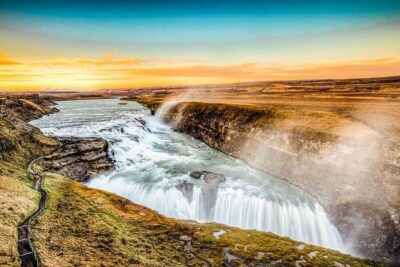
Golden Circle Full-Day Tour with Kerid Crater
Read our review →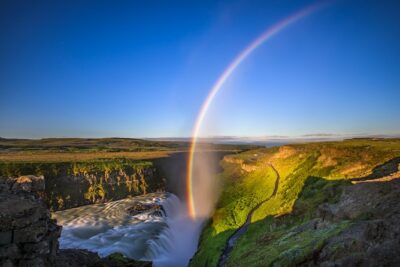
Small-Group Golden Circle, Blue Lagoon with Ticket & Kerid Crater
Read our review →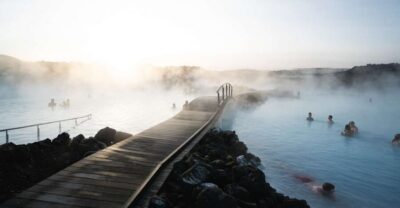
Golden Circle, Kerid Crater, & Blue Lagoon Tour
Read our review →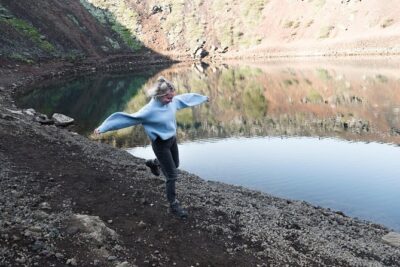
Golden Circle with Kerid Volcanic Crater Day Tour from Reykjavik
Read our review →
Golden Circle, Volcano Crater and Blue Lagoon Small-Group Tour
Read our review →
Golden Circle, Secret Lagoon and Kerid Crater Tour from Reykjavik
Read our review →
Golden Circle, Crater & Blue Lagoon Minibus Tour
Read our review →
Golden Circle, Kerid Crater & Geothermal Lagoon -Small Group Tour
Read our review →Browse the lists this tour appears in