
Reviewed · HORSE RIDING TOURS
North Iceland: Horseback Riding Tour
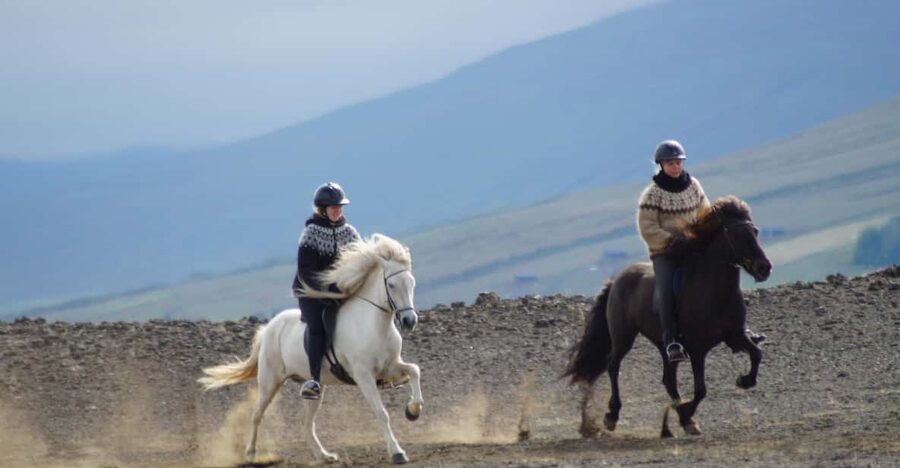
The best part of this ride is the quick change of scenery. In two hours, you go from farm fields to a river, a small lake, volcanic rocks, black sand, and a birch forest, all on the back of an Icelandic horse. The famous tölt gives the ride its special Icelandic flavor.
I like the small group, limited to seven riders, and the calm, friendly horses chosen to suit each person. I also like the patient guiding, with Audrey earning particular praise for helping beginners feel safe and included. The main drawback is practical: you must arrange your own transport to the farm, and cold, wet weather can make the ride feel tougher than the modest duration suggests.
Quick take: what makes this ride special
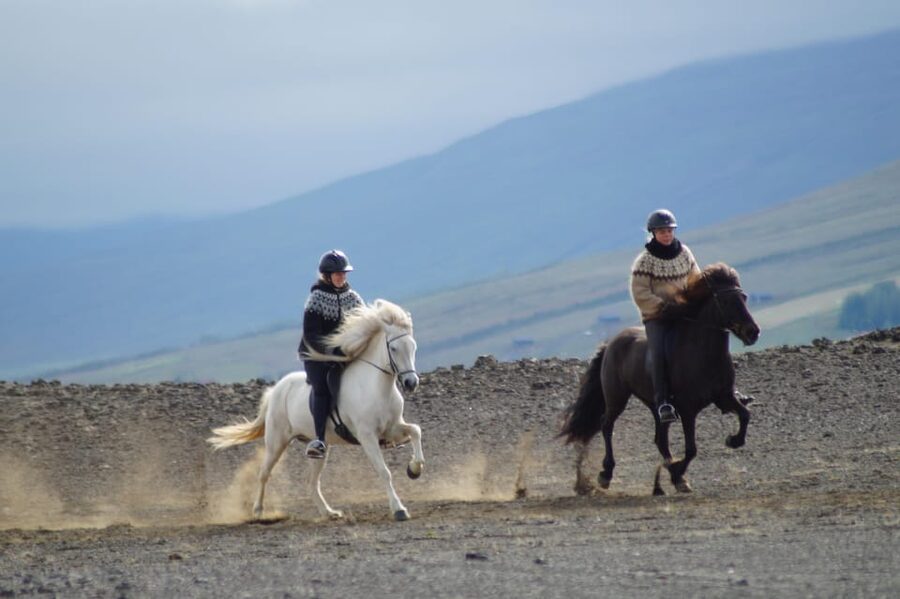
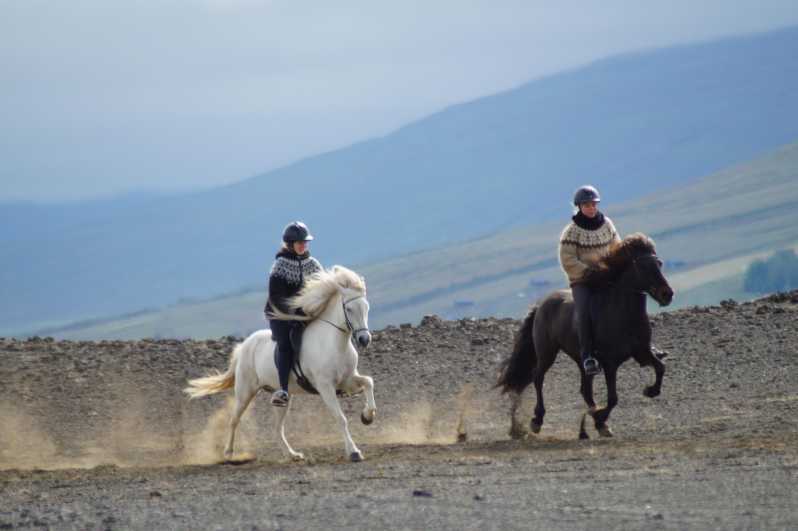
- Try the Icelandic horse’s tölt, a smooth four-beat gait that is unusual outside Iceland.
- Cross varied ground in two hours, including a river, small lake, black sand plain, lava rock, moss, and birch woods.
- Ride in a small group of up to seven, so the guide can pay attention to horse and rider pairings.
- Suitable for beginners and experienced riders, provided you have basic physical fitness.
- Meet guides such as Audrey and Anna, both praised for patience, local stories, and friendly support.
- Expect changing weather, with foul-weather riding clothes sometimes available from the operator.
A short ride with a surprisingly varied route
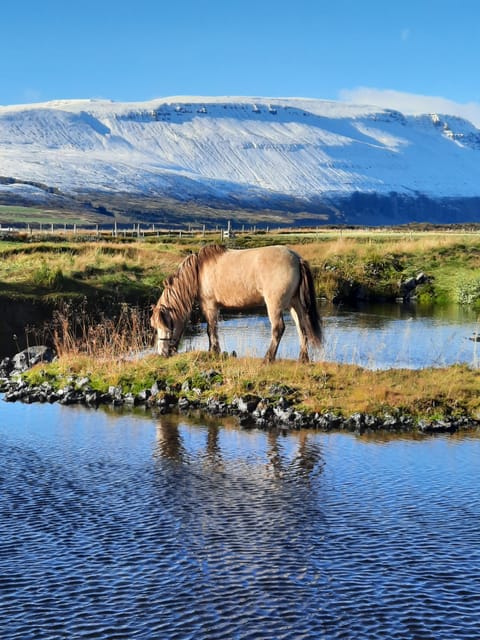
This is not a long expedition into the Icelandic interior. It is a compact two-hour outing from a working farm, designed to give you a broad sample of northeastern Iceland by horseback.
That short length is useful. You can fit the ride into a busy driving day without giving up half your schedule, and you do not need advanced riding stamina. At the same time, two hours in the saddle is long enough for beginners to feel that they have had a real ride, not just a brief loop around a paddock.
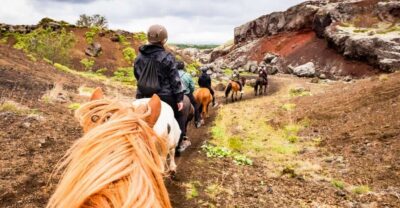
The route changes under you as you go. You begin near farm fields, pass grazing animals, follow a river, cross water, pick through volcanic ground, cross black sand, and return through birch woods. I like that progression because it keeps the outing from becoming a single repetitive trail.
The scenery is open and exposed in places, then more enclosed among trees. That contrast matters in Iceland, where a route can feel very different simply because a river, lava field, or patch of woodland changes the view.
More Horse Riding Tours in North Iceland:
- The Viking Horse Riding Experience in North Iceland
★ 5.0 · 46 reviews - Family Friendly Horse Riding Tour in Skagafjörður
★ 5.0 · 34 reviews - Private 3-Hour Horseback Riding Tour
★ 5.0 · 19 reviews
Getting comfortable with an Icelandic horse
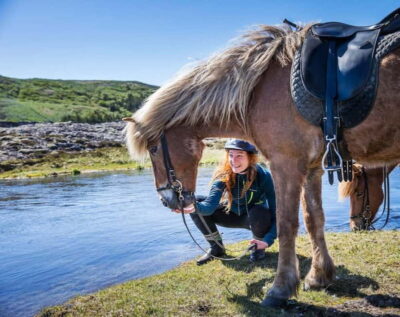
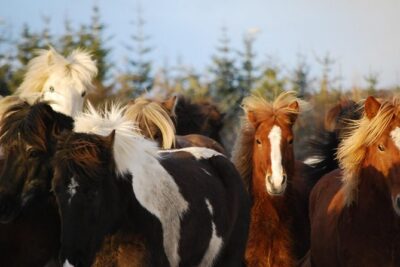
The horses are a major part of the appeal. Icelandic horses are known for their sure-footed nature and for the tölt, a distinctive gait that can feel smoother than a normal trot when the horse and rider find the right rhythm.
You do not need previous riding experience. The tour is set up for beginners with a basic level of fitness, and the guide explains what you need to know before setting off. Guides also match horses to riders, an important detail when the group includes people with different heights, confidence levels, and riding backgrounds.
That pairing seems to be handled thoughtfully. One rider specifically found her horse, Lisa, a good match, while first-time riders described feeling safe and comfortable. You should still expect to use your legs and core, keep your balance, and spend two hours sitting in the saddle. The ride is gentle enough for beginners, but it is not a completely passive sightseeing activity.
Experienced riders should not assume the tour will be a fast-paced training session. The route is built for a mixed group, so the focus is on enjoying the horses and surroundings rather than pushing speed or technical riding. You can try the tölt, but the guide will set the pace for the group and the conditions.
From the farm to the river
The ride starts from the farm and heads toward the river. In summer, cows graze in the fields. In autumn, sheep take their place, giving the route a different seasonal character.
This opening section should help you settle into the horse before the more varied parts of the route. It also gives the guide a chance to check that everyone is comfortable. With a group of no more than seven, questions and small adjustments are easier than they would be on a large trail ride.
The river section is one of the tour’s simple pleasures. You follow the water for a while rather than racing past it, which gives you time to notice how the route moves through farmland and open country. One guide, Audrey, has been praised for explaining local details and checking in with riders during the outing.
Do not expect a formal lecture about every feature you pass. The information is more likely to come in short stories and observations while you ride. That suits the setting. You get enough context to understand where you are without spending the whole ride listening instead of looking.
Crossing water and volcanic ground
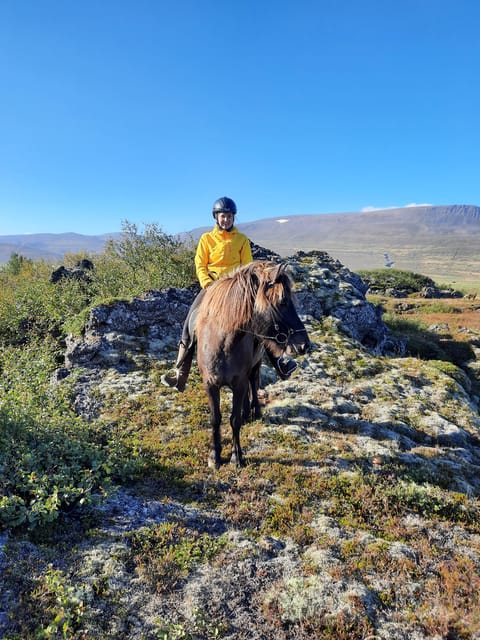
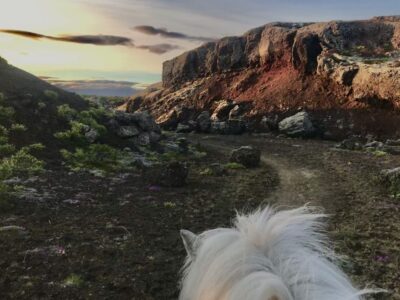
The route then crosses a small lake and moves between volcanic rocks and moss. This is where the ride feels most distinctively Icelandic. You are not simply following a fenced farm track. The horses carry you across ground shaped by volcanic activity, with dark rock and moss creating a stark contrast to the green fields.
The water crossing is also a practical reminder that you are taking part in an outdoor activity, not sitting inside a vehicle. Conditions can affect how the route feels. In cold or wet weather, you will want waterproof outer layers and shoes that are comfortable around damp ground.
The horses’ footing is part of what makes the Icelandic breed so well suited to this setting, but you still need to follow the guide’s instructions. Stay aware of the horse beneath you, keep your hands steady, and avoid treating the crossing as a photo stop until the guide says it is safe to do so.
This part may be especially appealing if you want more than a standard riding-school loop. The volcanic rock, moss, and water give the outing a strong sense of place without requiring a full-day trek.
A few more North Iceland days worth weighing up
- Akureyri: 3-Hour Classic Whale Watching Tour by Ship
★ 4.6 · 3,000 reviews - Húsavík: Whale Watching Tour with Guide
★ 4.6 · 2,761 reviews - Húsavík: Traditional Whale Watching by Local Family Company
★ 4.5 · 1,735 reviews - Mývatn: Myvatn Nature Baths Admission Ticket
★ 4.5 · 1,562 reviews
Across the black sand plain
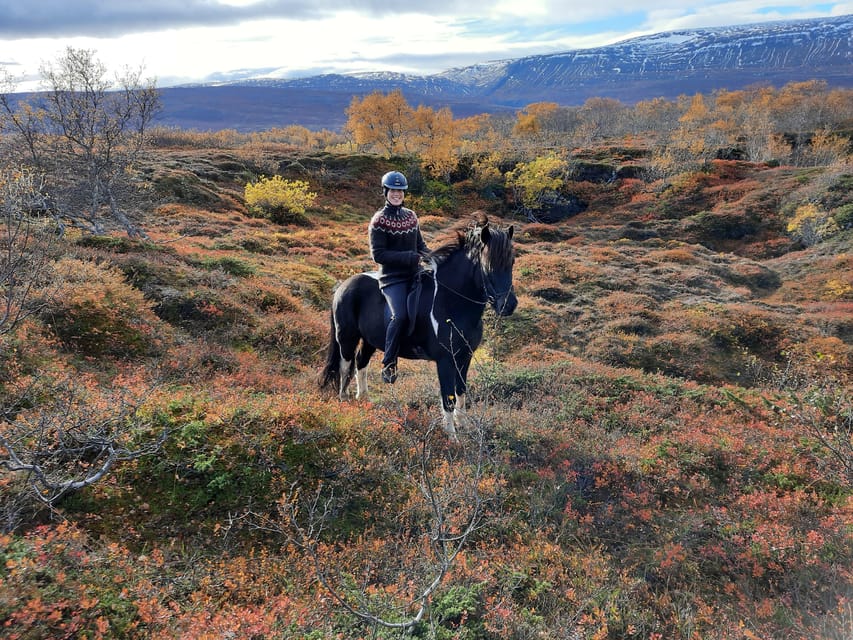
After the river and volcanic rocks, you reach a broad plain of black sand. The open surface changes the feel of the ride again. Instead of winding among rocks or trees, you cross a wide, dark expanse with more room to take in the surrounding views.
Black sand is one of Iceland’s most recognizable natural features, but seeing it from horseback gives you a slower and more personal perspective than a quick roadside stop. You notice the movement of the horse, the texture of the ground, and the way the open plain frames the scenery around you.
The plain may also be the point where weather matters most. Wind and rain can feel stronger in open country, and the ride can be chilly even during the warmer months. Bring layers that protect you from wind and rain rather than relying on a warm sweater alone.
A past ride took place in conditions that included cold, wind, and rain, and the operator provided foul-weather clothing. That is encouraging, but I would not count on borrowed gear as your main plan. Arrive dressed for Icelandic weather, and treat any extra clothing supplied at the farm as a helpful backup.
Returning through the birch forest
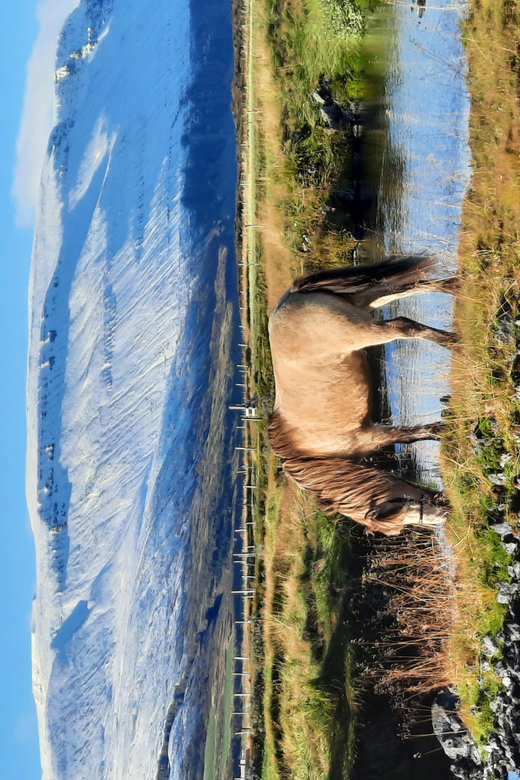
The final section leads back through a natural birch forest. After the open black sand and exposed volcanic ground, the trees provide a quieter finish.
Birch woodland is not the first setting many people picture when they think of Iceland, which is exactly why this section adds interest. You get a softer, more sheltered contrast to the stark dark rock and sand earlier in the route.
The forest also makes the return journey feel different from the outward ride. You are not merely retracing the same path. The route gives you a circuit through several types of terrain before bringing you back to the farm.
I would save a little energy for this last stretch. Beginners sometimes focus so hard on getting comfortable during the first half that they forget they will still be riding near the end. Two hours is manageable for most reasonably fit people, but some soreness the next morning is possible.
What the small group changes
The maximum group size is seven participants. That is a meaningful advantage for this kind of activity.
A small group makes horse selection easier and gives the guide more room to monitor riders. It also reduces the chance that the outing feels like a long procession. Audrey has been praised for speaking with everyone and encouraging beginners, while another ride led by Anna was noted for clear information and local stories.
The exact guide may vary, but the available guiding style is a strong reason to book. The guide does more than point the horses down the trail. You can expect help with riding basics, occasional checks on your comfort, and some explanation of the area.
Small groups also have limits. The ride may not suit you if you want complete independence or a private lesson focused on advanced technique. The experience is shared, and the pace must work for the least confident rider in the group.
Price, transport, and overall value
At $141 per person, this is not the cheapest two-hour activity in Iceland. I still think the price can make sense if you value a small group, proper riding equipment, an experienced guide, and a route with several distinct settings rather than a short horse introduction.
The price includes the two-hour ride, helmet, riding equipment, and guide. Food and drinks are not included, but you are unlikely to need a meal during such a short outing. Plan to eat before or after, especially if this is part of a long day on the road.
The biggest cost-related issue is transport. Hotel pickup and drop-off are not included, so you need to reach the farm yourself. This matters if you are relying on a cruise port, public transport, or a tightly timed excursion. One rider found transport from a cruise ship difficult after a port change, even though the operator was flexible and accommodating.
I would book this only after confirming the farm’s location against your route and allowing extra time to arrive. You are asked to be there at least 10 minutes before departure, and that is a sensible minimum. In rural Iceland, a simple drive can take longer than expected when roads, weather, and navigation enter the picture.
Weather, clothing, and physical demands
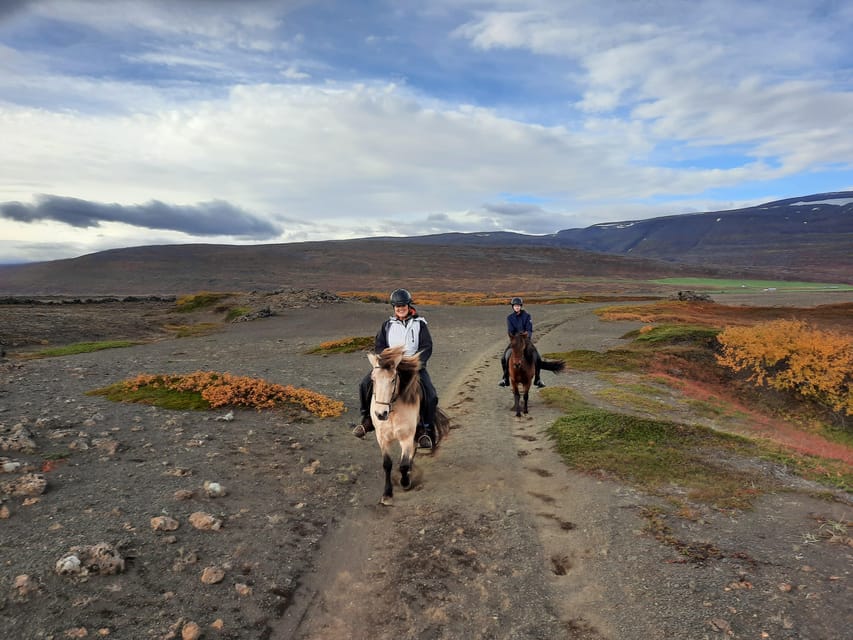
Bring comfortable shoes and comfortable clothes, but think beyond ordinary casual wear. You need clothing suitable for wind, rain, and changing temperatures. Layers are the safest choice, with an outer layer that can handle wet weather.
The activity is suitable for beginners and advanced riders, but you should have a basic physical shape. You will mount a horse, stay balanced, use your legs, and remain seated for about two hours. If you already know that riding causes back pain, this is not the right activity for you.
The tour is not suitable for pregnant women, people with back problems, or people with animal allergies. These restrictions are worth taking seriously. A horse ride combines movement, height, and animal contact, so the setting is not easily adapted for every physical condition.
The weather can change the mood of the outing. Sunshine will make the black sand and moss feel crisp and clear, while rain and wind can turn it into a more demanding outdoor ride. Snow has even appeared in some autumn outings. That unpredictability is part of Iceland, but you should decide in advance that you are willing to ride in less-than-perfect weather.
Who will enjoy this ride most
I would recommend this tour to:
- First-time riders who want a gentle introduction with support from the guide.
- Couples and families looking for a scenic activity that does not take a full day.
- Experienced riders who enjoy Icelandic horses and want to try the tölt.
- People who want several types of scenery in a short outing.
- Small groups who prefer personal attention over a large trail ride.
I would be more cautious if you are seeking speed, long-distance riding, or a private advanced lesson. The tour is built around comfort, scenery, and a mixed level of ability.
It is also a better fit for people with their own rental car or a clear transport plan. The ride itself is straightforward to book, with free cancellation up to 24 hours before departure and a reserve-now, pay-later option, but those policies do not solve the problem of getting to the farm.
Should you book the Lava Horses ride?
Book it if you want to meet Icelandic horses, try the tölt, and see a surprising amount of northeastern Iceland in two hours. The combination of river, small lake, volcanic rock, black sand, and birch forest gives the ride more variety than the duration suggests.
I would especially choose it for a first horseback experience. The calm horses, small group, and patient guidance from people such as Audrey and Anna make the activity approachable without stripping away the sense of adventure.
Skip it if you dislike outdoor weather, have back problems, need hotel transport, or want a fast and highly technical ride. For everyone else, $141 is a fair price for a well-supported small-group outing, provided you can reach the farm easily and arrive dressed for the day Iceland gives you.
FAQ
How long is the horseback riding tour?
The tour lasts two hours.
How much does the tour cost?
The price is $141 per person.
Is the tour suitable for beginners?
Yes. The ride is suitable for beginners with a basic physical shape, as well as advanced riders.
Can I try the tölt?
Yes. The tour gives you the chance to try the Icelandic horse’s tölt.
How many people can join the group?
The group is limited to seven participants.
Is hotel pickup included?
No. Hotel pickup and drop-off are not included, so you must arrange your own transport to and from the farm.
What should I bring?
Bring comfortable shoes, comfortable clothes, and clothing suitable for the weather. Arrive at least 10 minutes before the tour begins.
Who should not take this tour?
The activity is not suitable for pregnant women, people with back problems, or people with animal allergies.
Just added around North Iceland
- Akureyri: Whale Watching Shore Excursions★ 4.6 · 250 reviews
- Akureyri: Whale Watching Tour & Forest Lagoon Entrance★ 3.8 · 4 reviews
- West Glacial River Family Rafting★ 5.0 · 9 reviews
- Varmahlíð: Guided Family Rafting Trip★ 5.0 · 14 reviews
- Varmahlíð: East Glacial River Whitewater Rafting★ 5.0 · 6 reviews
- 8-Day Iceland Ring Road Tour: Reykjavik, Akureyri, Golden Circle & South Coast★ 4.5 · 81 reviews
- Double Snorkeling Adventure near Húsavík in North Iceland★ 5.0 · 4 reviews
- 7-Day Complete Iceland: South Coast, Golden Circle, Akureyri & Snaefellsnes★ 4.5 · 139 reviews
Horse Riding Tours, compared.
Icelandic Horseback Riding Tour with Pickup Option from Reykjavik
Read our review →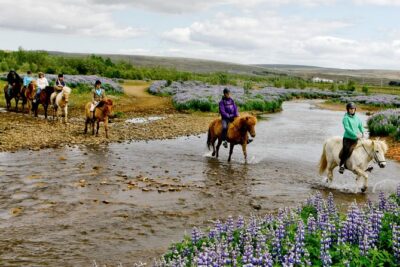
Icelandic Horseback Riding Tour Including Pick Up from Reykjavik
Read our review →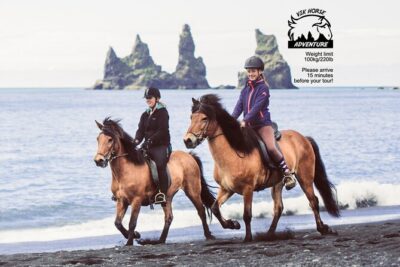
Small-Group Horse Volcano Riding Tour with Pickup
Read our review →
Viking Horse Riding and Golden Circle Tour from Reykjavik
Read our review →Browse the lists this tour appears in