
Reviewed · GUIDED
Hella: Guided Tour of Ancient Man-Made Caves
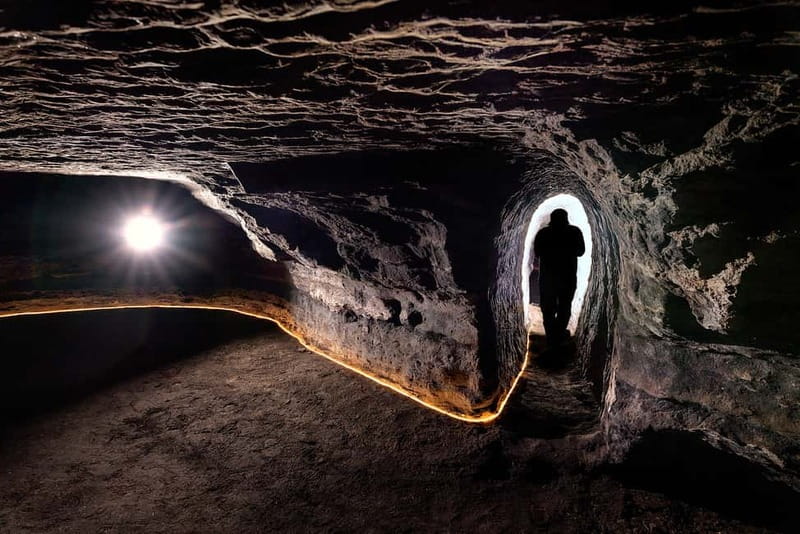
The Caves of Hella are a rare chance to step into Iceland’s oldest known man-made structures, or at least the oldest still-standing archaeological remains on the island. Twelve caves have been found at Ægissíða, and this one-hour tour takes you inside four of them, close to the town of Hella and Route 1.
I like the short, easy walk between the caves, and I like the way a local guide turns bare rock into a story about early settlers, possible Celtic builders, worship, and daily life. Guides such as Stefan and Hanna have earned praise for warmth, humor, and strong storytelling.
The main drawback is that the caves’ true age and purpose remain uncertain. You get a fascinating set of clues rather than a neat historical answer, and visitors using wheelchairs cannot join the tour.
Key points
- Four caves in one hour: See a small but meaningful selection from the twelve known caves at Ægissíða.
- Carved details underground: Look for crosses, wall markings, and seats cut directly into the rock.
- History with open questions: The caves may connect to Celtic settlers or old worship, but their exact story is not settled.
- Easy Route 1 stop: The site is beside Iceland’s Ring Road, about an hour from Reykjavík, with free parking.
- Local English-speaking guides: Stefan, Hanna, and other guides bring humor and clear storytelling to the visit.
- Good value at $39: The price makes sense if you want a focused cultural stop rather than another large natural attraction.
Four Caves, Twelve Questions
Iceland is famous for volcanoes, waterfalls, glaciers, and black-sand beaches. The Caves of Hella offer something different: human-made spaces cut into the earth long before modern Iceland took shape.
Twelve caves have been found on the land of Ægissíða by Hella. This tour visits four, so you are not trying to inspect every chamber or piece together the entire site on your own. Instead, the guide leads you between selected caves and explains what makes each one important.
The exact story is not tidy. The caves are believed to predate the arrival of the Vikings, and some theories connect them with Celtic settlers. Other ideas suggest worship or another early use. You will see physical clues, but you will not receive a final answer that settles every question.
That uncertainty is part of the appeal. You can look at a cross or a carved seat and think about who made it, why it was made, and how many generations used the space afterward. For me, this is more interesting than a site with every detail already pinned down.
The tour was only opened to the public in 2019, which gives it a different feel from Iceland’s big-name sights. It is not one of the country’s standard waterfall stops, and that makes it a useful choice when you want a break from the usual South Coast route.
A few more South Coast days worth weighing up
- Reykjavík: South Coast Waterfalls, Black Sand & Glacier Tour
★ 4.8 · 11,030 reviews - Iceland South Coast Full Day Small-Group Tour from Reykjavik
★ 5.0 · 5,988 reviews - South Coast Day Tour Black Sand Beach & Waterfalls from Reykjavik
★ 4.5 · 2,697 reviews
Getting There Beside Iceland’s Ring Road
The Caves of Hella sit beside Route 1, Iceland’s Ring Road, near the town of Hella. From Reykjavík, the drive takes about one hour, making the site practical at the beginning of a South Coast trip or as a stop on the way toward Vík.
You will find a large parking area with free parking. The American School Bus café is also on site, so you can pair the cave visit with a snack or a short rest. This matters because the stop does not require a separate expedition or a long walk from a distant parking area.
If you are building a full day around waterfalls and beaches, plan the caves as a compact cultural pause. The tour lasts one hour, and the walk between the four caves is short and easy. You do not need to set aside half a day.
The location also makes the tour useful in poor weather. The caves give you an indoor stop during a day when rain or wind has made outdoor sightseeing less pleasant. Still, you should expect a natural archaeological setting rather than a polished museum. The focus is on the spaces themselves and the guide’s explanation.
What You See Inside the Four Caves
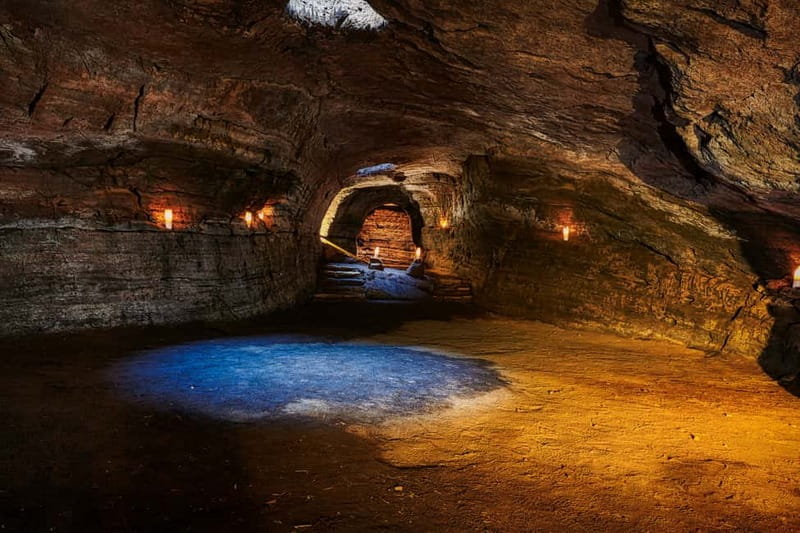
The tour takes you into four caves from the larger group at Ægissíða. Each cave offers a chance to examine the way people shaped the rock and used these underground rooms.
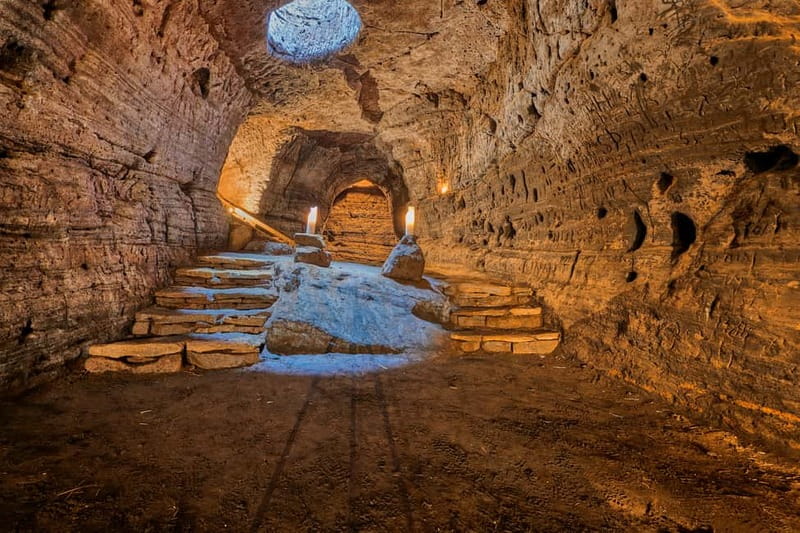
Among the most striking features are ancient crosses, wall carvings, and carved seats. These details are small compared with Iceland’s grand natural sights, so you will want to pay attention. The guide’s comments help you notice marks that might otherwise look like ordinary damage or rough stone.
A carved seat is especially useful for imagining human use of the caves. It suggests that the spaces were not simply holes in the ground. Someone took time to alter the rock for a purpose, although the purpose may remain uncertain.
The crosses raise another set of questions. They may point to Christian influence, later use, or another stage in the site’s long life. The information provided for this tour does not offer a fixed interpretation, so you should treat the markings as clues rather than proof of one single theory.
The wall carvings work in much the same way. You can see that people left marks, but the meaning and date are not fully settled. This is why the guide matters. Without context, the caves could take only a few minutes to inspect. With a good explanation, the same marks become the center of a larger story about settlement, belief, and survival.
The Guide Makes the Difference
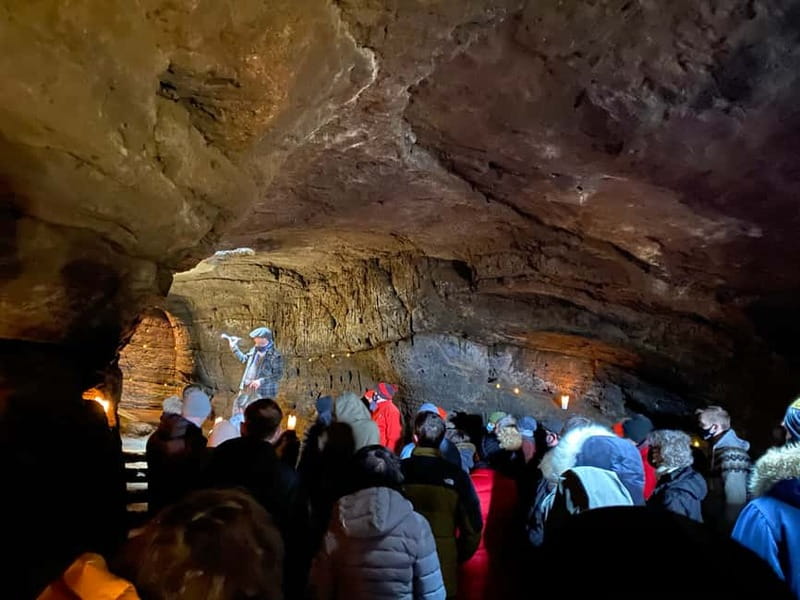
This is a guide-led visit, not a self-guided walk. Your guide speaks English and stays with you as you move between the caves and enter them.
The strongest part of the tour is the storytelling. Stefan has been praised for a relaxed, funny style and for adding useful insight into Icelandic history. Hanna has also been singled out for keeping the group focused with strong storytelling. These names do not guarantee who will lead your departure, but they show the kind of personal approach the company aims for.
You may find that a guide seems quiet at first. That need not be a concern. One account describes a reserved beginning followed by an engaging and entertaining tour once the explanation got underway. The lesson is simple: give the visit a few minutes before judging the guide’s style.
I like that the guide can acknowledge uncertainty instead of forcing a dramatic answer. The caves are often linked with early settlers, Celts, and worship, but the available information does not prove every theory. A good guide can make those possibilities interesting while keeping the difference between fact and guess clear.
The humor also matters. Ancient stone structures can feel dry if presented as a list of dates and theories. A lively guide gives the site human scale and helps a short tour feel like a real encounter with Icelandic culture.
Same corner of the island, a completely different day out:
- South Coast Classic: Full-Day Tour from Reykjavik
★ 4.6 · 2,457 reviews - From Vik: Katla Ice Cave and Super Jeep Tour
★ 4.6 · 2,110 reviews - Iceland: Full-Day South Coast, Black Beach & Waterfalls Tour
★ 4.6 · 1,721 reviews - From Vik: Katla Ice Cave and Super Jeep Tour
★ 4.6 · 1,310 reviews
How Much History Can Fit Into One Hour?
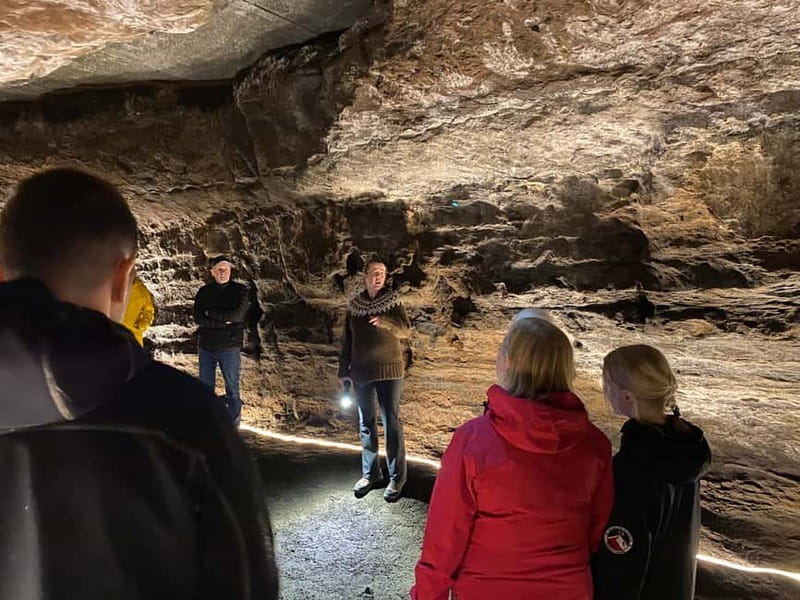
One hour is enough to see four caves and hear the main theories. It is not enough for a full course in Icelandic archaeology, and the tour does not pretend to be one.
You will learn about the people who may have made or used the caves, the physical features inside them, and the long-running questions about their purpose. The guide connects those points as you move through the site, so the information arrives alongside the carvings and seats rather than as a long lecture before you enter.
That format suits a road trip. You get a clear sense of why the caves matter without spending an entire morning on one small site. If you want a detailed academic discussion of every theory, you may find the hour limited. If you want a strong introduction to an unusual piece of Iceland’s past, the timing works well.
I would allow a little extra time before or after the tour for parking, the café, and getting ready to leave. The official activity itself is one hour, but the wider stop can be fitted neatly into a South Coast driving plan.
The Mystery Is the Main Attraction
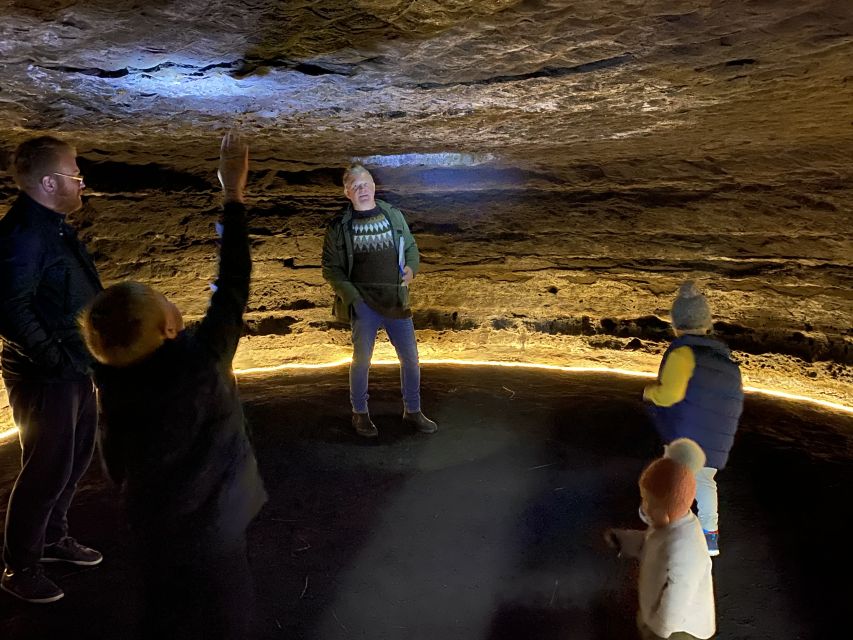
The Caves of Hella are not valuable only because they are old. Their appeal comes from the gap between what you can see and what you can prove.
The central questions are straightforward:
- Were the caves made by Celtic settlers?
- Were they used for worship?
- Did their purpose change over time?
- Who carved the seats and wall markings?
- Why were the crosses made?
You will not receive a final answer to all of these. That may frustrate anyone who wants a firm historical label, but it gives you something to think about after you leave.
I find this kind of site useful because it adds depth to a road trip. Waterfalls and beaches give you powerful views, but the caves ask you to consider the people who lived in Iceland before the familiar Viking-era story. They provide a human connection to the island’s earliest settlement period.
Take the claims with sensible care. The wording around the site presents the caves as possibly connected with Iceland’s first settlers and as older than the Viking arrival, but the exact dating and use are not completely known. The honest version is more interesting: these are ancient human-made structures with clues, theories, and plenty of unanswered questions.
Is $39 a Fair Price?
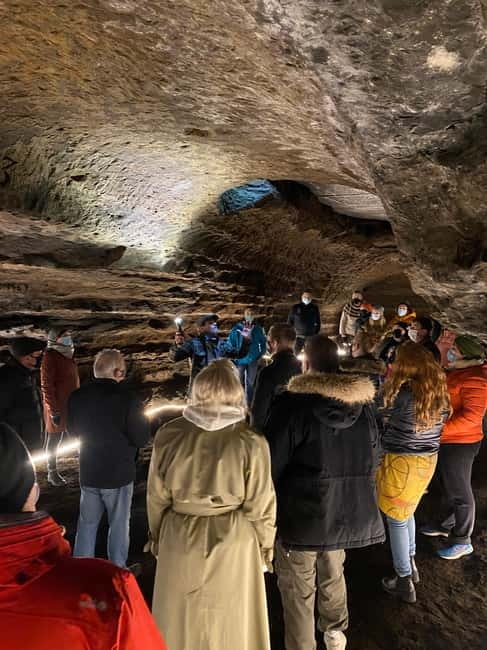
The tour costs $39 per person. For one hour, that is not a bargain in the same way as a free waterfall or a roadside viewpoint. You are paying for access to the caves and, more importantly, for a personal English-language explanation from a local guide.
The price works best when you value context. Without a guide, you would see carved rock, crosses, and seats but have little way to judge their possible meaning. The guide turns a short stop into a focused history experience.
It is also a reasonable add-on to a South Coast drive because the location is so convenient. You do not need a separate transfer, a long hike, or a full-day commitment. Free parking helps keep the wider stop simple.
I would consider the cost worthwhile for history lovers, people curious about early settlement, and anyone who has already seen several of Iceland’s natural sights. If your budget is tight and your schedule is packed, you may prefer to spend the hour at a free natural attraction. The caves offer value through interpretation and atmosphere, not scale.
Flexible booking also helps. You can cancel up to 24 hours in advance for a full refund, and the reserve-now, pay-later option lets you hold a place without paying immediately.
Who Will Enjoy This Stop?
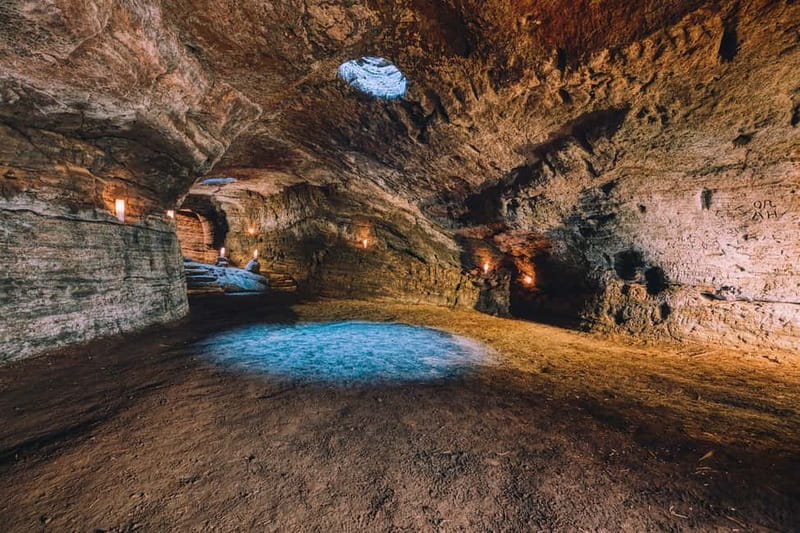
This tour suits you if you like places that raise questions. You do not need specialist knowledge, and the walk between the caves is short and easy.
It is particularly well suited to:
- History lovers who want to consider Iceland before the Viking period.
- Curious families and adults who enjoy unusual sites and guide-led stories.
- Road trippers driving Route 1 between Reykjavík and Vík.
- Visitors seeking variety after several waterfalls, beaches, and viewpoints.
- People who enjoy local guides with humor and personality.
The tour is less suitable if you want a large, polished attraction with extensive displays. It is also not suitable for wheelchair users. The cave setting may feel modest if your main goal is dramatic scenery, since the interest lies underground in carved details and historical questions.
Because the walk is described as short and easy, you should not expect a strenuous outing. The important requirement is curiosity, not fitness.
A Practical Stop on a South Coast Day
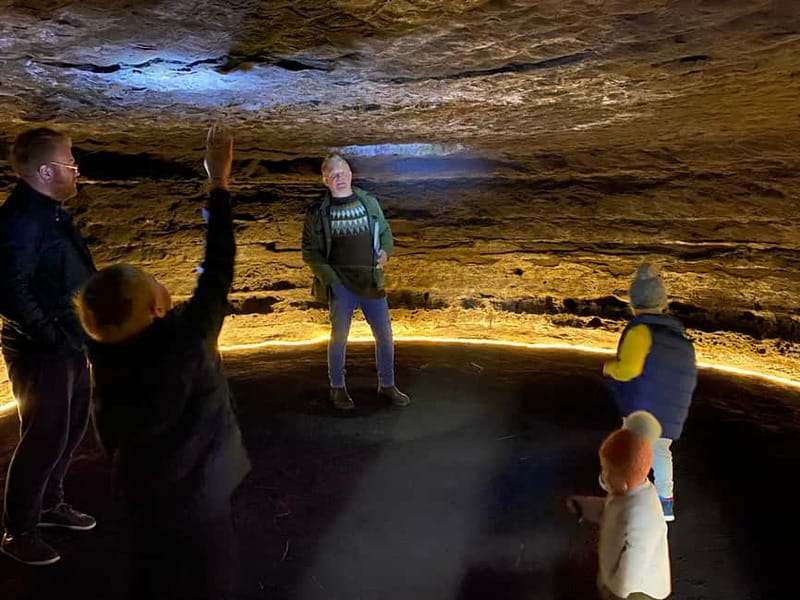
The best way to use the Caves of Hella is as one part of a larger driving day. From Reykjavík, the site is about an hour away, and its position beside Route 1 makes it easy to include before continuing toward the South Coast.
You can stop for the tour, use the free parking, and visit the American School Bus café before returning to the road. The one-hour format keeps the plan flexible. Check the available starting times when booking, since the tour does not operate on a single universal departure time.
I would avoid treating the caves as the only reason for a long detour. Their strength is convenience and character. They work particularly well when you are already passing through Hella and want a cultural stop that differs from the usual outdoor sights.
Bring your attention rather than special equipment. The walk is short and easy, and the experience depends on seeing the carvings and listening to the explanation. You should also be comfortable with the limits of an old archaeological site: the caves are historic spaces, not a modern museum built for easy viewing from every angle.
Should You Book the Caves of Hella?
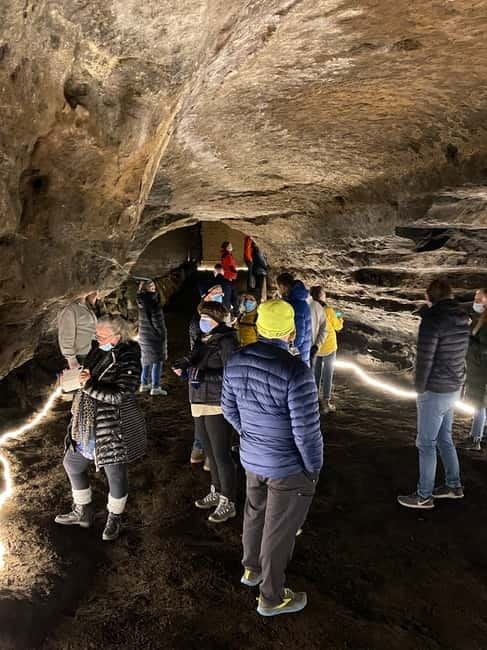
Book this tour if you want a one-hour stop with ancient carvings, local storytelling, and real historical uncertainty. At $39, it offers a focused look at an unusual part of Iceland’s past and fits neatly beside Route 1.
Skip it if your schedule is too tight, your main interest is dramatic scenery, or you need wheelchair access. The caves will not provide a grand natural vista or a complete answer about who built them.
For most people with room in a South Coast itinerary, I would include it. The stop is short, the parking is easy, the walk is manageable, and a good guide can make four quiet caves feel surprisingly full of questions.
FAQ
Where are the Caves of Hella located?
The caves are on the land of Ægissíða near the town of Hella in southern Iceland. They are located beside Route 1, the Ring Road, about one hour from Reykjavík.
How long does the guided tour last?
The tour lasts one hour. Starting times vary, so check availability when choosing your visit.
How many caves will I visit?
You will visit four caves. Twelve man-made caves have been found on the land of Ægissíða.
What language is the tour offered in?
The tour includes a live local guide who provides the tour in English.
What can I see inside the caves?
The caves include ancient crosses, wall carvings, and carved seats. The guide also explains theories about who made the caves and how they may have been used.
Is the walk difficult?
The walk between the four caves is short and easy.
Can I cancel the booking?
You can cancel up to 24 hours in advance for a full refund. A reserve-now, pay-later option is also available.
Just added around South Coast
- Volcano Movie – Experience the Latest Eruptions in Iceland★ 3.6 · 3 reviews
- Vik: Guided Sólheimajökull Glacier Hike★ 4.7 · 233 reviews
- Ancient Historical Site Tour at the Caves of Hella★ 4.5 · 191 reviews
- Tandem Paragliding Flights from Vik★ 5.0 · 63 reviews
- Sólheimajökull Glacier Hike Adventure★ 5.0 · 8 reviews
- South Coast & Katla Ice Cave Adventure From Reykjavik in a 4×4★ 4.5 · 36 reviews
- Private Ice Climbing on Sólheimajökull★ 5.0 · 3 reviews
- Private Guided Hike Experience on Sólheimajökull Glacier★ 5.0 · 41 reviews
Guided, compared.

Jokulsarlon Glacier Lagoon Full-Day Guided Trip
Read our review →



The Golden Circle Guided Bus Tour from Reykjavik
Read our review →

Browse the lists this tour appears in