
Reviewed · VOLCANO TOURS
Volcano Exhibition and Cinema – Lava Centre Iceland
Iceland’s volcanoes are not just scenery here. At Lava Centre, you can watch magma rise beneath the island, see how tephra forms, track live earthquakes on a map, and feel a simulated tremor. I especially like the clear connection between geology and the scenery outside, plus the cinema footage showing recent eruptions around Grindavík and the Blue Lagoon.
I also like the mix of hands-on displays and real mountain views, which keeps the subject from becoming a wall of technical text. The main consideration is time: this is an exhibition rather than a full-day tour, and many visitors will see the key sections in about an hour. Food and drinks are not included.
Key points at a glance
- Watch recent Icelandic eruptions in the cinema, including footage from Grindavík and the Blue Lagoon area.
- Feel an earthquake in a simulator and see live seismic activity on a map.
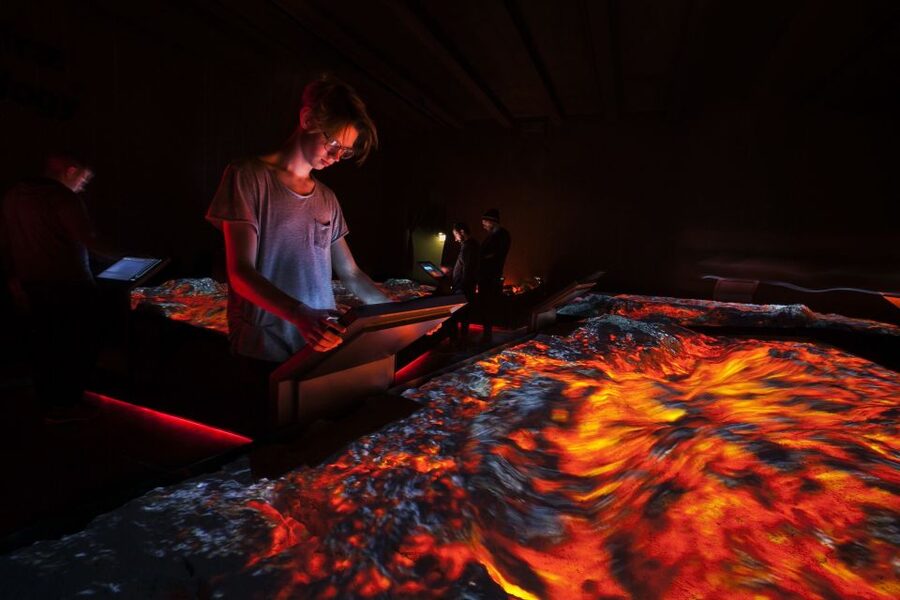
- Study Iceland’s volcanic systems through displays on magma, lava, tephra, geysers, black sands, and colored mountains.
- Look toward Hekla, Katla, and Eyjafjallajökull from the observation deck and Local Volcano section.
- Use the center with a wheelchair, with wheelchairs available and accessible facilities noted.
- Plan roughly one hour, though your admission remains valid for the full day.
Why Lava Centre makes sense in southern Iceland
Southern Iceland can feel like a giant outdoor geology lesson. You pass black beaches, steaming ground, glaciers, waterfalls, and volcanic ridges, but it is not always clear how these features connect. Lava Centre gives you the missing explanation before you continue down the road.
The center sits in view of three major Icelandic volcanoes: Eyjafjallajökull, Katla, and Hekla. Two are among the country’s most active and productive volcanoes. They may be quiet during your visit, but they give the exhibition a useful sense of place. You are not studying volcanoes in a city museum. You are looking toward the real mountains that shaped the region.
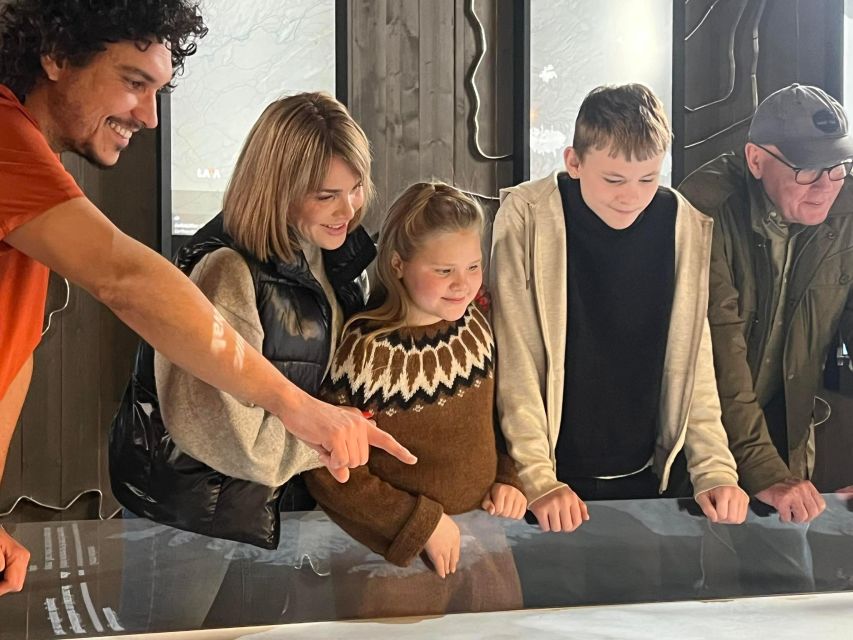
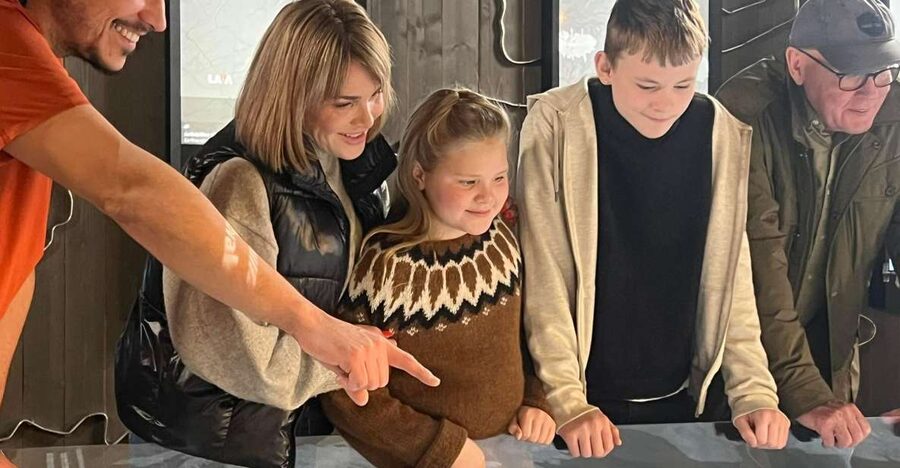
The visit is self-guided. Hosts speak English and Icelandic, but no individual guide is named for this activity. That matters if you expect a guided walk with a set commentary. Instead, you move through the displays at your own speed, stopping longer where a subject catches your attention.
More Volcano Tours in the South Coast
- Ice Cave by Katla Volcano Super Jeep Tour from Vik
★ 4.5 · 1,100 reviews - Lava Centre Interactive Volcano Exhibition
★ 4.5 · 209 reviews - Katla Volcano Ice Cave – Super Jeep Tour from Vik
★ 4.5 · 199 reviews
Start with Iceland’s moving ground
The Trembling Earth section explains why earthquakes are so common in Iceland. The country sits along diverging tectonic plates, where the plates move apart and magma rises from below. That combination keeps the ground active.
The earthquake simulator turns this from a diagram into something physical. You can experience a simulated tremor rather than only read about seismic movement. The effect is designed for education, not danger, but it gives children and adults a memorable way to understand what shifting plates can feel like.
A live earthquake map adds a useful current view. Instead of presenting Iceland’s geology as something that happened long ago, the display shows that the country is still changing. If you are visiting after feeling a small tremor or hearing about recent activity, this section can help put it into context.
The simulator is likely to be one of the most popular stops, especially for families. If you prefer quiet displays and technical detail, you may spend less time here, but it is a strong opening because it explains the forces beneath your feet.
The fiery heart beneath the island
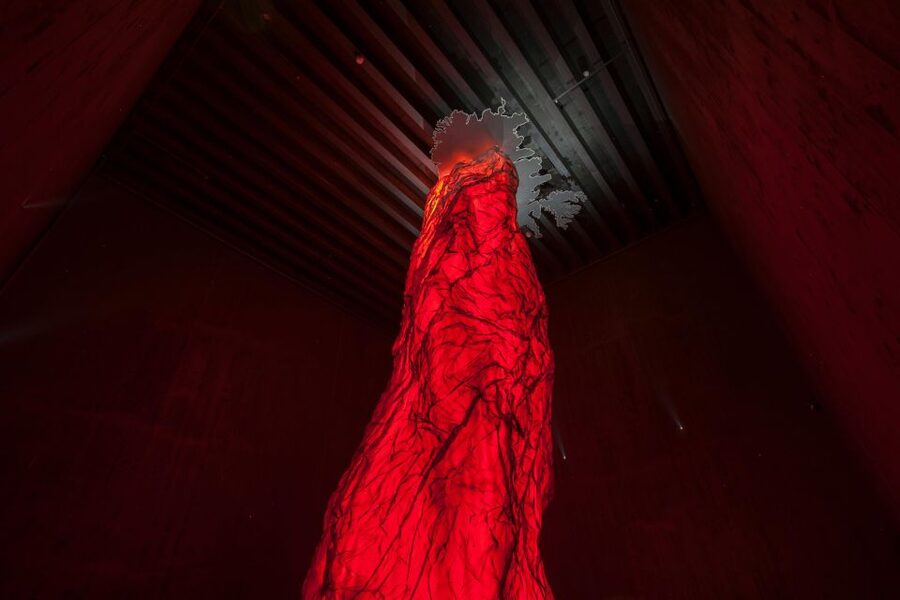
The Fiery Heart of Iceland display focuses on magma and the source of Iceland’s volcanic activity. At the boundary where tectonic plates separate, magma rises through the Earth’s crust. Iceland also sits above a mantle plume, sometimes called a hot spot, located beneath the central highlands.
This is the key idea behind much of the exhibition: Iceland’s volcanoes are not random isolated features. They are linked to both plate movement and heat rising from deep below. Once magma leaves the crust during an eruption, it is called lava when it reaches the surface. Airborne volcanic material is called tephra.
That distinction helps you make sense of what you see around the country. A black lava field, a layer of ash, a volcanic cone, and a steep mountain may all come from different parts of the same process. The exhibition does a good job of giving those terms a practical meaning.
I like this section because it answers a question many visitors have after a few days in Iceland: why does this country look so different from other places? The answer is not one dramatic eruption. It is the repeated meeting of moving plates, rising magma, ice, water, and time.
Magma Learning Center and volcanic structures
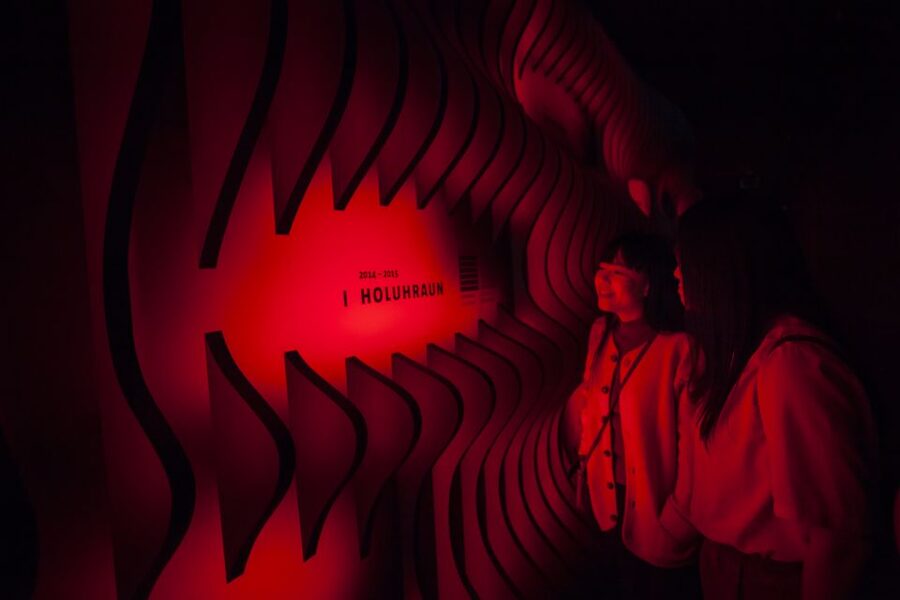
The Magma Learning Center looks at the many forms volcanoes can take. Iceland has 30 volcanic systems, and they do not all produce the same kind of eruption or terrain.
This is useful because the word volcano can suggest one familiar cone. Iceland’s volcanic structures are more varied. Magma can travel through cracks, spread across broad areas, or break apart into tephra when it meets water or ice. Gaseous, sticky magma can also splinter into airborne material.
You will see how these forces help explain Iceland’s black sands and unusual mountains. Tephra can spread far from the eruption site, while lava flows can build new ground. Ice and water can change the force of an eruption, sometimes producing clouds of ash and fragmented rock.
The displays use a mixture of interactive elements, videos, and artistic presentations. That balance matters. A purely scientific exhibit might lose younger children, while a display that focuses only on dramatic images would leave you without much understanding. Here, the goal is to show the process and its results.
If you are interested in geology, you can take your time with the explanations. If you are traveling with children, the hands-on stations offer a reason to keep moving rather than reading every panel.
Same corner of the island, a completely different day out:
- Reykjavík: South Coast Waterfalls, Black Sand & Glacier Tour
★ 4.8 · 11,030 reviews - Iceland South Coast Full Day Small-Group Tour from Reykjavik
★ 5.0 · 5,988 reviews - South Coast Day Tour Black Sand Beach & Waterfalls from Reykjavik
★ 4.5 · 2,697 reviews - South Coast Classic: Full-Day Tour from Reykjavik
★ 4.6 · 2,457 reviews
The cinema brings recent eruptions into focus
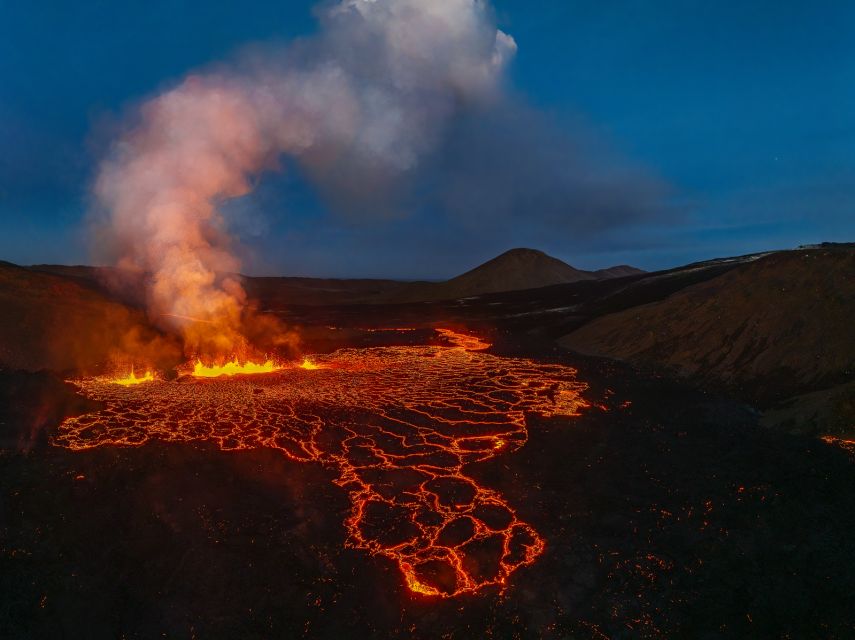
The cinema shows footage of Icelandic eruptions, including the latest activity around Grindavík and the Blue Lagoon. This is one of the strongest parts of the visit because it connects the science to events that have affected real communities and familiar places.
Seeing an eruption on film gives you a better sense of scale than a still photograph. Lava does not behave like a simple river, and volcanic activity can change quickly. The cinema presentation adds motion, sound, and a direct view of the force involved.
It also gives context to the exhibition’s discussion of magma and lava. You first learn the terms, then see what those forces look like when they reach the surface. The result is more useful than watching eruption footage without an explanation.
The film is a good reason to allow more than a quick walk through the exhibit. One visitor estimated that the entire visit could take about an hour, but your timing depends on how long you spend with the film and interactive displays. If the cinema is important to you, avoid rushing through the first rooms.
The Local Volcano section and observation deck
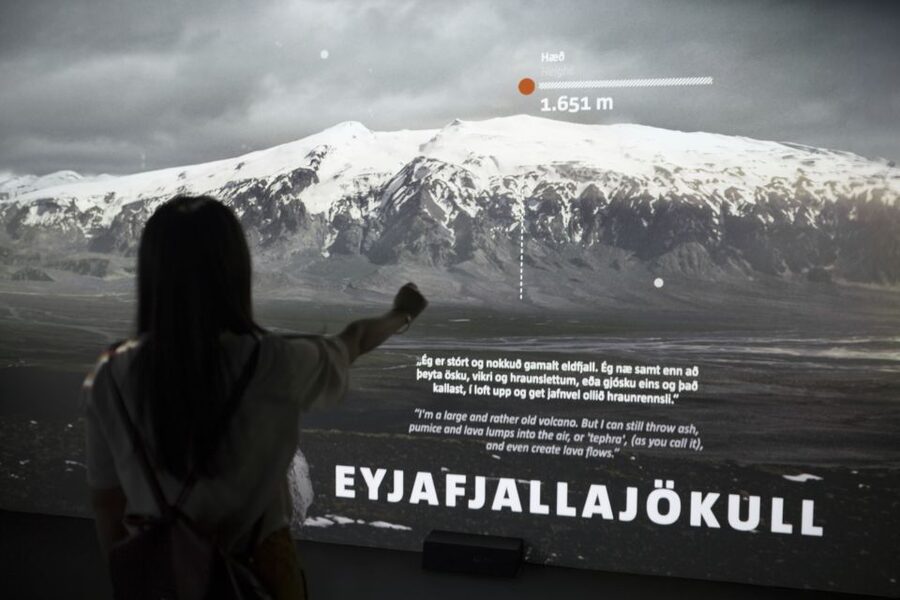
The Local Volcano section gives you a panoramic view of four large, active but dormant volcanoes, along with a group of volcanic islands. The observation deck provides another chance to look outside and match the real mountains with what you have just learned.
The main views include Eyjafjallajökull, Katla, and Hekla. Each has a different type and character, and the point is not simply to take a photograph. The view helps you see that Iceland’s volcanoes are part of a larger system spread across the country.
Weather will affect this part of the experience. The mountains may be clear, partly hidden, or completely covered by cloud. That is not a flaw in the center, but you should treat the observation deck as a valuable extra rather than a guaranteed panorama.
The indoor Local Volcano section helps on poor-weather days. You can still learn about the volcanoes even if the outdoor view disappears. On a clear day, though, the deck adds a satisfying finish because you can look directly toward the features described inside.
How long you need and what the $42 price buys
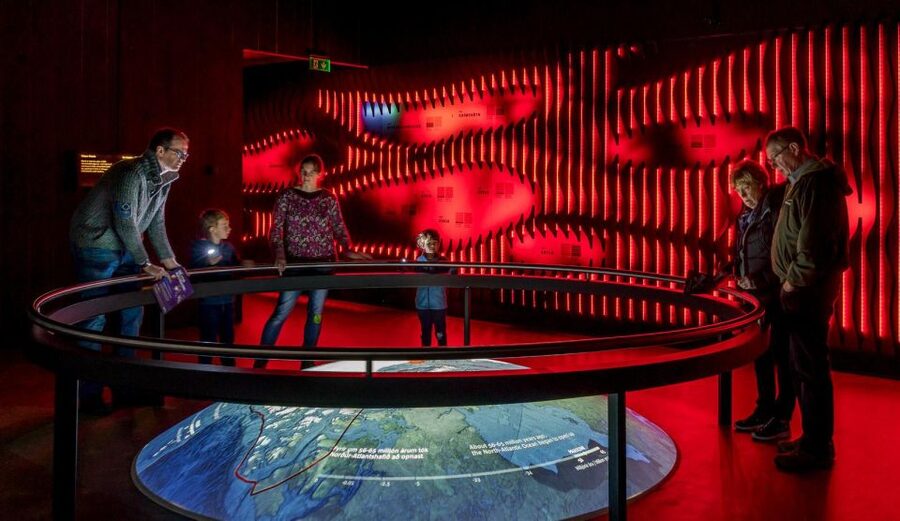
Admission costs $42 per person and includes the Lava Centre exhibition, cinema, and observation deck. Ear muffs, flashlights, and support teddy bears are available for the youngest children. Food and drinks are not included.
At that price, I would not book this as a quick filler stop if you only have ten minutes. The value comes from using the interactive stations, watching the film, and spending time with the views. For a family, the earthquake simulator and hands-on displays can make the ticket easier to justify. For an adult already familiar with Icelandic geology, the value depends on how much you enjoy structured interpretation.
The ticket is valid for one day, which gives you useful flexibility. You can visit at a suitable starting time, take a break, and return later the same day if your plans allow. That is more helpful than a tightly timed presentation, especially when southern Iceland weather changes your driving schedule.
The overall rating is 4.4 from 66 reviews, and the strongest praise centers on the interactive route, the eruption film, and the clear explanations. Those are also the parts I would prioritize if you are deciding how much time to set aside.
Who will get the most from this visit
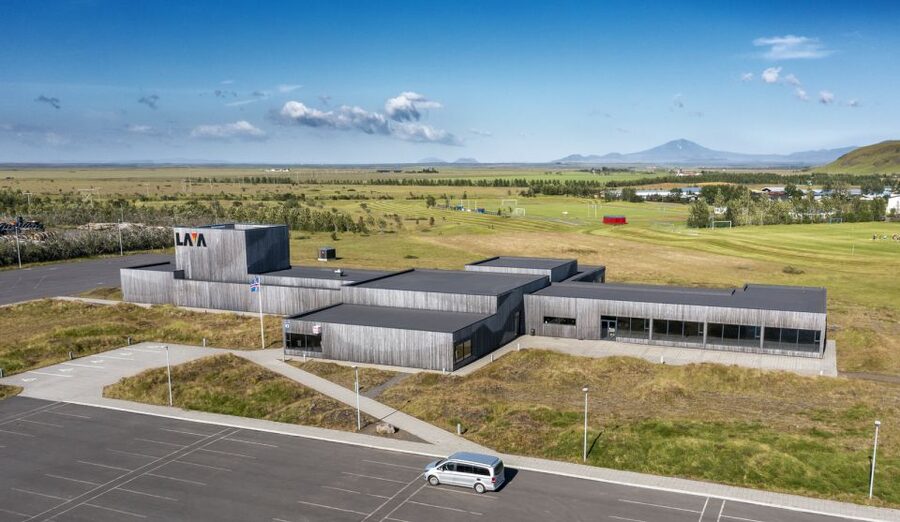
Lava Centre suits first-time visitors who want a basic but substantial explanation of Iceland’s geology. You do not need specialist knowledge to follow the displays, and the exhibition links technical ideas to things you may already have seen on the road.
Families should find plenty to hold a child’s attention. The simulated earthquake gives the visit a physical element, while ear muffs, flashlights, and support teddy bears are available for younger children. The center is not only a quiet collection of signs.
It also works well for adults who want more context before visiting the South Coast, Hekla, Katla, or areas affected by recent eruptions. The cinema footage from Grindavík and the Blue Lagoon gives current relevance to the subject.
You may find it less satisfying if you want a guided volcanic hike, a live eruption, or a long outdoor activity. This is an indoor exhibition with a viewing deck. Its purpose is to explain Iceland’s forces, not take you into a volcanic area.
The center is wheelchair accessible, and wheelchairs are available. That makes it a practical choice when you want an educational stop without uneven outdoor paths or a demanding walk.
Practical planning for a smoother visit
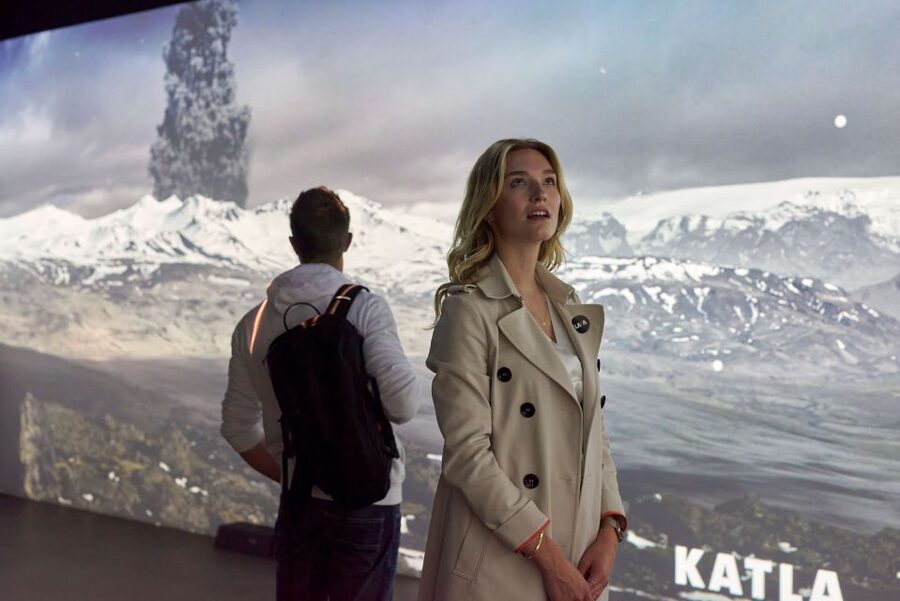
Allow about an hour as a starting point, then add time if you want to read the displays carefully or wait for the cinema. The admission remains valid for the day, so you do not need to treat the visit as a race.
Try to include the observation deck even if the weather looks uncertain. Mountain views can change quickly, and the indoor volcano section still gives you something useful if cloud blocks the peaks.
If you are visiting with children, begin with the Trembling Earth section. The earthquake simulator gives them an immediate reason to engage, and you can then explain the plate movement and magma displays while their interest is fresh.
Food and drinks are not part of admission, so plan those separately. The experience itself has no stated meal or refreshment inclusion.
You can cancel up to 24 hours in advance for a full refund, and the reserve-now-pay-later option lets you keep plans flexible. That is helpful for an Iceland road trip, where weather can change a day’s route.
Should you book Lava Centre?
Book it if you want to understand the volcanic scenery you are seeing across southern Iceland, especially if you are traveling with children or visiting in uncertain weather. The earthquake simulator, cinema, interactive displays, and mountain views give the visit more substance than a standard museum stop.
At $42, it is best value when you use all three parts of the admission: exhibition, cinema, and observation deck. If you only want a quick photograph of the volcanoes, the price may feel high. If you want a clear, accessible explanation of why Iceland has black sands, geysers, colored mountains, and active volcanic systems, it earns its place in a South Coast itinerary.
FAQ
Where is Lava Centre located?
Lava Centre is in the Southern Region of Iceland, with views toward major volcanoes including Eyjafjallajökull, Katla, and Hekla.
What does admission include?
Admission includes the Lava Centre exhibition, the cinema, and the observation deck.
How much does the experience cost?
The listed price is $42 per person.
How long does a visit take?
The ticket is valid for one day, and a visit can take about one hour. You may spend longer if you read the displays carefully or take extra time with the film and viewing deck.
Is the visit guided?
The experience is presented as an exhibition with interactive displays and videos. Hosts or greeters speak English and Icelandic, but no named guide or guided tour is specified.
Can I see recent volcanic eruptions?
Yes. The cinema shows recent eruption footage, including activity connected with Grindavík and the Blue Lagoon.
Can I experience an earthquake?
Yes. The Trembling Earth section includes an earthquake simulator, and you can also see live earthquakes on a map.
Is Lava Centre wheelchair accessible?
Yes. The activity is wheelchair accessible, and wheelchairs are available.
Are food and drinks included?
No. Food and drinks are not included in the admission.
Can I cancel my booking?
You can cancel up to 24 hours in advance for a full refund. A reserve-now-pay-later option is also available.
More Museums in South Coast
- Ancient Historical Site Tour at the Caves of Hella
★ 4.5 · 191 reviews - Geothermal Energy Exhibition Entry Ticket
★ 4.5 · 34 reviews - Reykjavik: Perlan Museum Wonders of Iceland Entrance Ticket
★ 4.7 · 2,575 reviews - Reykjavík: Hop-On Hop-Off Bus and Perlan Museum Entry Ticket
★ 4.3 · 719 reviews
Just added around South Coast
- Volcano Movie – Experience the Latest Eruptions in Iceland★ 3.6 · 3 reviews
- Vik: Guided Sólheimajökull Glacier Hike★ 4.7 · 233 reviews
- Ancient Historical Site Tour at the Caves of Hella★ 4.5 · 191 reviews
- Tandem Paragliding Flights from Vik★ 5.0 · 63 reviews
- Sólheimajökull Glacier Hike Adventure★ 5.0 · 8 reviews
- South Coast & Katla Ice Cave Adventure From Reykjavik in a 4×4★ 4.5 · 36 reviews
- Snowmobiling on Eyjafjallajökull★ 4.5 · 31 reviews
- Private Ice Climbing on Sólheimajökull★ 5.0 · 3 reviews
Volcano Tours, compared.
Golden Circle Full-Day Tour with Kerid Crater
Read our review →
Small-Group Golden Circle, Blue Lagoon with Ticket & Kerid Crater
Read our review →
Golden Circle, Kerid Crater, & Blue Lagoon Tour
Read our review →
Golden Circle with Kerid Volcanic Crater Day Tour from Reykjavik
Read our review →
Golden Circle, Volcano Crater and Blue Lagoon Small-Group Tour
Read our review →
Golden Circle, Secret Lagoon and Kerid Crater Tour from Reykjavik
Read our review →
Golden Circle, Crater & Blue Lagoon Minibus Tour
Read our review →
Golden Circle, Kerid Crater & Geothermal Lagoon -Small Group Tour
Read our review →Browse the lists this tour appears in